Pune: Umakant Dash Appointed Vice-Chancellor of Gokhale Institute Amid Institutional Turmoil
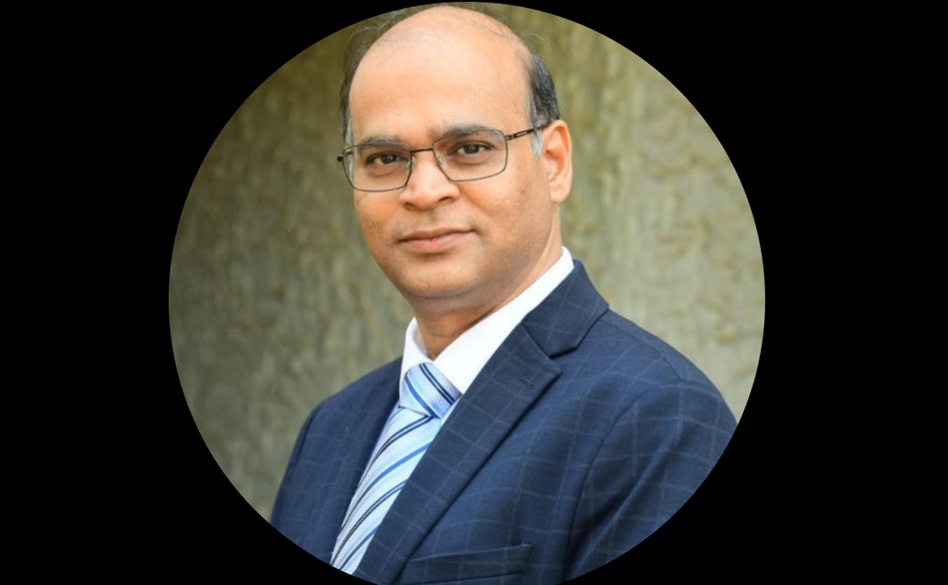
Pune, 5th July 2025: Dr. Umakant Dash, Director of the Institute of Rural Management Anand (IRMA) in Gujarat, has been appointed the new Vice-Chancellor of Gokhale Institute of Politics and Economics (GIPE), Pune. The appointment order, signed by Chancellor Sanjeev Sanyal, was issued on July 2, with Dash set to formally assume office on July 29 for a five-year term.
Dash’s appointment comes at a time when GIPE is navigating a series of administrative controversies and legal disputes involving its parent body, the Servants of India Society (SIS).
Dash: “Ready to Uphold the Institute’s Legacy”
In his first statement following the announcement, Dash expressed gratitude for the opportunity to lead one of India’s premier institutions in economics and social sciences.
“It’s a privilege to be given this responsibility. GIPE has a long and respected legacy in the field of economics, and I aim to contribute positively to its future,” Dash said.
“While I’m not yet fully acquainted with past disputes, my role will be to engage constructively with all stakeholders — be it the parent organisation, faculty, students, or alumni — and foster a collaborative atmosphere. I will be joining in person on July 29.”
Academic and Professional Background
With nearly 20 years of experience in academia, research, and administration, Dash brings significant credentials to the role. Prior to IRMA, he served as the Head of the Department of Humanities and Social Sciences at IIT Madras, and was also an adjunct professor at IIM Tiruchirappalli.
Dash holds a PhD in Applied Economics from IIT Kanpur and a Diploma in Health Systems Management from Tulane University in the United States.
Leadership Amid Institutional Conflict
Dash’s appointment comes in the wake of an extended phase of turbulence at GIPE. The institute made headlines last year when former Vice-Chancellor Ajit Ranade stepped down, following allegations of irregularities in his appointment. His exit was preceded by the resignation of then-Chancellor Bibek Roy, who cited differences with the parent body, SIS.
In the aftermath, Dr. Shankar Das, former Pro-VC of the Tata Institute of Social Sciences, was appointed interim Vice-Chancellor. His term too has been marked by conflict between GIPE’s administration and SIS.
SIS–GIPE Dispute Escalates
The discord between SIS and GIPE has intensified over the past year, leading to legal action and mutual accusations. In April, GIPE filed a complaint against SIS, accusing its office-bearers of financial mismanagement. This resulted in the arrest of the SIS secretary, who was later granted bail.
In retaliation, SIS accused GIPE of procedural violations in staffing and governance. They initially removed Chancellor Sanjeev Sanyal, only to reinstate him shortly after amid public scrutiny and internal pressure.
In June, GIPE escalated the matter by formally requesting the Charity Commissioner to suspend SIS’s role as the governing body and appoint an external administrator. The situation remains unresolved, with both parties continuing to trade allegations.
Call for Neutral Leadership
Despite the volatile backdrop, stakeholders have expressed hope that Dash’s appointment will offer a chance to restore institutional normalcy.
Damodar Sahoo, President of SIS, issued a formal letter to Chancellor Sanyal on July 3, stating:
“SIS will extend full cooperation to the new Vice-Chancellor as needed to ensure that GIPE functions smoothly and without disruption.”
Atmanand Mishra, a senior member of SIS, also voiced support for the new appointee.
“We are optimistic that Dr. Dash will steer GIPE towards academic excellence. The issues between SIS and GIPE are systemic, not personal. Accountability must apply equally — irrespective of affiliation.”
Looking Ahead
Dr. Dash now faces the formidable task of not just rebuilding trust within the institution, but also navigating the complex legal and administrative tangle between GIPE and SIS.
Stakeholders across the academic community are watching closely, with the hope that the new leadership will bring both stability and renewed academic focus to an institute that has long been a pillar in India’s economics and public policy landscape.