“Aundh Pattern” for Traffic Management May Soon Be Replicated Across Pune: Police Plan Multiple Measures
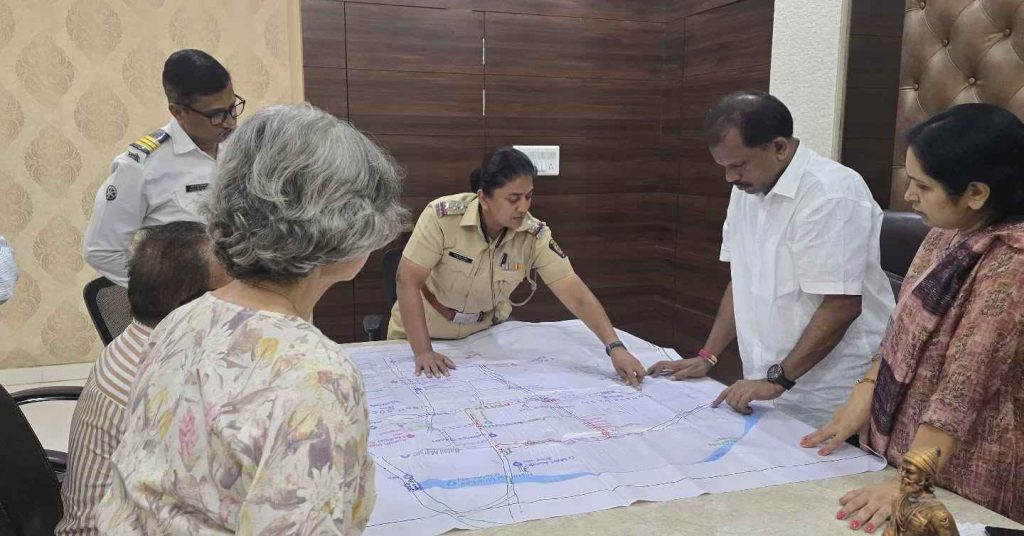
Aundh, 23rd July 2025: In a bid to tackle worsening traffic congestion in Aundh, Pune Police have announced a set of targeted interventions focused on easing bottlenecks caused by commercial hubs and unregulated parking. If successful, the initiative—dubbed the “Aundh Pattern”—could become a model for other congested localities across the city, Additional Commissioner of Police Manoj Patil said on Tuesday.
Speaking at a community meeting held at the Swargiya Gopinath Munde Sabhagruha, Patil outlined proposed changes that include shifting the entry and exit points of major shopping malls like Westend and Reliance, removing roadside encroachments, and installing a new traffic signal at Medipoint Hospital Chowk. These steps aim to streamline traffic movement along Mahadji Shinde Road, New DP Road, and Nagras Road.
“We are conducting a feasibility study to understand how these structural changes can improve flow,” Patil said. “Improperly located entry and exit points of large commercial establishments often choke arterial roads. If required, exits will be shifted away from main roads.”
Representatives from the Pune Municipal Corporation (PMC), local schools, residents’ associations, and commercial establishments were also present at the meeting. Residents have long complained about the severe congestion, especially during weekends, when traffic often comes to a standstill due to increased footfall at the malls.
A resident from Wireless Colony shared their frustration: “Gridlock is a daily affair, particularly on weekends. The mall exits open directly onto Mahadji Shinde Road, causing complete standstills. Even ambulances struggle to get through. To make matters worse, auto-rickshaws and taxis stop wherever they like, narrowing the road further.”
The lack of traffic signals, encroachments by hawkers, and illegal parking were flagged as additional pain points by several attendees. “Except for Parihar Chowk, no other junction has signals. Roads between Ambedkar Chowk and Medipoint Chowk are overrun with hawkers. Multiple T-junctions remain unmanaged, especially during peak hours,” another resident said.
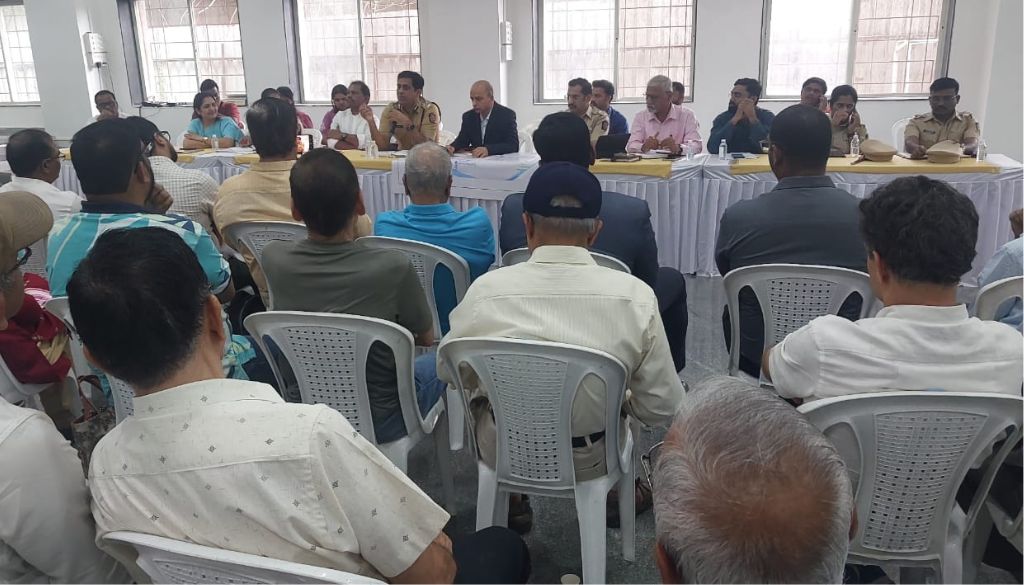
Local political activist Madhukar Musale, who facilitated the meeting, emphasized the need for permanent solutions. “There is a mismatch between road widths in the PMC’s development plan and the actual conditions. Some roads need immediate widening, and illegal vendors must be relocated. Also, we should explore P1/P2 parking models in suitable areas,” he said.
To address ongoing congestion around high-footfall establishments, Patil proposed a new partnership model: “Large businesses that benefit from public infrastructure should also take responsibility. We’re asking them to provide traffic wardens who will be trained and issued identity badges by the police. This is not aimed at small shopkeepers but larger venues drawing thousands of visitors daily.”
The initiative may also extend to wedding halls and event venues. “If these facilities are contributing to congestion, they must also help in managing it. They profit from the city’s infrastructure and should give back by assisting traffic police,” Patil stated.
On concerns regarding school bus parking outside institutions, Patil clarified that while safety is paramount, schools with available space should consider allowing buses to be parked inside the premises where feasible. “Blanket rules aren’t practical. But where internal space exists, schools should cooperate,” he added.
Patil concluded by affirming that similar studies and consultations would be held across Pune to assess the role of large commercial centers in causing congestion, with a view to adopting the Aundh model citywide if proven effective.