Rare Egyptian Vulture Returns to Junnar Grasslands After Decades, Sparking Hope Among Conservationists
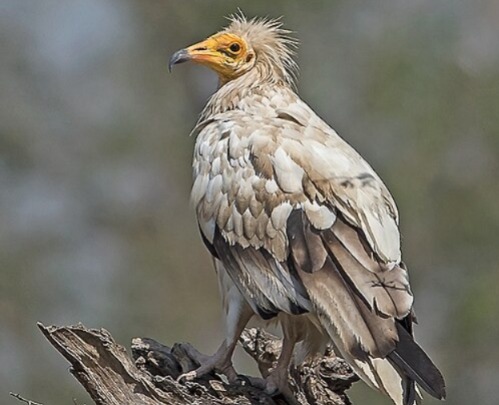
Junnar, 10th November 2025: In a remarkable development for Maharashtra’s struggling vulture population, a rare Egyptian Vulture (Neophron percnopterus) was recorded in the grasslands of Junnar on Sunday—a region where sightings have been virtually absent for nearly three decades. The discovery has thrilled birdwatchers and wildlife researchers, who view it as a promising sign for the critically endangered species.
Nature Team Spots Sub-Adult Vulture on Ane Plateau:
The sighting occurred during a biodiversity survey on the Ane Plateau, a vast grassland ecosystem in eastern Junnar. The bird was identified by a group of nature enthusiasts: Yash Maskare, Aniket Dukhre, Kiran Mhaskar, Alpesh Dighe, Subhash Kuchik, and Prakash Vanave.
Maskare, who documented the vulture, described the occasion as “an extremely rare and encouraging moment,” noting that the region has not reported this species for decades.
How the Egyptian Vulture Stands Apart
Unlike larger Indian vultures, the Egyptian Vulture carries a distinct appearance:
-Roughly the size of a large kite
-Juveniles display dark-brown plumage
-Adults develop pale, off-white feathers with striking black flight wings
-A bare, yellow head with a slender, slightly hooked yellow beak
The bird observed in Junnar was a sub-adult, evident from its brownish feathers and yellow beak—a transitional stage before it acquires full adult colors.
The eastern Junnar grasslands form one of Maharashtra’s most ecologically rich yet under-protected habitats. They support diverse species including Blackbuck, Chinkara, Sandgrouse, Malabar Lark, Grey Francolin, harriers, raptors, and multiple vulture species.
Vulture populations across Maharashtra remain dangerously low. Out of the nine vulture species found in India, the state now hosts only four or five, with a combined population estimated at just 100–125 birds. Small groups survive in pockets of Gadchiroli, Chandrapur, Nashik, and the Konkan belt.
For the northern Pune district, where such sightings have been missing for 25–30 years, the appearance of an Egyptian Vulture marks a significant conservation milestone.