Radio-Collared Tigress Released Into Wild in Maharashtra’s Chandoli National Park
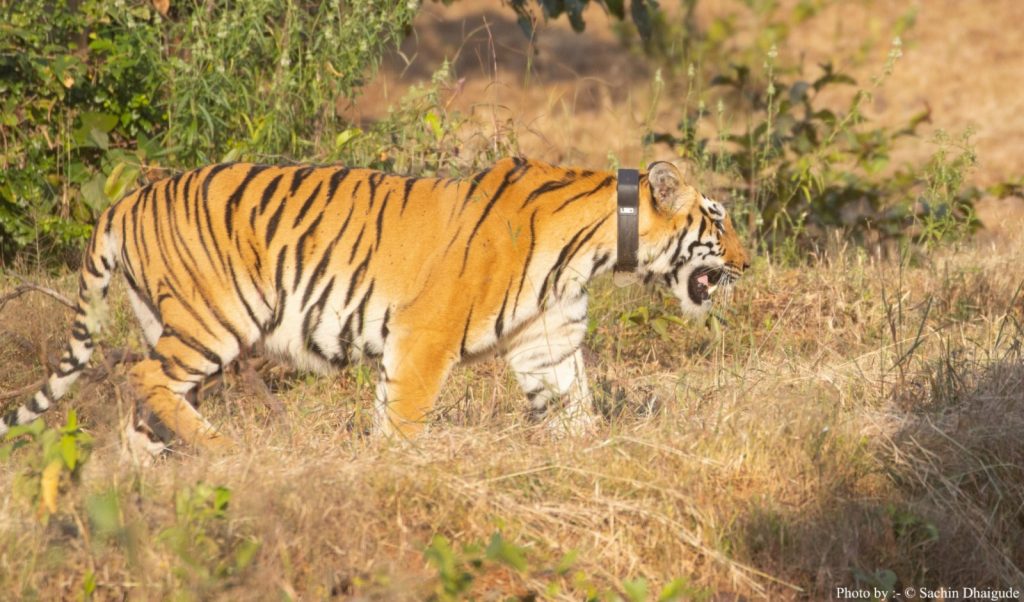
Sangli, 20th November 2025: In a significant boost to the Sahyadri landscape’s tiger conservation efforts, a female tigress (T-20-S-2) was released into the open forests of Chandoli National Park after completing a scientific acclimatisation phase inside a controlled pre-release enclosure at the Sahyadri Tiger Reserve.
Officials said the tigress had arrived earlier this month and was kept under a structured habituation and monitoring programme. During this phase, her movement, behaviour, feeding habits, territorial responses, prey interest and avoidance instincts were observed round-the-clock by experts from the Wildlife Institute of India (WII). After detailed behavioural assessments, veterinarians and wildlife biologists declared her fit for full release.
The enclosure gates were opened at 4.30 pm on November 18, but the tigress exited at her own pace and finally stepped into the wild around 8.15 am on November 20. Officials noted she began marking territory immediately, an indicator of healthy instinctive behaviour.
Round-the-Clock Monitoring Begins
The tigress has been fitted with a radio collar and is now under continuous satellite and VHF-based tracking. Multiple monitoring teams from Sahyadri Tiger Reserve, Chandoli National Park and WII have been deployed across strategic forest points, patrol routes and water bodies.
Key components of the protocol include real-time satellite tracking, patrol-based triangulation, behavioural documentation such as movement and kill patterns, conflict-avoidance measures around villages, and readiness for veterinary response if required.
‘Important Milestone,’ Say Officials
Sahyadri Tiger Reserve Field Director Tushar Chavan, IFS, said the tigress displayed “excellent adaptive behaviour” during her stay in the enclosure. “She is perfectly fit, healthy and ready to thrive in the wilderness of Chandoli National Park. Our teams, supported by WII scientists, are fully prepared for responsible post-release monitoring. This marks an important milestone in the Sahyadri tiger recovery programme,” he said.
Chief Wildlife Warden of Maharashtra, M S Reddy, IFS, said the release reflects the state’s “scientific and long-term approach” to wildlife conservation. “The tigress has acclimatised well and demonstrated satisfactory wild behavioural traits. With dedicated teams in place for continuous monitoring, this effort strengthens our aim of rebuilding a viable tiger population in the Sahyadri landscape,” he noted.
The Maharashtra Forest Department, Sahyadri Tiger Reserve, Chandoli National Park and the Wildlife Institute of India said they remain committed to ensuring safe and scientifically guided conservation practices that protect biodiversity for future generations.