Gera’s Isle Royale: Bombay HC Upholds Single Housing Society for Composite Projects Involving Both MOFA and RERA Regimes in Pune
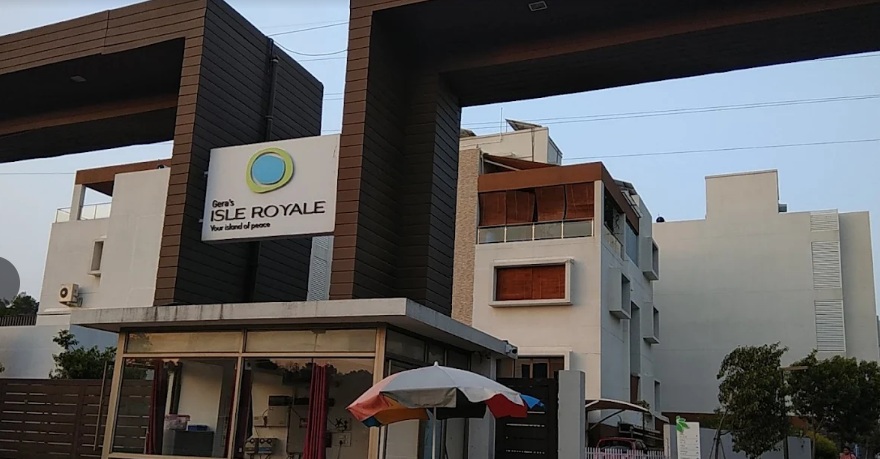
Bavdhan, 10th April 2026: In a significant ruling for the real estate sector and homebuyers, the Bombay High Court has held that residents of a composite real estate development can form a single, unified co-operative housing society, even if different phases or towers within the layout are governed by distinct statutory regimes like MOFA and RERA.
Pronouncing the judgment on April 1, 2026, Justice Amit Borkar dismissed a writ petition filed by Pune-based Gera Developers Private Limited, effectively upholding the registration of a single society formed by the residents of the ‘Gera’s Isle Royale’ project in Bavdhan Khurd, Pune.
The dispute centered on the developer’s contention that a sprawling layout comprising different buildings—some developed under the Maharashtra Ownership Flats Act (MOFA) and newer towers registered under the Real Estate (Regulation and Development) Act (RERA)—mandated the formation of separate housing societies for each building or phase, followed by an overarching ‘Apex Body’ or federation.
Gera Developers challenged the registration of respondent ‘Gera’s Isle Royale CHS Limited’, arguing that 109 out of 155 unit holders could not unilaterally bypass the promoter to form a single society. The developer claimed it had expressed a “willingness” to form phase-wise societies by sending emails and preparing documents.
Justice Borkar firmly rejected the developer’s stance, emphasizing the statutory duties cast upon promoters. The court observed that merely expressing readiness or preparing paperwork does not constitute compliance with the law.
“The law expects the promoter to move the process of registration in an effective manner,” the court noted. “If such incomplete acts are treated as compliance, then the purpose of fixing a time limit would fail. The promoter could then indefinitely delay the process.” The court ruled that because the developer failed to formally initiate the registration process within the prescribed statutory timeframe, the right to form the legal entity rightfully shifted to the purchasers.
Addressing the developer’s argument that RERA defines each independently developed tower as a “separate project” requiring a separate society, the High Court took a pragmatic view of integrated developments. The judge noted that the definition of a “project” under RERA is broad and includes common areas, development works, and amenities.
The court observed that ‘Gera’s Isle Royale’ was planned as a composite layout where residents across different towers and bungalows share common infrastructure, including the main entrance, clubhouse, swimming pool, and gardens.
“In such circumstances, the formation of one common society will be more effective,” Justice Borkar observed. “It avoids duplication of management. It allows better coordination in maintaining common areas. It reduces confusion about responsibility.”
The court concluded that while the law permits separate societies for distinct buildings, it does not mechanically mandate the fragmentation of management in a clearly integrated project, especially when a clear majority (109 out of 155 unit holders) has democratically opted for a unified body.
The High Court upheld the earlier order passed by the State Minister of Co-operation and discharged the rule, bringing a definitive end to the developer’s attempt to dissolve the residents’ unified housing society.
Official Statement from GERA Developments Pvt. Ltd.
“As advised by our legal counsel, we believe the law does not permit formation of a single society across multiple phases when one phase was developed in the MOFA regime and the other under RERA. Under RERA even a single building in a layout can be a project. RERA states that a society should be formed for the project.
We believe the order contains errors on the face of the record and hence have filed a review petition before the same judge rather than file an appeal in the Supreme Court.
If the law permits a single society, we have no objections to the same if the owners prefer to have one society.”