Three Generations, One Tradition: How a Pune Muslim Family Has Been Serving Warkaris Since 1932
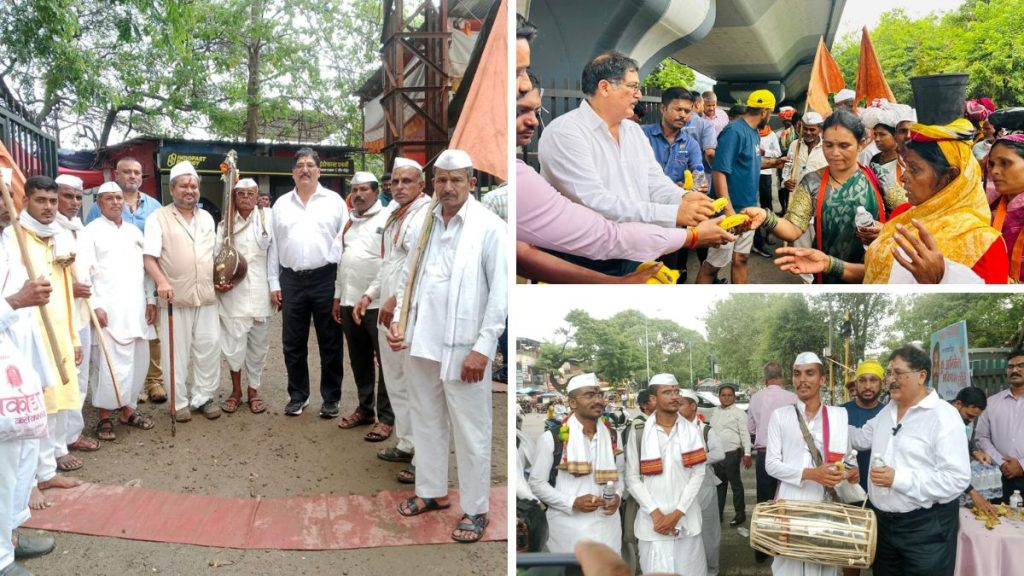
Yerawada, 9th July 2026: Every year, as lakhs of Warkaris walk into Pune chanting the names of Sant Dnyaneshwar Maharaj and Sant Tukaram Maharaj, countless citizens line the routes to welcome them with food, water and heartfelt hospitality. Amid these acts of devotion, one family’s quiet tradition has continued uninterrupted for nearly a century, becoming a powerful symbol of communal harmony and selfless service.
At Golf Chowk in Yerawada, entrepreneur Ikram Khan, along with his family, has once again organised arrangements for Warkaris participating in the Ashadhi Wari. Volunteers served meals, drinking water, refreshments and other essential facilities to thousands of pilgrims passing through the area.
What makes the initiative remarkable is not just the scale of the service, but its legacy.
The Khan family’s association with the Wari dates back to 1932, when Ikram Khan’s grandfather, Mosa Khan, began serving Warkaris during their annual pilgrimage to Pandharpur. His father, Isa Khan, carried the tradition forward, extending the family’s spirit of service beyond the Wari by actively participating in the annual Ram Navami celebrations at the Ram Temple in Ramwadi, reflecting a long-standing commitment to communal harmony.
Today, the third generation has embraced the same values. Ikram Khan, along with his son Ahad Ikram Khan, continues the family’s decades-old tradition of serving pilgrims and supporting various social initiatives, ensuring that the legacy remains alive.
“For us, serving Warkaris is not just a tradition—it is a responsibility handed down by our elders,” said Ikram Khan. “My grandfather taught us that humanity is above all religions. When lakhs of devotees pass through Pune, offering them food, water and care is our way of serving society. This tradition has united our family for generations, and we are proud that the third generation is carrying it forward.”
For the Khan family, service transcends religious identity.
Their work reflects the belief that humanity comes before all divisions of religion, caste and creed. At a time when society often grapples with polarisation, their efforts stand as a reminder that compassion and mutual respect continue to unite communities.
The initiative has drawn appreciation from local residents, Warkaris and members of various social organisations, many of whom described it as an inspiring example of India’s shared cultural heritage.
As the chants of “Dnyanoba-Tukaram” echoed through Pune’s streets, the Khan family’s service demonstrated another enduring message of the Wari—that faith may follow different paths, but kindness and service remain universal.
For nearly 94 years, that message has been quietly lived by one family, one meal, and one act of service at a time.