Beyond the Floodwaters: Assam Floods of 2026 and India’s Changing Climate Challenge
By Gargi Kashyap
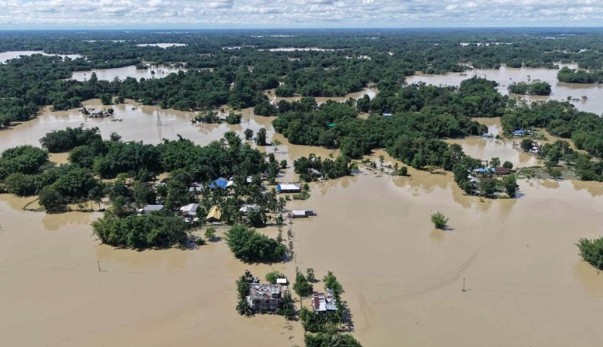
Guwahati, 8th August 2026: The floodwaters sweeping across Assam are more than a seasonal disaster—they are a warning. The 2026 floods have once again displaced thousands, disrupted livelihoods, and tested the state’s disaster response. Yet beneath the immediate humanitarian crisis lies a deeper story of changing climate patterns, environmental degradation, and the urgent need for sustainable flood management.
Assam is witnessing one of its worst floods in decades. Lakhs of people have been displaced, homes lie submerged, livelihoods have been washed away, and countless families are struggling to rebuild their lives.
The districts of Upper Assam, including Sivasagar, Charaideo, Nazira, Jorhat, and Golaghat, have been among the worst affected. Districts such as Sivasagar, Charaideo, and Jorhat, which were not traditionally associated with floods of such magnitude, witnessed widespread destruction as rivers overflowed, embankments came under tremendous pressure, and floodwaters spread across villages, towns, and agricultural land. Flood warnings were also issued for parts of Middle and Lower Assam. According to the latest official figures, the floods have claimed 97 lives, while around 1.68 lakh people remain affected across 15 districts. Although floodwaters have started receding in some areas, nearly 45,000 people continue to live in relief camps, highlighting that the humanitarian crisis is far from over. The floods have also claimed the lives of livestock and wildlife, leaving a significant ecological impact alongside the human tragedy.
The real causes of this flood are far more complex than a normal seasonal phenomenon. What is happening in Assam right now demands a closer look at the environmental and geographical factors that have intensified the crisis.
The intense rainfall that triggered the floods was not limited to Assam. Nagaland and Arunachal Pradesh received rainfall far above normal levels, and geographically, Assam is a vast floodplain, whereas Nagaland is characterised by steep, hilly terrain. During periods of heavy rainfall, water rapidly flows down from these hills into the plains of Assam. Consequently, districts along the Assam–Nagaland border experienced severe flooding, as runoff from the hills exacerbated conditions in downstream areas. Beyond the floodwaters, it is important to examine the factors that have made such disasters increasingly destructive, life-threatening, and environmentally damaging.
The first major factor is deforestation. Large-scale tree loss across the region has reduced the land’s ability to absorb rainwater, increasing surface runoff and accelerating soil erosion. Environmental degradation has been further worsened by illegal mining and illegal sand extraction, particularly in and around the Dikhow River.
Mining activities have also altered the natural course of rivers. Excessive extraction and changes in river channels have redirected water flow towards densely populated areas of Assam, increasing the severity of flooding.
Assam has an extensive network of embankments designed to control flooding. However, many of these structures were built decades ago and have deteriorated over time. Repeated monsoons, erosion, and inadequate maintenance have left several stretches vulnerable to breaches during periods of extreme flooding.
Another major environmental concern is wetland encroachment. Rapid urbanisation, along with the construction of residential buildings, hotels, and commercial establishments, has destroyed many wetlands that once acted as natural flood buffers. As these wetlands are destroyed and disappear, their capacity to absorb excess rainwater is significantly reduced, increasing the intensity of floods. Riverbeds have also become increasingly silted due to erosion and sediment deposition, a process aggravated by deforestation, quarrying, and mining in upstream areas. Shallower rivers have a reduced capacity to carry floodwaters, making them more likely to overflow during periods of heavy rainfall.
The rainfall itself was a natural event. However, the scale of the disaster reflects years of environmental degradation, inadequate infrastructure, poor maintenance of flood-control systems, and weak land-use planning.
The floods also exposed the vulnerability of Upper Assam. Historically, many parts of the region had not experienced flooding of this magnitude. As a result, preparedness for such an extreme event was limited, contributing to greater devastation and the loss of human lives, livestock, wildlife, homes, and livelihoods. The real challenge lies in understanding how natural events and human activities interact to transform heavy rainfall into a devastating humanitarian and environmental disaster.
As the Assam Government stated on 22 July 2026, “The ongoing wave of floods in some eastern districts of Assam has been the worst in 60 years.” The statement underlines the unprecedented nature of the disaster and the need for long-term solutions rather than temporary relief measures.
Many actors, business leaders, organisations, and digital creators have come forward to support relief efforts in Assam. However, while donations and relief campaigns provide immediate assistance, rebuilding homes, livelihoods, agricultural land, and damaged ecosystems will require sustained investment and long-term planning long after the floodwaters recede.
Assam is not the only state facing the consequences of extreme monsoon events. In recent weeks, Gujarat and Himachal Pradesh have also experienced severe flooding, flash floods, and landslides following intense rainfall, forcing large-scale evacuations and disrupting normal life. Although the causes and geographical conditions differ, these disasters underscore a common reality: extreme weather events are becoming more frequent and intense. This highlights the urgent need for climate-resilient infrastructure, sustainable land-use planning, stronger environmental governance, and improved disaster preparedness across India.
The Assam floods of 2026 also highlight the importance of understanding floods from a river-basin perspective rather than as isolated state-level disasters. Heavy rainfall in upstream states can have devastating downstream consequences, as witnessed during the 2026 floods. Scientific investigations should objectively determine the relative contribution of natural and human-induced factors so that public policy is based on evidence, transparency, and accountability rather than assumptions or political narratives. Greater emphasis should be placed on restoring and strengthening river embankments, improving watershed management, enhancing flood forecasting systems, regulating environmentally harmful activities, and investing in long-term climate adaptation. Under changing climatic conditions, environmental degradation will continue to intensify future flood disasters unless immediate preventive action is taken. Protecting forests, restoring wetlands, regulating mining activities, and strengthening flood-management infrastructure must become long-term priorities rather than short-term responses.
Floods cannot be eliminated, but their destructive impact can be significantly reduced through scientific planning, responsible management of natural resources, strict enforcement of environmental laws, and long-term ecological restoration.
The lesson emerging from the Assam floods of 2026 is both simple and profound: when ecological balance is sacrificed for short-term economic gain, society ultimately pays a far greater price through recurring disasters, economic losses, environmental damage, and human suffering.