Gen Manoj Naravane Calls China India’s ‘Main Competitor’, Highlights ‘Hindu Nations’ India-Nepal Ties in Pune
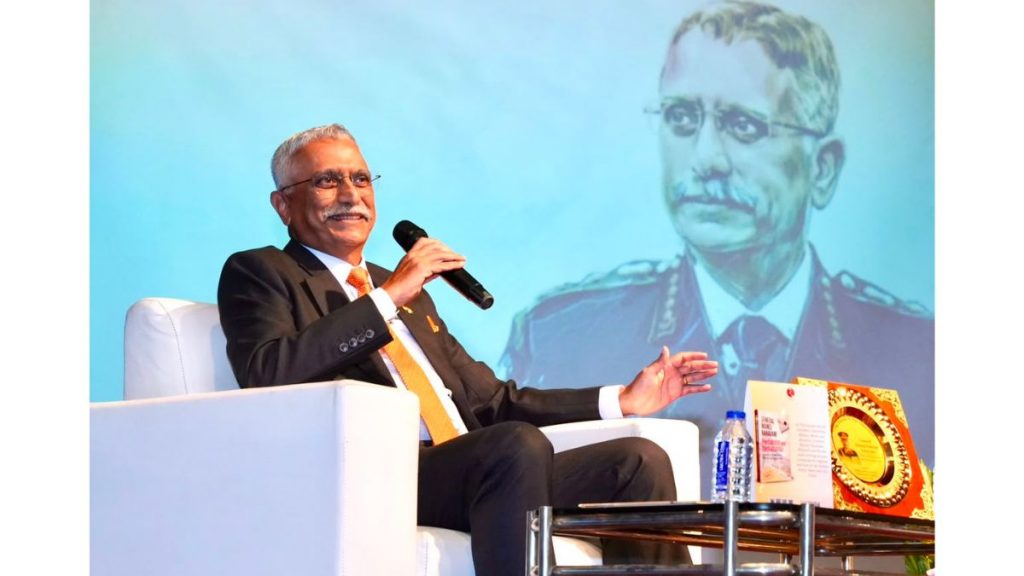
Pune, 22nd August 2026: Former Chief of Army Staff General Manoj Mukund Naravane has described China as India’s “main competitor” in the coming years, saying Beijing is likely to challenge New Delhi across political, economic, trade and military spheres. He also highlighted India’s ties with Nepal, referring to the two countries as the “only two Hindu nations” while discussing the significance of Army Chief General Dhiraj Seth’s first foreign visit to Nepal.
Naravane made the remarks on Thursday while speaking at the Pune launch of his latest book, The Curious & The Classified: Unearthing Military Myths & Mysteries, at a packed auditorium at Modern College, Shivajinagar on Thursday (August 20).
The former Army chief spoke at length about India’s security challenges, its relationship with China and Pakistan, and the strategic importance of stability in neighbouring countries.
‘China is our competitor, not enemy’
Speaking about China, Naravane deliberately used the word “competitor” instead of “enemy” while describing India’s long-term relationship with Beijing.
“We have fought major wars with Pakistan and China, and our border disputes with both countries remain unresolved. Therefore, both will remain on our radar as threats and challenges,” he said.
However, Naravane said the nature of the challenges posed by the two countries is different. Pakistan continues to pose an immediate security challenge largely because of the threat of terrorism, while China is likely to emerge as India’s principal competitor over the longer term.
“We have fought major wars with Pakistan and terrorism continues because of its support, so our focus remains on the western border. But I think we are very clear that in the coming years and in the long term, China is going to be our main competitor,” Naravane said.
He said the competition with China would extend beyond the military domain to politics, the economy and trade.
‘India and Nepal are the only two Hindu nations’
Naravane also highlighted the significance of Army Chief General Dhiraj Seth choosing Nepal for his first foreign visit after taking charge.
Pointing out that the Army Chief’s first overseas visit was to Nepal rather than the United States or another country, Naravane underlined the close relationship between the two neighbours.
“India and Nepal are the only two Hindu nations,” Naravane said.
He made the remark while discussing India’s strategic ties with its neighbourhood and the importance of Nepal in India’s broader security environment.
Naravane said India’s strategic interests are closely linked to stability in countries such as Nepal, Bhutan, Bangladesh and Myanmar.
“You cannot choose your neighbours. You have to make the best of what you have,” he said, drawing a parallel between geopolitics and real life.
India should use diplomacy with China
Naravane stressed that India should seek to resolve its differences with China through dialogue and diplomatic channels rather than resorting to force.
“Use of force should always be the last resort,” he said, while stressing that India must simultaneously maintain credible military preparedness to deter any potential misadventure.
‘If you want peace, prepare for war’
Naravane said India should work towards helping neighbouring countries maintain stability while ensuring that its armed forces retain adequate deterrence capabilities.
“If you want peace, prepare for war,” he said.
He warned that instability in neighbouring countries could quickly spill over into India, creating challenges ranging from refugee movements to smuggling, drug trafficking and the illegal supply of weapons.
Citing Myanmar, Naravane referred to the movement of refugees into India as an example of how instability in a neighbouring country can have direct consequences for India.
“If your neighbour is on fire, you should not be happy about it,” he said, stressing the need for India to support stability in neighbouring countries while maintaining its own military preparedness.
Beyond military myths and mysteries
The Pune launch of The Curious & The Classified also focused on the lesser-known and often intriguing aspects of military life.
The book explores military folklore, legends, traditions and stories that rarely feature in official military narratives. It examines the intersection of fact, folklore, memory and military culture.
Naravane also spoke about the psychological cost of war, an aspect he said often receives less attention than discussions about victory, defeat, weapons, strategy, territory and military expenditure.
He highlighted the long-term psychological impact of conflict, which can continue even after the battlefield and immediate crisis have disappeared from public attention.
The event also featured a discussion on India’s diversity and national unity. Speaking about “unity in diversity”, Naravane stressed that unity cannot simply remain a phrase repeated during national occasions. He said people need to be brought together rather than merely being asked to celebrate diversity from a distance.
Prafful P. Sarda, host of the event, said the launch was intended to open a wider conversation about military history, folklore and stories that often remain outside the public narrative.
The event brought together themes of military history, contemporary security challenges and wider questions facing Indian society, with Naravane using his new book as a starting point to discuss both the visible and less visible dimensions of military life and national security.