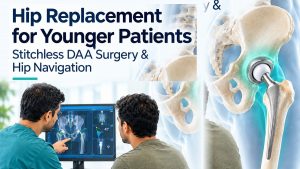
Stitch-less Robotic Joint Replacement: Making Recovery Simpler for Patients

Pune, 11 September 2026: For people living with severe knee or hip pain, joint replacement surgery can bring back something as simple yet important as walking comfortably, climbing stairs or enjoying time with family. But while patients are often prepared for the benefits of joint replacement, many continue to worry about the surgery, stitches, wound care and the recovery period.
Stitch-less robotic-assisted joint replacement is now emerging as a modern option that addresses some of these concerns while combining advanced robotic technology with a more patient-friendly surgical approach.
Robotic technology enables the surgeon to create a highly personalized surgical plan based on the patient’s individual anatomy. During surgery, the robotic system assists the surgeon with precise bone preparation, implant positioning and alignment. This precision can help preserve healthy tissues and support a smoother rehabilitation process.
The Stitch-less technique further simplifies the recovery experience. Instead of conventional external stitches or staples, specialized wound-closure techniques are used to close the incision. This means patients do not have to return specifically for stitch or staple removal—a concern that can cause anxiety for many patients.
Key benefits of Stitch-less Robotic Joint Replacement
- Greater surgical precision: Robotic assistance helps the surgeon plan and execute the procedure according to the patient’s anatomy.
- Minimally invasive approach: Smaller incisions and careful tissue handling can support reduced surgical trauma.
- No conventional stitch removal: Patients can avoid the discomfort and anxiety associated with removal of external stitches or staples.
- Simpler wound care: The closed incision can make postoperative wound management more convenient.
- Earlier bathing: With appropriate wound closure and the surgeon’s advice, patients may be able to bathe soon after discharge without worrying about protecting conventional stitches.
- Faster rehabilitation: Reduced tissue disruption, combined with structured physiotherapy, may help patients begin mobilization and rehabilitation earlier.
- Better patient experience: The combination of robotic precision and simplified wound care can make the overall surgical journey more comfortable and less stressful.
“Today, patients want more than just a successful joint replacement. They want a smoother journey from surgery to getting back to their normal life. Robotic technology helps us achieve precision, while Stitch-less closure can make wound care and recovery simpler for the patient. It is about making modern joint replacement not only precise, but also more patient-friendly,” says Dr. Neeraj Adkar, Robotic Joint Replacement and Sports Injury Surgeon.
While stitch-less robotic joint replacement offers several advantages, the suitability of the technique depends on the individual patient, their anatomy and the surgeon’s clinical assessment.