
Pune FDA Suspends Puranchand and Sons’ Food Licence After Finding Expired Stock, Rat Droppings and Hygiene Violations
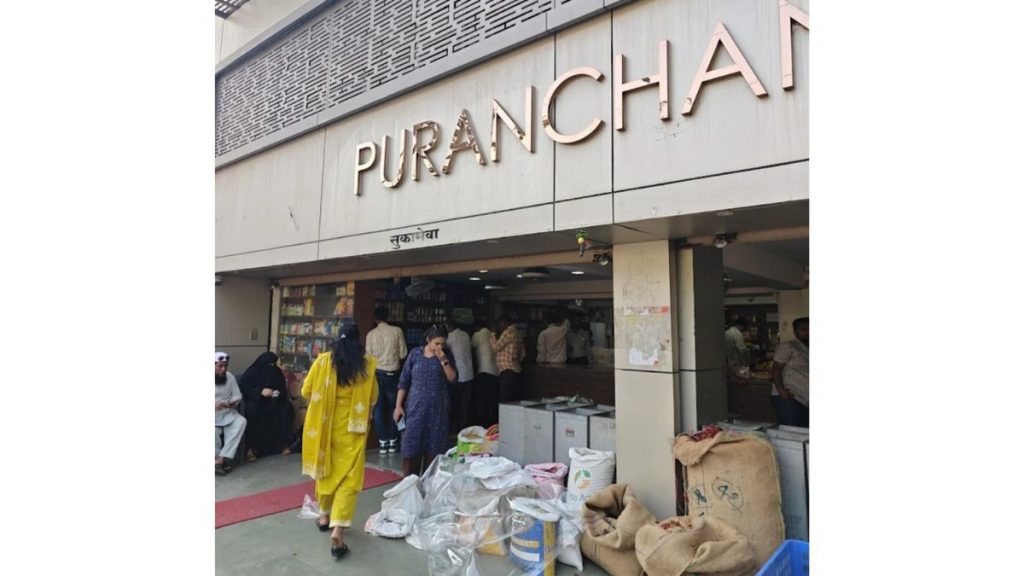
Market Yard, 14th September 2026: The Maharashtra Food and Drug Administration (FDA) has suspended the food licence of Puranchand and Sons Trading LLP, a wholesaler and food-repacking business operating from Pune’s Market Yard, after an inspection allegedly found expired food products, rat droppings, inadequate pest control and multiple hygiene and storage violations.
The suspension order, issued on September 8, prohibits the firm from carrying out any food business under the affected licence until the deficiencies are rectified and further orders are issued. The establishment is located at Plots 97, 98 and 99 and Gala No. 100 in Market Yard, Gultekadi.
According to the order issued by the FDA’s Pune Division, Food Safety Officer S. S. Hake inspected the premises on September 7, 2026. The inspection report recorded numerous instances of non-compliance with the Food Safety and Standards Act, 2006, and the regulations governing the licensing and registration of food businesses.
The FDA suspended FSSAI Licence No. 11523034000064, which was valid until August 13, 2029, pending rectification of the deficiencies. The licence covered retail, wholesale and distribution activities, along with general manufacturing.
The firm was allegedly engaged in wholesaling and repackaging food products that were generally supplied to hotels, the inspection report stated.
460 Kg of Expired Food Found
FDA officials reported finding at least 460 kg of expired food products, with a combined recorded value of ₹27,600, stored on the premises.
The expired stock listed in the inspection report included:
Samrat Maize Flour: Four bags of 50 kg each, totalling 200 kg and valued at ₹6,400. The product was manufactured on May 18, 2026, and had a declared shelf life of 90 days.
Mohini Wheat Suji: Five bags of 50 kg each, totalling 250 kg and valued at ₹18,000. The product was packed on August 1, 2026, and had a use-by date of September 1.
Kuttu Ka Aata: Twenty packets of 500 grams each, totalling 10 kg and valued at ₹3,200. The product was packed on March 9, 2026, and had a use-by date of July 8.
Officials alleged that the expired products were neither separately identified nor kept in a designated area. Instead, they were stored alongside other food stock.
The inspection report also mentioned bags containing food materials with self-pasted date stickers. The business operator reportedly told inspectors that the stickers showed the dates on which the products had been received. However, officials said no records or documentary evidence were produced to verify those dates.
Rat Droppings and Suspected Rodent Infestation
One of the most serious observations concerned alleged pest activity at the establishment.
FDA officials reported finding rat droppings on storage racks and on the floor, indicating possible rodent infestation and inadequate pest-control and housekeeping measures.
The inspection team also found that a proper pest-control programme had not been maintained. Records showing pest-control treatments and details of the chemicals or fumigants used were not available for verification, according to the order.
The report further noted that an adequate number of mapped rodent traps was not found and that the premises showed signs of pest activity.
Officials also observed cobwebs at several locations, including around electrical fittings and wiring in the packaging section. Windows opening directly to the outside allegedly lacked protective screens or mesh, creating potential entry points for dust, insects and other contaminants.
Detergent Bags Stored Alongside Food
Bags of Nirma and Wheel washing powder were allegedly stored directly alongside food products without adequate separation.
The FDA said storing detergents and other non-food products together with food could create a potential contamination risk. Scrapped materials and other non-food items were also allegedly kept in food-storage areas without proper segregation.
Waste, dust and dirt had accumulated beneath storage racks, while the premises’ walls, floors and ceilings were found to be unclean and poorly maintained, the report stated.
Inspectors also recorded spitting marks on walls, dirt on floors and flaking or peeling paint on parts of the ceiling.
At some locations, the ceiling was allegedly wet or damp and showed mould-like growth, indicating inadequate moisture control and maintenance.
Food Stored on Floor, Cold Room Not Properly Maintained
The inspection found that several food products were stored directly on the floor instead of being placed on pallets, racks or other raised storage facilities.
Bags of food were reportedly dumped in an unorganised manner, and the contents of some bags had spilled onto the floor. Similar conditions were allegedly observed in a storage section created on the mezzanine level.
Some racks were found to be corroded or broken, while the packaging section had dust and dirt on empty packaging materials.
The outer surfaces of salt bags were allegedly covered with a greasy, blackish and sticky substance, which the FDA attributed to inadequate cleanliness and housekeeping.
A cold room had been provided for temperature-sensitive food products, but inspectors said the required temperature was not being maintained. Food products were also allegedly piled on top of one another in an unorganised manner inside the cold room.
The firm was found only partially compliant with requirements for maintaining frozen products at minus 18 degrees Celsius or below and chilled products at 5 degrees Celsius or below, along with maintaining temperature-monitoring records.
Toilet Located Close to Food-Storage Area
The inspection report stated that a washroom or toilet was located inside the establishment and close to the food-storage area.
The washroom’s floor, walls and surrounding area were allegedly unhygienic and poorly maintained. The FDA consequently recorded non-compliance with the requirement that premises used to manufacture, store or sell food be effectively separated from toilets, drains and areas containing waste matter.
Questions Raised Over FSSAI Licences
At the time of inspection, the firm was found holding two valid FSSAI licences for the same premises.
One licence—No. 11521035000186, valid until March 9, 2031—covered retail, wholesale and distribution operations. The second—No. 11523034000064, valid until August 13, 2029—covered retail, wholesale, distribution and general manufacturing.
However, inspectors said there was no clear physical or operational separation of the areas governed by the two licences.
Purchases were reportedly made under the first licence, while sales, packaging and repackaging activities were conducted under the second. The inspection also found that an expired FSSAI licence number—11518035000765—was mentioned on certain purchase bills.
Officials additionally found food products stored for sale in Gala No. 101, which was not covered by the existing licences. The firm produced an application seeking modification of its licence to include the additional premises, but an approved copy of the modification was not presented during the inspection.
Gaps in Supplier, Testing and Repacking Records
The FDA reported extensive shortcomings in the business’s documentation and traceability systems.
Records identifying the vendors and suppliers from whom food products were purchased were allegedly not maintained or produced for verification. Certificates of analysis and test reports for raw materials were also unavailable in several cases.
Although the firm was engaged in repacking different food products, inspectors said it did not produce proper records covering:
Products received for repacking
Quantities repacked
Batch and lot numbers
Subsequent sales and distribution
As a result, the FDA said it could not establish complete traceability from receipt of the products to their repacking and eventual sale.
Testing reports were produced for only some food materials. The required records for the remaining products were not available, the report said. Some products, including quinoa, were allegedly received and stored in unlabelled or unidentified packaging.
The firm was also found non-compliant with requirements to maintain separate daily records of production, raw-material utilisation and sales.
Cassia Allegedly Sold as ‘Dalchini’
The inspection raised a separate issue concerning a consignment described as “Split Cassia.”
According to the report, Split Cassia was mentioned on a purchase invoice issued by HEM Spices of APMC Market-I, Vashi, Navi Mumbai, on September 2, 2026. The same description appeared on the product label.
However, inspectors said they did not find a corresponding sales invoice for Split Cassia and alleged that the product was being sold under the name “Dalchini.”
No Documented Food-Safety Management Plan
The firm was unable to produce a documented Food Safety Management System plan, according to the FDA.
Officials also said no records were available to show that regular internal or external audits had been conducted. Audit schedules, findings and records of corrective action were not produced for verification.
The establishment was also found non-compliant with the requirement to employ at least one appropriately qualified technical person to supervise production.
The FDA further recorded non-compliance concerning periodic testing for relevant chemical and microbiological contaminants through an in-house laboratory or an accredited or notified laboratory.
A documented cleaning schedule for the premises, pallets and other storage equipment was also not available. Inspectors said records showing that cleaning was regularly undertaken could not be produced.
Licence Suspended Pending Compliance
The order states that the violations were serious and could adversely affect public health. The FDA consequently suspended the firm’s licence until the deficiencies listed in the inspection report are rectified and further directions are issued.
During the suspension period, the firm has been directed not to conduct any food business from the premises under the suspended licence. Any violation of this direction could invite legal action under the applicable food-safety laws.
The company has also been asked to submit a written compliance report, supported by evidence, after correcting the deficiencies. The matter will then be considered by the authorities before any further decision is taken.
The order was signed by N. B. Khose, Assistant Commissioner (Food) and Designated Officer, Pune Division, Maharashtra FDA.
The firm may appeal against the suspension order before the Commissioner of Food Safety at the FDA headquarters in Bandra East, Mumbai, within 15 working days of receiving it.