Pune Division Completes Water Safety Drive Across 1,401 Railway Locations
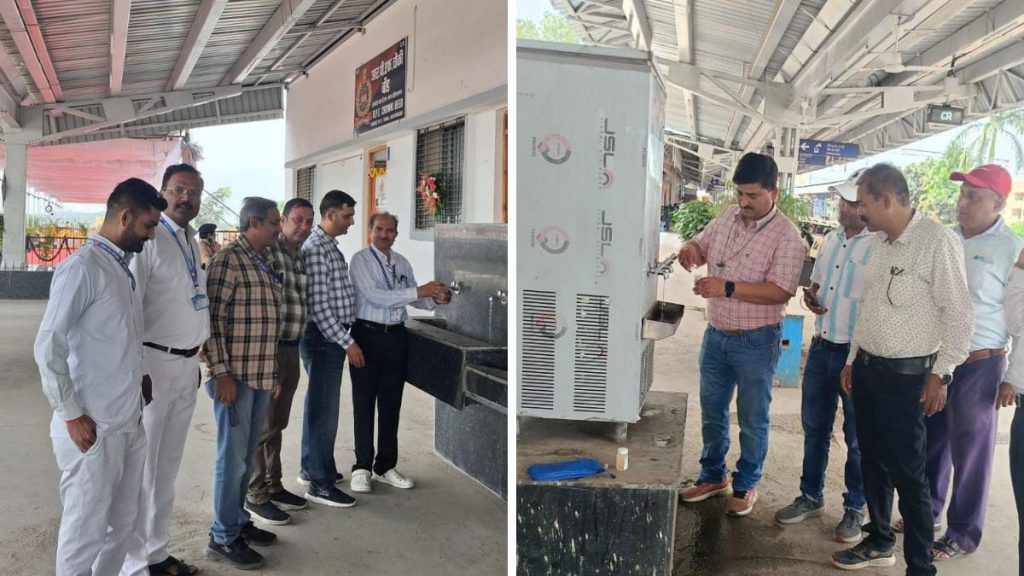
Pune, 22 September 2026: Pune Division of Central Railway has completed a special drive to inspect drinking water installations, test water quality and clean storage tanks across stations, railway colonies and workplaces. The exercise covered 1,401 locations, with 2,132 water samples subjected to physical, chemical and bacteriological testing.
The drive was undertaken between 20 August and 21 September 2026 following directions issued by the Railway Board for intensified monitoring of drinking water facilities across the railway network.
During the testing conducted in August and September, 50 of the 2,132 samples were initially found unfit. Necessary rectification was carried out, following which the affected samples were retested and found fit. After the corrective measures and retesting, no bacterial or E. coli contamination was found in the tested samples.
As part of the exercise, Pune Division inspected drinking water sources, filtration plants, underground and overhead tanks, PVC tanks, booths, taps and dispensing points. Seven pipeline leakages or deficiencies were identified, and all seven were subsequently rectified.
The division also inspected and cleaned 1,382 water tanks located on platforms, station premises, railway colonies and office premises during the special drive. The cleaning work covered all 1,382 tanks identified for the exercise.
The complete water piping system was checked for leakages and deficiencies. Water coolers were also inspected and cleaned by the Electrical Department. Missing taps were provided, leaking taps were replaced and accumulated silt was removed during the maintenance work.
To strengthen water quality monitoring, E. coli testing kits have been provided at all concerned Inspector of Works (IOW) offices.
The Railway Board has also directed the installation of a comprehensive “Tank to Tap” water filtration and monitoring system at approximately 20,000 locations across the railway network, including water coolers. Replacement of old and worn-out water tanks is also being undertaken in phases. The directions include regular water quality testing at source and outlet points, centralized monitoring and accountability, and scheduled cleaning and maintenance of storage tanks.
Pune Division stated that the drinking water installations were inspected across its jurisdiction even though the CAG audit observation on drinking water did not pertain to any station in the division.
“Safe and hygienic drinking water is an essential passenger amenity. The special drive has focused on ensuring that water supplied at stations, railway premises and other passenger-use points is regularly tested, storage tanks are cleaned and any deficiencies in the distribution system are promptly addressed. We will continue to follow the Uniform Drinking Water Quality Monitoring Protocol to maintain the quality and hygiene of drinking water facilities available to passengers,” said PRO Hemant Kumar Behera.