Bank Strike Called Off: Banks to Remain Open as Planned September 28–30 Strike Is Cancelled
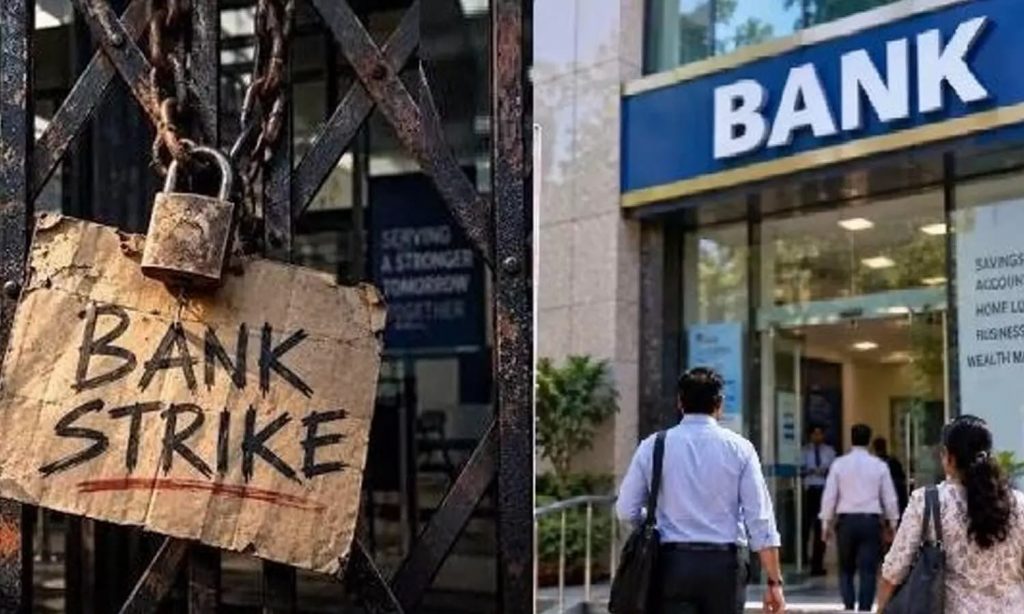
New Delhi, 28th September 2026: The proposed three-day nationwide bank strike scheduled for September 28, 29 and 30 has been called off following late-night talks between the Indian Banks’ Association (IBA) and the United Forum of Bank Unions (UFBU) on Sunday.
The decision was taken after the two sides agreed to form a committee to examine the demand for a five-day working week in banks. The proposed strike was also linked to disputes over the Performance Linked Incentive (PLI) scheme and other pending issues.
With the strike postponed, bank customers are unlikely to face disruptions specifically due to the planned industrial action. However, the demand for five-day banking has not yet been accepted, and a final decision on implementing the system remains pending.
Why was the bank strike planned?
Bank unions have been demanding a five-day working week, with banks operating from Monday to Friday and remaining closed on Saturdays and Sundays.
The unions have also raised concerns over the PLI scheme and other unresolved service-related issues. Seven major bank employee and officers’ organisations were expected to participate in the strike.
These included the All India Bank Employees’ Association (AIBEA), All India Bank Officers’ Confederation (AIBOC), National Confederation of Bank Employees (NCBE), All India Bank Officers’ Association (AIBOA), Bank Employees Federation of India (BEFI), Indian National Bank Employees Federation (INBEF) and Indian National Bank Officers’ Congress (INBOC).
Together, these organisations represent a substantial section of bank employees and officers.
What happened at the IBA-UFBU meeting?
The meeting between the IBA and UFBU took place at around 9.30 pm on September 27. The discussions resulted in an agreement to constitute a committee to examine the demand for additional weekly holidays.
The IBA represents banks and negotiates with employee and officers’ unions on matters such as wages, service conditions and other employment-related issues. The UFBU is a joint platform representing several bank employee and officers’ unions.
According to the UFBU circular referred to in the information provided, the government was not directly involved in the meeting. However, the IBA is expected to take up proposals concerning changes to the PLI scheme with the government.
Has five-day banking been approved?
No. The decision to call off the strike does not mean that five-day banking has been approved.
The two sides have agreed to examine the demand through a committee. Banks will continue to follow the existing working-day arrangements until a formal decision is taken.
Media reports ahead of the proposed strike cited Finance Ministry sources as saying that the government had not committed to implementing a five-day working week during the previous salary revision negotiations. The sources reportedly said the demand had been raised by unions without a mutually agreed decision.
How would the strike have affected bank customers?
A three-day strike could have disrupted several banking services, particularly at physical branches. These include:
- Cash deposits and withdrawals at branches.
- Cheque clearing and processing.
- Demand draft-related services.
- Other branch-based banking transactions.
The extent of any disruption would have depended on employee participation and the availability of alternative banking channels, such as internet banking, mobile banking and ATMs.
With the proposed strike called off, customers will not face disruptions arising specifically from the planned industrial action.
What is the dispute over the PLI scheme?
Apart from five-day banking, the PLI scheme has been another point of contention between bank unions and the authorities.
The scheme links incentives to performance. According to the details provided, a revised incentive framework for senior officers at Scale IV and above has been a source of disagreement. Under the reported framework, eligible officers could receive incentives equivalent to as much as 365 days of basic pay, subject to the applicable performance criteria and rules.
Bank unions have raised objections to aspects of the scheme. The IBA is expected to take up the matter with the government.
Why were banks open on Sunday, September 27?
The proposed strike led to banks being opened for customers on Sunday, September 27, following directions from the Finance Ministry, according to the information provided.
This was reportedly the first time in a decade that banks had been opened for the general public on a Sunday in connection with such arrangements.
The previous instance cited was November 14, 2016, during the demonetisation period, when banks operated on a Sunday to help people exchange or deposit the old ₹500 and ₹1,000 currency notes and withdraw cash.
The September 27 arrangements were made ahead of the now-cancelled strike. The decision to call off the strike came later that night, following the IBA-UFBU discussions.
Editorial note: The report has been edited for clarity, grammar and an inverted-pyramid structure. Before publication, independently verify the UFBU circular, the Finance Ministry’s reported directions, the exact terms of the revised PLI framework and the claim about Sunday banking, as these details are attributed to the supplied material.