How Pune’s Rural Schools Are Opening a Window to the World Through Foreign Languages
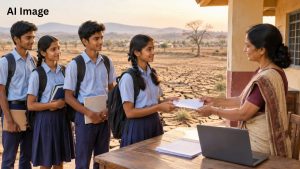
Pune, 30th September 2026: Imagine walking into a Marathi-medium classroom in a village in Pune district. The teacher turns to the blackboard and writes: Guten Tag, Bonjour, Hola, こんにちは! — greetings in German, French, Spanish and Japanese.
Until a few years ago, such a scene might have seemed unusual in a rural Zilla Parishad school. Today, it is becoming a possibility as teachers step beyond familiar linguistic boundaries to introduce their students to the languages and cultures of the wider world.
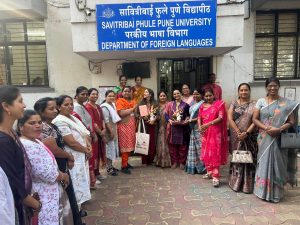
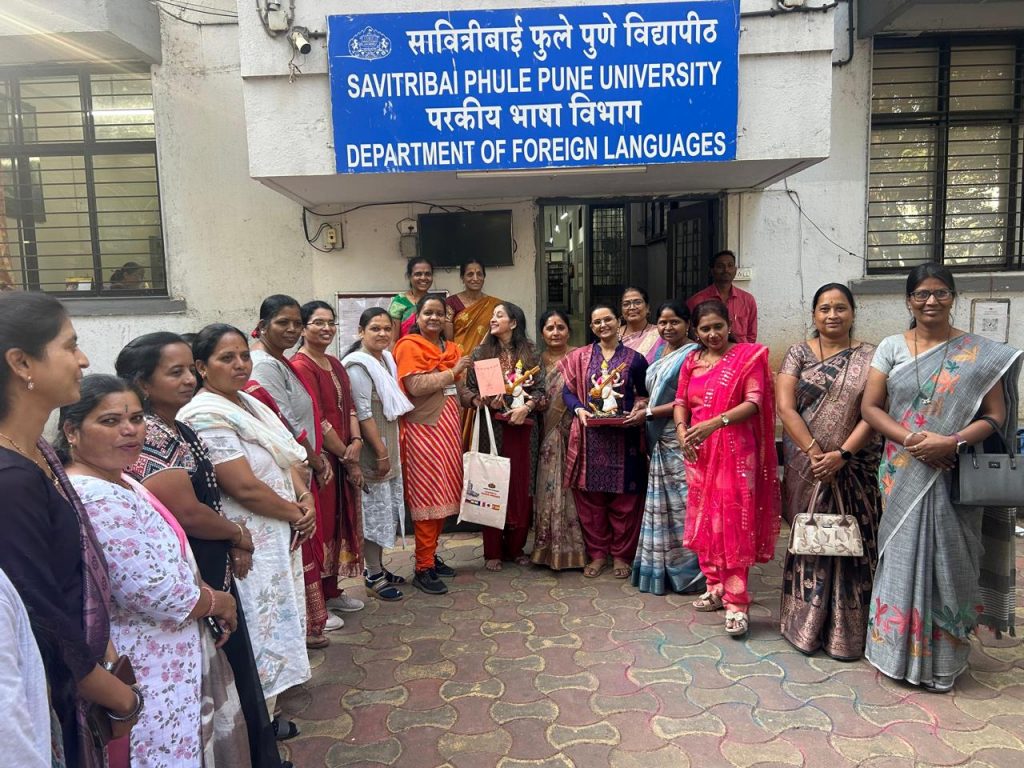
In an initiative aimed at connecting rural education with global learning, the Pune Zilla Parishad has partnered with the Department of Foreign Languages at Savitribai Phule Pune University (SPPU) to train teachers in foreign languages. Now in its second year, the programme is helping teachers acquire new linguistic skills that they can gradually bring into their classrooms.
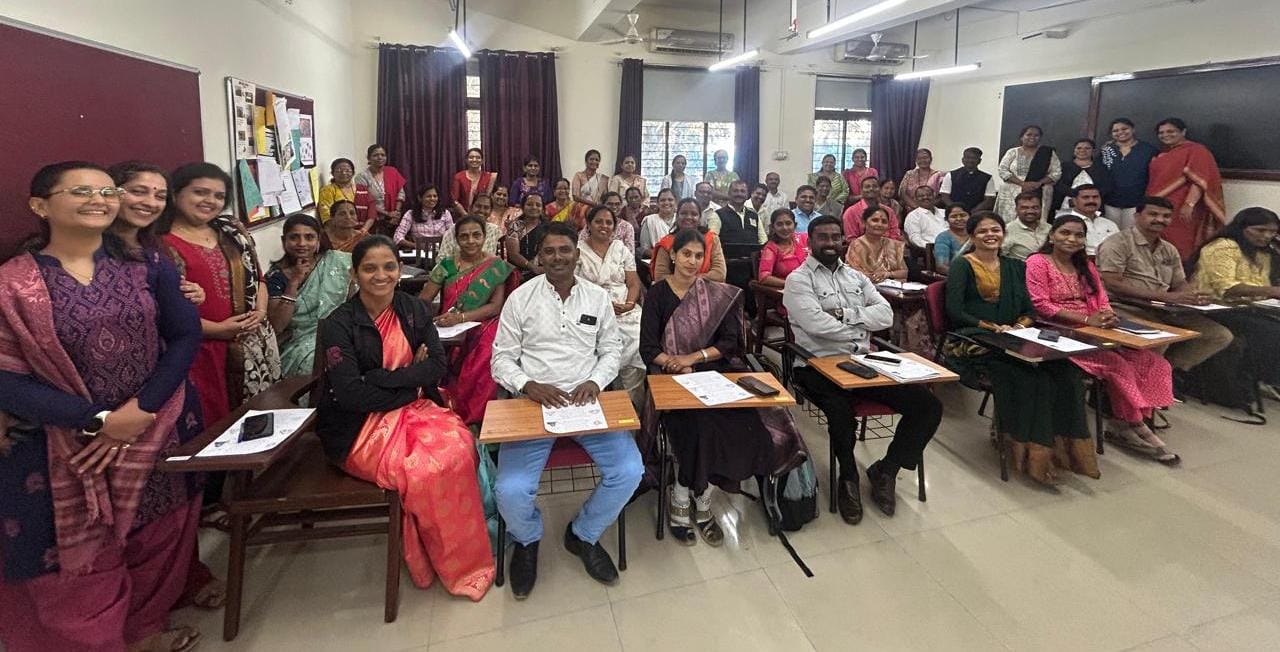
This year, 219 teachers are learning five foreign languages — German, French, Spanish, Russian and Japanese. The initiative seeks to expand the horizons of both teachers and students, introducing children in rural schools to cultures, countries and opportunities beyond their immediate surroundings.
Five languages, 219 teachers and a world of possibilities
The current batch comprises teachers from different parts of Pune district, with German attracting the highest participation. As many as 126 teachers are learning German, while 22 teachers each are enrolled in French and Spanish. Another 23 teachers are learning Russian, and 25 are undergoing training in Japanese.
Together, these 219 teachers are exploring languages that connect people across continents and open doors to different cultures, traditions and ways of life.
The training goes beyond memorising unfamiliar words or learning a few greetings. It introduces teachers to the fundamentals of languages spoken in different parts of the world, along with the cultural contexts in which they are used.
The programme follows a structured 180-hour language curriculum, with emphasis on four essential skills: listening, reading, writing and speaking. The focus is on helping teachers develop a working understanding of their chosen language rather than limiting learning to textbook exercises.
For the teachers, the experience offers an opportunity to learn something new. For their students, it could become the beginning of a much wider journey of discovery.
When teachers learn, entire classrooms benefit
The most significant aspect of the initiative lies in how its benefits can extend beyond the teachers undergoing training.
A teacher who learns a foreign language can introduce students to new words, greetings, cultural practices and everyday life in other countries. A lesson on Japanese, for instance, could prompt a discussion about Japan’s location, while learning French might lead to questions about France, its people and their traditions.
These interactions need not replace the existing curriculum. Instead, they can complement classroom learning by making students curious about geography, history, culture and the wider world.
The first year of the programme saw 102 teachers undergo foreign language training. According to information shared by the district administration, each teacher subsequently reached approximately 50 students with exposure to foreign languages and related cultures.
This translated into a potential reach of more than 5,000 students, giving the initiative a multiplier effect. One trained teacher can introduce an entire classroom to experiences that students might otherwise have limited opportunities to encounter.
The programme’s broader value, therefore, lies not only in the number of teachers trained but also in how they use their learning to enrich classroom experiences.
Bringing global exposure to rural schools
For children growing up in rural areas, opportunities to engage with foreign languages and cultures may be less readily available than they are for some students in urban settings.
Digital resources have made the world more accessible, but access to meaningful learning experiences also depends on how those resources are introduced and used. Teachers can play an important role in bridging this gap by connecting classroom lessons with the world beyond the village.
Questions such as Where is Japan? Which language is spoken in Germany? What is French culture like? Where is Spanish spoken? How does Russian sound? can become starting points for classroom conversations.
The immediate objective need not be fluency in a foreign language. Even a basic introduction can encourage children to ask questions, explore unfamiliar subjects and develop an interest in other cultures.
Over time, such curiosity can support reading habits, communication skills and a broader understanding of the world. It can also help students become more comfortable engaging with different languages and perspectives.
Rooted in the mother tongue, connected to the world
Introducing foreign languages in Marathi-medium schools does not mean moving away from the mother tongue. Rather, it offers an opportunity to build on the foundation of learning in one’s own language while developing an appreciation of other languages and cultures.
For rural students, this approach can reinforce the idea that global exposure is not limited to children attending expensive private schools or living in major cities.
A child can learn in Marathi, remain connected to the local culture and still develop an interest in Japan, Germany, France, Spain or Russia.
Such exposure may also help students recognise the growing relevance of languages in international communication, higher education, technology, industry and employment. While the current programme is primarily about teacher training and cultural exposure, it can lay the groundwork for further exploration of these subjects.
Pune Zilla Parishad Chief Executive Officer Gajanan Patil said, “Through foreign languages, students can be introduced to different languages, cultures and global contexts. This initiative strengthens teachers’ capacities while extending its benefits to thousands of students.”
A small beginning with a wider vision
The sight of a teacher writing an unfamiliar greeting on a blackboard may appear to be a small classroom moment. But for a student encountering that language for the first time, it could be the beginning of a new interest.
With 219 teachers currently undergoing training, the initiative is creating opportunities for foreign languages and cultural awareness to enter more rural classrooms across Pune district.
Its long-term impact will depend on how teachers apply their learning, how frequently students are exposed to these languages and whether the programme continues to expand.
Yet its central idea is simple: a child’s access to knowledge should not be limited by geography.
From a village classroom in Pune district, the journey towards understanding the world can begin with a single word — Bonjour, Hola, Guten Tag or こんにちは.
And sometimes, a single word is enough to open a new window.