Pune Dengue Cases Near 2025 Levels; Naval Kishore Ram Reviews Preparedness at Dr Naidu Hospital
Reported by Mubarak Ansari
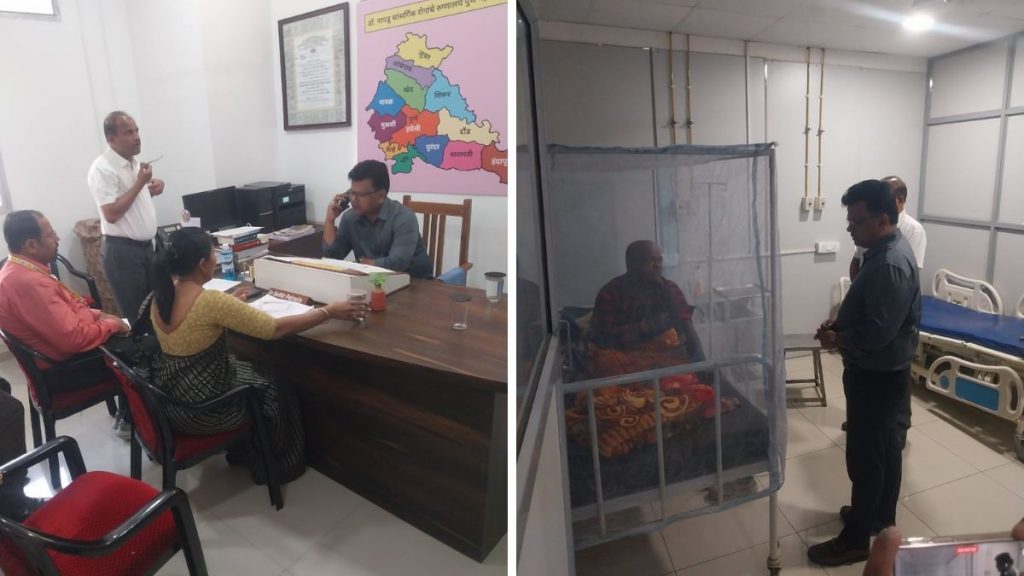
Pune, 24th October 2026: Pune Municipal Commissioner Nawal Kishore Ram on Saturday reviewed the city’s dengue situation during a visit to the newly established Dr Naidu Hospital in Baner, stating that adequate beds and medicines were available for treatment and urging citizens not to panic.
According to data shared by the Pune Municipal Corporation (PMC), the city recorded 2,291 dengue cases between January 1 and October 20, 2026. The civic body reported 4,908 cases in 2024 and 2,391 in 2025, indicating that the number of cases this year has already come close to last year’s total.
During his visit, Ram reviewed the dengue situation, hospital bed availability, treatment facilities and measures being implemented to control mosquito breeding. He directed the health, construction, encroachment and solid waste management departments to coordinate and urgently intensify preventive measures.
The civic administration has particularly emphasised preventing water accumulation at construction sites, waste disposal locations and areas affected by encroachments, where mosquito breeding can occur.
4,742 beds available across private and civic hospitals
According to the PMC, private hospitals in Pune have 4,409 beds available for dengue treatment, including 670 intensive care unit (ICU) beds. Municipal hospitals have 333 beds, including six ICU beds.
The civic body said approximately 50% of the beds were available on average and urged patients not to insist on treatment at only a few large hospitals.
Dr Naidu Hospital has 50 dedicated beds for dengue patients. Of these, 10 to 15 are occupied daily, leaving approximately 35 beds vacant, according to the civic administration. Treatment at the hospital is provided free of charge.
Officials have also been directed to ensure that patients with severe symptoms receive prompt treatment at Dr Naidu Hospital and Kamala Nehru Hospital. The use of mosquito nets has been made mandatory in all dengue wards.
Ram appealed to citizens to seek medical attention promptly if they develop symptoms of dengue and to approach the nearest municipal or other hospital for treatment.
PMC inspects nearly 14 lakh homes
As part of its mosquito surveillance and prevention drive, PMC teams have visited approximately 14 lakh homes and inspected 28,31,386 containers and water storage facilities.
Mosquito larvae of the Aedes species were found in 18,885 containers across 13,000 homes. The civic body has issued notices to 2,664 properties and collected fines amounting to Rs 6.30 lakh for violations.
The Aedes mosquito transmits dengue and commonly breeds in stagnant water collected in containers and other water-holding objects.
The civic administration has identified changing weather conditions, increasing construction activity, water storage due to water cuts, and stagnant water in plant pots and trays used for indoor plants and terrace gardens as factors contributing to mosquito breeding.
Free dengue testing at municipal facilities
The PMC has made Rapid Diagnostic Kits (RDKs) available at all its dispensaries for free dengue testing.
Free confirmatory testing has also been arranged at designated sentinel centres, including Dr Naidu Hospital, Dr Kotnis Hospital and Kamala Nehru Hospital. Serum samples can be sent to these facilities for further testing.
All government and private hospitals have been directed to register dengue patients on the Integrated Health Information Platform (IHIP) portal and avoid duplicate entries to ensure accurate reporting of cases.
The civic administration is also prioritising areas reporting higher numbers of dengue cases for insecticide spraying and other preventive measures.
Officials have been instructed to follow prescribed fogging protocols rather than undertake indiscriminate spraying in open areas. The focus will be on the patient’s home and adjoining enclosed areas, with fogging carried out for an appropriate duration. Biological larvicides will also be used in stored water, particularly in localities where residents store water during periods of reduced supply.
Awareness campaign intensified
The PMC has stepped up its dengue awareness campaign through digital displays at railway stations, radio broadcasts and audio messages played on garbage collection vehicles.
Audio awareness clips are being played daily on the civic body’s garbage collection vehicles, with audio pen drives distributed to all 15 ward offices.
The administration is also reaching out to housing societies, urging their office-bearers to ensure that terraces and water tanks are kept clean. Schools are being encouraged to conduct essay-writing and drawing competitions to educate students about dengue prevention.
Citizens have been urged to observe one dry day every week by emptying and cleaning water containers to prevent mosquito breeding.
Citizens urged to take precautions
The PMC has appealed to residents to prevent water from accumulating around their homes, keep water storage tanks covered and cooperate with civic inspection teams.
The civic body has also advised people to consult doctors and seek timely treatment if symptoms develop. Adequate rest, a fresh and nutritious diet, and sufficient fluid intake have been recommended as part of recovery.
The administration said coordinated action by civic departments and public cooperation would be essential to contain the spread of dengue in Pune.