From Broken Appliances to Repaired Bicycles: How Repair Cafés Are Changing India’s Waste Habits
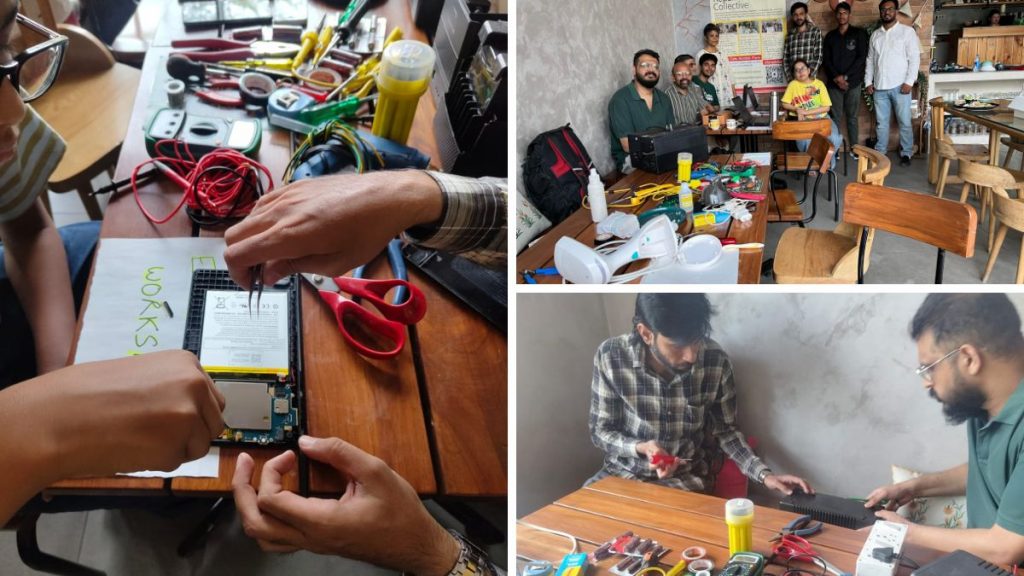
Pune, 27th October 2026: In a world where a broken appliance is often replaced rather than repaired, a community-led movement is encouraging people to rethink their relationship with the things they own. Its message is simple: before throwing something away, find out whether it can be repaired.
Repair Café Collective India brings together volunteers, professional repairers, educators, makers and local communities to promote repair, reuse, maintenance and practical learning. The initiative began as Repair Café Bengaluru in 2015 and has since evolved into a wider collective supporting repair initiatives across India.
Founder Purna Sarkar and co-founder Himadri Das of Repair Café Bengaluru, along with Babajan Sajjan, founder of Pune-based Erepair, are associated with efforts to make repair knowledge more accessible and encourage people to extend the lives of everyday objects.
The collective’s approach is built around a simple principle: repairing an object is not just about restoring its functionality but also about learning how it works, reducing waste and valuing the skills involved in maintaining it.
More than fixing broken objects
According to Purna Sarkar, founder of Repair Café Bengaluru, the initiative’s approach centres on creating spaces where people can learn to repair everyday objects rather than immediately discard them.
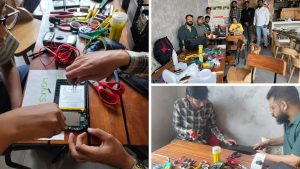
Repair Cafés are community workshops where people bring broken household items and work alongside volunteers and professional repairers to explore possible solutions. Depending on the workshop, the items may include electronics, clothing, bicycles and other commonly used objects.
The emphasis is on participation and learning rather than simply handing over an item for repair. By understanding what has gone wrong and how a problem can be addressed, participants can develop practical skills that may help them maintain other belongings in the future.
The collective also recognises that not every repair can be undertaken independently. Some products require specialised knowledge or professional assistance. Its broader objective is to help people understand the possibilities of repair and make informed decisions before discarding an item.
Keeping thousands of kilograms of material out of landfills
Repair Café Bengaluru has conducted community workshops in schools, cafés, garages, parks and other shared spaces, relying substantially on volunteers.
According to the initiative’s reported figures, it had organised more than 50 repair workshops by 2023. Earlier reporting also documented that around 40 pop-up events had helped keep more than 4,500 kg of material out of landfills by 2019.
These figures demonstrate the potential of community repair activities to contribute to waste reduction. Extending the useful life of products can delay replacement purchases and potentially reduce the resources required to manufacture new items.
Himadri Das, co-founder of Repair Café Bengaluru, is associated with the initiative’s broader efforts to make repair a shared learning experience. The collective’s approach encourages participants to understand the problem and take part in the repair process, helping preserve practical knowledge that can otherwise be overlooked in an increasingly disposable economy.
The impact, therefore, extends beyond the number of objects repaired. Workshops can also help people develop new skills, connect with experienced repairers and recognise that many everyday products may have a longer useful life.
Teaching children the value of repair
The collective’s work also extends to children through TinkerKinder, an educational programme introducing them to repair, maintenance, tinkering and practical problem-solving.
The programme encourages hands-on learning, allowing children to explore tools, understand how everyday objects function and develop confidence in approaching problems.
According to the collective’s educational approach, repair can become an opportunity for children to investigate, experiment and learn rather than regard a broken object as something useless.
Such experiences can also encourage more thoughtful consumption habits from an early age. By introducing children to basic maintenance and practical problem-solving, the programme seeks to make repair and care part of everyday learning.
Connecting Pune’s repair economy with local communities
India has a long-established repair economy, supported by neighbourhood electricians, tailors, cobblers, bicycle mechanics, appliance technicians and other skilled professionals.
However, finding the right repairer can sometimes be difficult, particularly when local businesses are not easily discoverable. Repair mapping and community initiatives can help make these services more visible while connecting consumers with professionals who possess the necessary skills.
Babajan Sajjan, founder of Pune-based Erepair, is associated with the collective’s wider efforts to promote repair and strengthen connections between communities and repair services.
The collective’s repair walks and mapping initiatives seek to document local repair ecosystems, while online troubleshooting groups allow people to exchange advice and seek guidance on everyday repair problems.
Its training programmes and workshops also bring together professional repairers, volunteers and learners, creating opportunities for practical knowledge to be shared.
This approach recognises that repair is not solely an environmental activity. It also supports local livelihoods and helps preserve skills that are essential to keeping everyday products in use.
From Bengaluru to a wider network of repair communities
What began as Repair Café Bengaluru has helped inspire repair-related activities in cities including Hyderabad, Mumbai and Chennai. The collective’s public resources also highlight communities and activities in Ahmedabad, Delhi and Pune.
The model can be adapted to local needs. Some workshops may focus on electronics and household appliances, while others may cover clothing, bicycles or basic household maintenance.
Rather than relying on a single central facility, community-led repair initiatives can use existing spaces and bring together volunteers, skilled professionals and people interested in learning.
The collective’s activities include repair workshops, repair walks, children’s education, online community groups, repair mapping, skills training and collaborations across cities.
Through these efforts, the initiative seeks to make repair knowledge more accessible while recognising the contribution of India’s existing network of professional repairers.
Why repair matters in an increasingly disposable economy
The benefits of repair extend beyond waste reduction. Keeping products in use for longer can help households avoid unnecessary replacement expenses, conserve resources and support local repair businesses.
There is also a cultural dimension. When people become accustomed to replacing objects at the first sign of trouble, they may lose touch with the skills required to maintain them. Repair initiatives seek to change this pattern by encouraging curiosity, practical learning and a greater appreciation of skilled work.
Repair is not always possible or economical, and some products may be unsafe to fix without professional assistance. However, making repair a more visible option can help people assess whether an object can be restored before deciding to discard it.
For communities, shared repair spaces provide opportunities to exchange knowledge, work together and recognise the value of skills that are often overlooked.
Building a culture of care
Repair Café Collective India’s long-term vision is to make repair a normal part of everyday life, with neighbourhoods offering access to repair knowledge, skilled professionals and opportunities for hands-on learning.
The initiative’s work brings together environmental awareness, practical education and community participation. From workshops that help adults understand household objects to programmes that introduce children to tinkering, the objective is to encourage people to see repair as a useful and accessible skill.
For Sarkar, Das, Sajjan and the wider network of repair advocates, the broader challenge is to make repair a more natural choice in a society where replacing a product can often seem easier than fixing it.
A repaired appliance, a mended garment or a bicycle returned to working condition may appear to be a small achievement. Collectively, however, such actions can reduce waste, support local repair economies and help preserve practical knowledge.
Ultimately, the movement is about more than fixing broken objects. It is about changing how people relate to the things they own and recognising the value of maintaining, repairing and reusing them.
Repair is not just about fixing things. It is about building a culture of care.