Pune: Water Hyacinth Growth in Hadapsar’s Baby Canal Raises Health Concerns
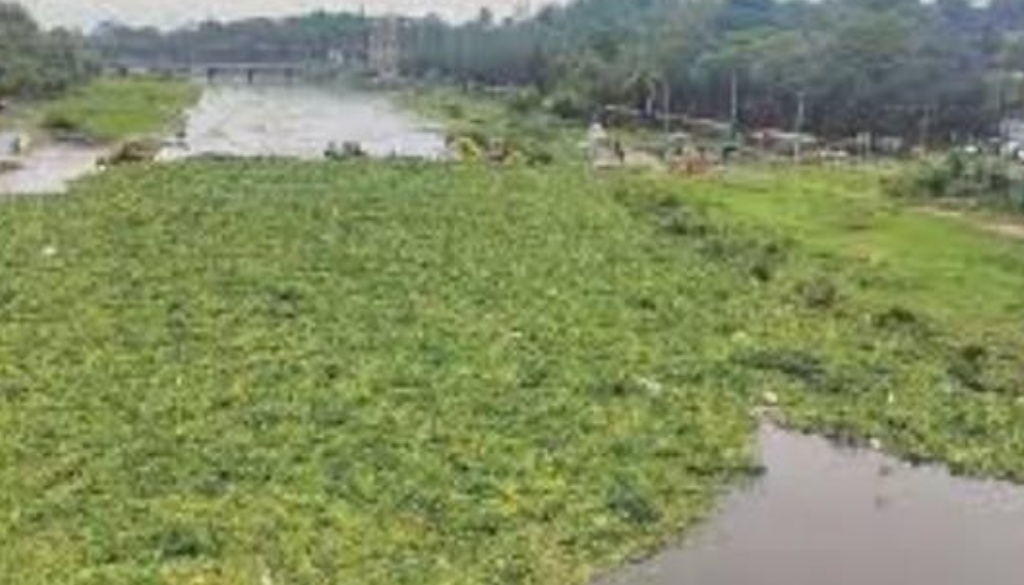
Hadapsar, 20th February 2025: The rapid growth of water hyacinth in the Baby Canal in the Hadapsar area of Pune has led to increased mosquito breeding, raising concerns about the spread of infectious diseases. The Pune Municipal Corporation’s (PMC) Health Department has requested the Maharashtra Government’s Water Resources Department to remove the water hyacinth, but the latter has refused, stating that the pollution in the canal is caused by the PMC itself.
The Baby Canal, which falls under the jurisdiction of the Hadapsar Mundhwa Ward Office, passes through several areas including Sade Satra Nali, Ansari Phata, Mahadev Nagar, Ghule Wasti, Kalpataru Society, Amar Srushti, Laxmi Colony, Vitthal Nagar, Manjari, Phursungi, Shewalwadi, and Saykarwadi. The canal is currently choked with water hyacinth and accumulated garbage, leading to frequent complaints from residents about increased mosquito populations.
In response to the growing health risk, the health department initiated insecticide spraying in the Baby Canal. However, the presence of water hyacinth has rendered the spraying largely ineffective. On 2nd January, the health department sent a letter to the Water Resources Department requesting the removal of water hyacinth from the canal.
The Water Resources Department has declined to remove the water hyacinth, citing several reasons in a letter to the PMC. They state that there has been significant urbanization on both sides of the canal, with a high proportion of slum dwellings. Residents are dumping large amounts of garbage and debris into the canal, leading to high levels of pollution. The protective fencing previously installed along the canal has been damaged by residents.
Furthermore, the Water Resources Department claims they lack the necessary manpower and equipment for canal cleaning. They argue that without proper waste management planning from the PMC, it is impossible to maintain the canal in a clean and proper condition permanently.
Dr Rajesh Dighe, Assistant Health Officer of PMC, emphasized that the water hyacinth in the Baby Canal has led to increased mosquito breeding, posing a risk of infectious diseases. He noted that despite sending a letter to the Water Resources Department two months ago, no action has been taken.
Shweta Kurhade, Executive Engineer of the Water Resources Department, suggested that the PMC should implement measures to prevent garbage dumping in the Baby Canal. She recommended placing garbage bins in the area to discourage canal dumping and installing protective fencing on both sides of the canal. Kurhade insisted that the PMC should be responsible for the canal’s cleanliness and security.