340 Indian Star Tortoises Set for Release Under Maharashtra’s Turtle Rehabilitation Project
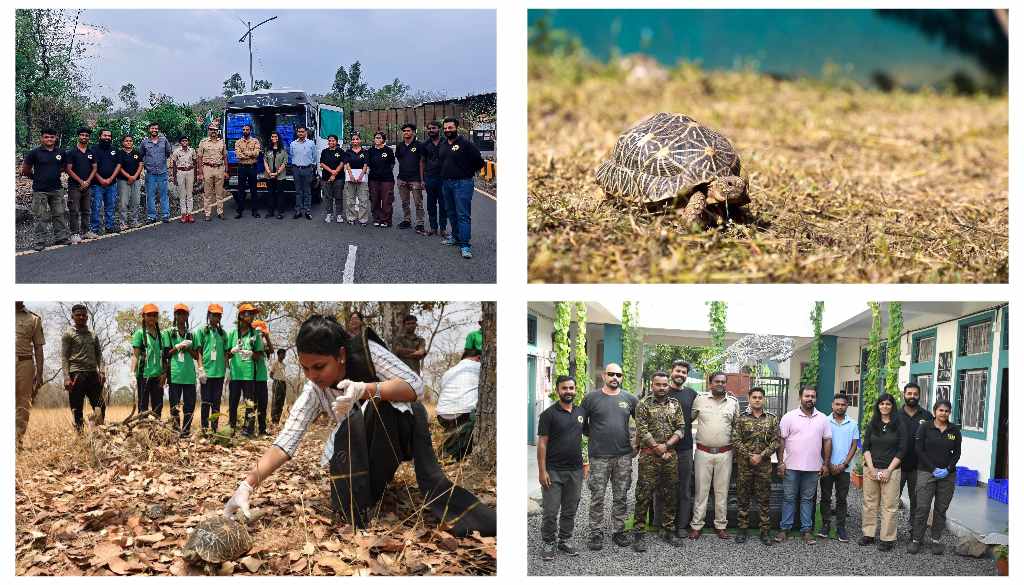
Pune/Chandrapur, 5th April 2025: In a significant milestone for wildlife conservation, 340 Indian Star Tortoises have been released back into the wild in Jogapur Reserve Forest of Rajura Forest Range of Central Chanda Forest Division – a collaborative initiative led by the Maharashtra Forest Department under the leadership of Vivek Khandekar, then Chief Wildlife Warden, in partnership with RESQ Charitable Trust (RESQ CT) and facilitated by the Pune Wildlife Division. This marks one of the largest organized releases of this species in the state, following an intensive rehabilitation process that began in late 2024. With this release Reserve forests of Chandrapur has emerged as home for Indian Star Tortoises rescued from illegal wildlife trade.
The TRP was established to address the growing issue of turtles and tortoises being rescued from illegal wildlife trade and captivity and the initiative to have statewide approach to rehabilitate them in a systematic way with a positive end goal in mind. Over the past few months, 441 Indian Star Tortoises were admitted to the programme, many in severely compromised health. With a survival rate of approximately 80%, the current cohort ready for release has successfully completed all stages of medical care, quarantine, and environmental acclimatization. A final group continues to undergo rehabilitation and is expected to be considered for release in due course.
Organisations that contributed to the rescue of the animals into the TRP include: OIPA, ACF & PAWS-Mumbai, Bhavans Nature and Adventure Centre, WWA India, RAWW, Thane Community for the Protection and Care of Animals, Dahanu Turtle Rescue Centre, RESQCT-Eco Echo Nashik and RESQ Charitable Trust, Pune, which spearheaded the rehabilitation and release project with support from its donors, in collaboration with the Maharashtra Forest Department.
The rehabilitation programme at the Wildlife Transit Treatment Centre, Bavdhan, Pune was meticulously designed to replicate natural living conditions and prepare the animals for life in the wild. Many of the admitted individuals had spent prolonged periods in captivity, often housed in substandard conditions lacking appropriate diet, space, or sunlight—resulting in a range of health complications including nutritional deficiencies and gait issues. Upon arrival, tortoises were categorized based on size and sex to reduce stress and ensure appropriate care and monitoring.
The first phase involved stabilisation, medical treatment, and quarantine in observation and treatment enclosures, followed by gradual transition to semi-natural outdoor rehabilitation habitats. The animals were then placed on species-specific foraging diets, with a strong focus on native grasses and seasonal vegetation to rebuild gut health and encourage natural feeding behaviours. Special attention was given to UV exposure and thermoregulation through strategically designed basking zones and shaded resting areas.
Rehabilitation efforts focused intensely on facilitating the transition from captive to wild conditions, including climate acclimatisation and behavioural restoration. Progress was closely tracked through periodic biometric assessments—such as weight, shell quality, and hydration levels—alongside regular behavioural observations of feeding, mobility, and social interactions. A team of dedicated wildlife rehabilitators and veterinarians worked round-the-clock to provide responsive care tailored to individual health needs.
Encouragingly, the majority of the cohort demonstrated significant improvement in activity levels and adaptation to wild diets, indicating a strong potential for survival post-release. These improvements form the basis for release readiness and underscore the importance of long-term, welfare-centric rehabilitation in conservation programmes.
The tortoises undertook a 900-kilometre journey from Pune to Chandrapur district, where they have been released in Jogapur Reserve Forest, known for natural occurrence of the species and habitat suitability. Previous smaller releases in this area have yielded promising results, with forest staff reporting frequent sightings, evidence of breeding, and juvenile individuals—clear indicators of successful reintegration.
The release operation was completed in presence and enthusiastic participation of over 100 children from Adarsh Vidyalaya Rajura, symbolizing the commitment of the young generation of conservationists accompanied by RESQ CT team members Sonesh Ingole, Ketan Vaidya and Raju Sayyed. The entire operation was closely supervised by Smt. Swetha Boddu, Deputy Conservator of Forests, Central Chanda Forest Division and Pawan Jong, Sub-Divisional Forest Officer, Rajura. Post release monitoring is being done by Adesh Shendage, ACF, Suresh Yelkewad, Range Forest Officer and local forest staff.
Dr. Clement Ben, Additional Chief Conservator of Forests, Wildlife West, Mumbai, who oversaw the release of this batch from Pune prior to their departure, remarked, “The release was directed under the aegis of Shri. Srinivas Rao, Chief Wildlife Warden, Maharashtra Forest Department. This release reflects a growing commitment in Maharashtra to tackle the issue of illegal wildlife trafficking not just through enforcement, but through long-term, sustainable rehabilitation and release programmes that return animals to where they belong—in the wild.”
Jitendra Ramgaonkar IFS, Chief Conservator of Forests, Chandrapur, stated, “I have overseen several batches of these releases over the past few years, and each one has provided valuable insights into the adaptability and resilience of the species when reintroduced into their native habitat. These efforts have not only helped strengthen local populations but also contributed to restoring ecological balance in the region. For the upcoming batches, we are working on innovative tagging solutions that will enable us to monitor the post-release movement and behaviour of the tortoises more effectively. This will allow us to gather critical data to inform future conservation strategies while ensuring the welfare of the animals remains uncompromised.”
Tushar Chavan IFS, Deputy Conservator of Forests (Wildlife), added, “As this batch of tortoises makes its return to the wild, the Turtle Rehabilitation Project stands as a testament to what can be achieved through science-led conservation, inter-agency collaboration, and dedicated rehabilitation efforts.”
Indian Star Tortoises play a vital ecological role in the ecosystems they inhabit. As herbivores, they help maintain a balance in vegetation by grazing on grasses and low-lying plants. Their foraging habits contribute to seed dispersal, and their movement across the landscape aids in soil aeration and habitat health. The return of these animals to the wild not only restores individual lives but also reinforces the ecological stability of the habitats they are released into.
Children from the local school briefly took part in the tortoise release process, which was accompanied by a brief awareness session. The programme aimed to educate them about the species’ vital ecological role and the life-threatening challenges they face due to the illegal pet trade. The session concluded with a call to action, encouraging the students to become ambassadors for wildlife by spreading the message that these animals belong in the wild, not in homes as pets.
Neha Panchamiya, Founder and President of RESQ CT, stated, “Indian Star Tortoises are among the most sought-after species in the illegal pet trade and suffer immensely due to the growing demand for wild animals as pets. While several organizations continue to raise awareness about this issue, this release symbolizes something more—it is a celebration of freedom for these animals. Witnessing them instinctively graze and explore their natural surroundings moments after release is profoundly rewarding. Looking ahead, future releases will incorporate post-release monitoring using specially developed tracking devices designed not to hinder the animals’ natural behaviour or movement. For now, this moment stands as a true reflection of what successful rehabilitation looks like—wild animals, behaving as they should, back in their rightful homes.”
As this release progresses, this stands as a model of science-backed, welfare-centric conservation. It exemplifies Maharashtra’s commitment to tackling wildlife trafficking with not only enforcement but also the long-term vision of recovery, restoration, and return to the wild.