Pune: Delays in the Automated Penalty System Leave Pune Airport Struggling with Parking Chaos
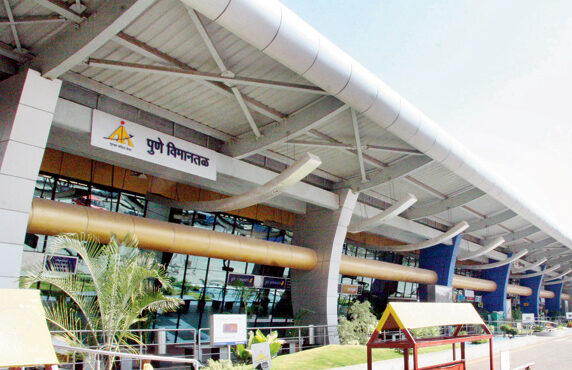
Lohgaon, 26th July 2025: Despite a surge in passenger traffic and growing concerns over long-term parking of private vehicles at Pune International Airport, the proposed implementation of the Automatic Number Plate Recognition (ANPR) system remains in limbo due to pending approval. As a result, outdated manual enforcement continues to be the airport’s only option, leading to mounting complaints from passengers and operational challenges for airport authorities.
With thousands of travelers using private vehicles and cabs to reach or leave the airport daily, the need for efficient traffic regulation has become critical. According to the Airports Authority of India (AAI) guidelines, private vehicles are permitted to halt for only a limited time to pick up or drop off passengers. Beyond this grace period, fines are to be imposed.
However, the enforcement remains manpower-dependent, with only four to five personnel deployed for traffic monitoring. According to eyewitness accounts, vehicles often overstay, causing congestion and arguments between drivers and enforcement staff. The lack of adequate personnel has made it difficult to manage violations effectively.
Pune Airport Director Santosh Dhoke confirmed, “We have submitted a proposal to the AAI for the ANPR-based penalty system, but it is yet to receive approval. Meanwhile, manual enforcement is ongoing.”
ANPR Proposal Stuck:
To tackle the issue, Pune Airport authorities have proposed the adoption of the ANPR system, which uses advanced camera technology to identify number plates and automatically impose fines for rule violations. Under the revised guidelines introduced in June 2025, vehicles are permitted 15 minutes of free parking, after which a ₹500 fine would be levied via ANPR.
But due to a lack of final approval from the AAI, the ANPR system has yet to be installed. This means officials are still relying on older rules and manual methods, such as those from 2016 (₹85 after 7 minutes) and 2019 (₹340 after 3 minutes)—both of which are insufficient in today’s high-traffic scenario.
The delay in deploying a smart parking enforcement solution is having tangible impacts. Airport officials acknowledge that many drivers refuse to comply, resulting in frequent verbal altercations with staff. Long-term parking clogs limited space, impedes smooth traffic movement, and creates a frustrating experience for travelers.