Pune: Doctors at Symbiosis Hospital Remove 280g Hair and Thread Mass from 10-Year-Old Girl’s Stomach in Rare Case of Rapunzel Syndrome
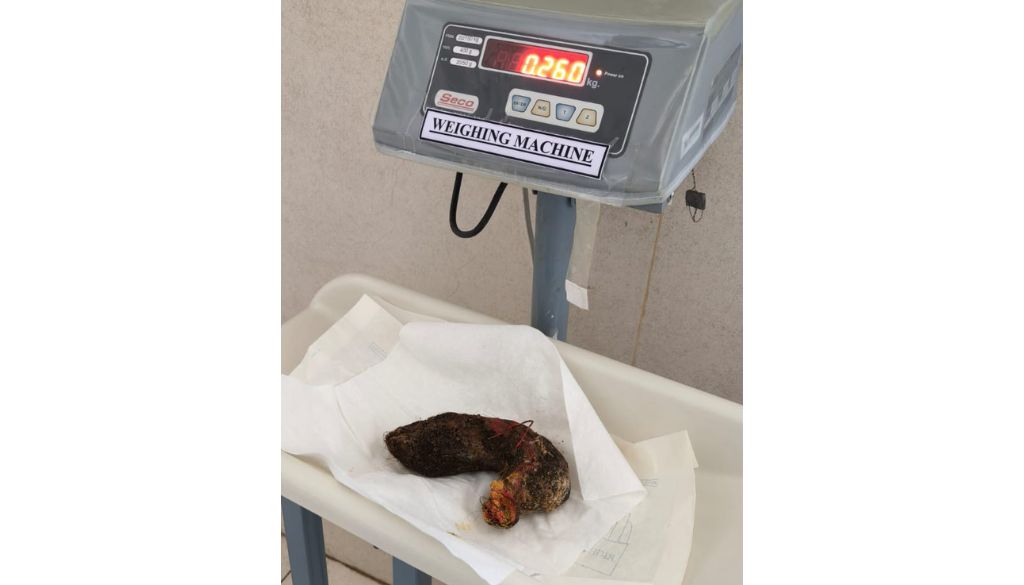
Pune, 5th November 2025: In an exceptionally rare and complex medical case, doctors at Symbiosis University Hospital and Research Centre, (SUHRC) Lavale, Pune successfully operated on a 10-year-old girl to remove a massive 280-gram mass of hair and cotton threads that extended from her stomach into the small intestine and unusually, even into the gallbladder.
She had been experiencing intermittent abdominal pain for nearly ten months, with no relief from conservative treatment. She was referred to Dr. Kalpesh Onkar Patil, Paediatric and Neonatal Laparoscopic Surgeon, Pune. On clinical examination, a large, hard mass was palpable across the upper abdomen.
A CT scan of the abdomen revealed a huge mass completely occupying the stomach and extending into the small intestine. Based on these findings, she was diagnosed with a rare gastrointestinal obstruction and immediately posted for emergency surgery.
In a 2.5-hour surgical procedure, Dr. Kalpesh and his team at the SUHRC successfully removed the tightly packed 280-gram mass of hair and cotton threads. Dr. Kalpesh reported a remarkable intraoperative finding some of the threads had extended into the gallbladder, an exceptionally rare occurrence even in known cases of Rapunzel Syndrome.
Following the surgery, the girl was admitted to the Paediatric Intensive Care Unit (PICU) and kept nil by mouth. On postoperative day 7, after confirming there was no leak from the gastrointestinal tract, oral feeds were gradually introduced. By postoperative day 8, she even passed a small bunch of threads in her stool — likely residual material from the intestines.
The patient is now stable, tolerating food well, and scheduled for discharge.
Doctors identified the condition as Rapunzel Syndrome — a rare disorder in which swallowed hair (trichophagia) forms a tail-like mass extending from the stomach into the intestines. The involvement of the gallbladder, however, makes this case exceptionally rare and significant in medical literature.