Pune Civic Poll: Clock and Trumpet Together, But Votes Missing; NCP Reunion Falters in Pune
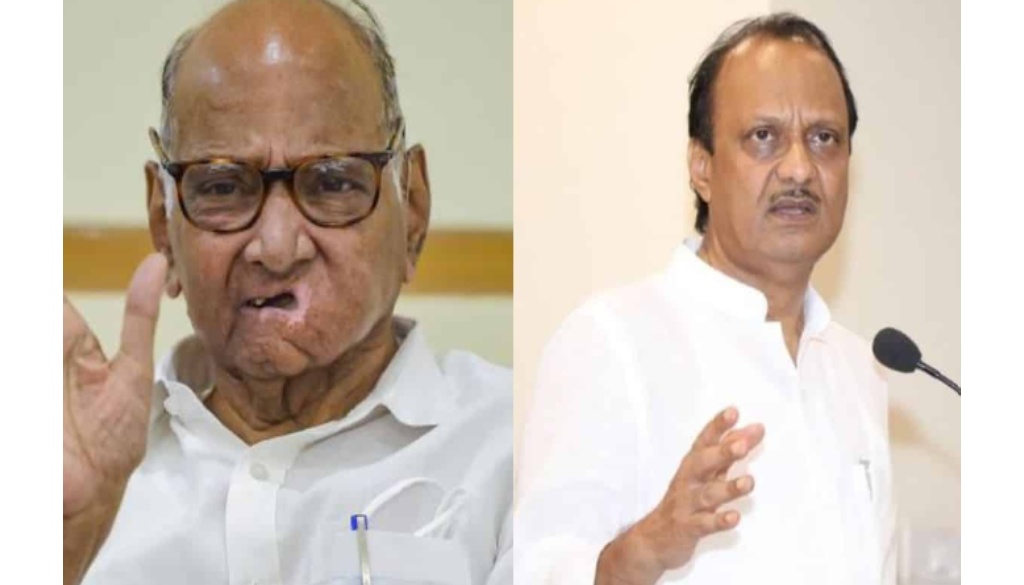
Pune, 16th January 2026: Early trends from the Maharashtra civic elections indicate that the BJP has once again asserted its dominance in key urban centres, with Pune and Pimpri-Chinchwad emerging as major setbacks for the reunited Nationalist Congress Party (NCP). Despite the symbolic coming together of the Ajit Pawar-led faction and the Sharad Pawar-led NCP, the alliance struggled to convert unity into votes in these crucial civic bodies.
In the 165-member Pune Municipal Corporation (PMC), the BJP has secured the highest number of seats, reinforcing its long-standing grip on the city’s civic politics. The much-anticipated reunion of the NCP’s traditional “clock” and “trumpet” symbols failed to sway voters, with political observers noting that the alliance did not generate the expected electoral momentum.
A similar outcome was witnessed in the Pimpri-Chinchwad Municipal Corporation (PCMC), where the BJP crossed the majority mark in the 128-member body. While Ajit Pawar’s faction managed a limited presence, the Sharad Pawar-led NCP was unable to make significant inroads, underscoring the uneven performance of the reunited party.
Across Maharashtra, as counting continues for elections to 29 municipal corporations, the BJP–Shiv Sena (Shinde faction) alliance has taken a clear lead in several major cities, including Mumbai. In contrast, the NCP reunion appears to have delivered only marginal gains outside select pockets.
The elections also brought to the surface internal dynamics within the ruling Mahayuti alliance. While the BJP, Shiv Sena (Shinde faction) and Ajit Pawar-led NCP contested together in limited areas such as Kolhapur, they largely adopted independent strategies or relied on local arrangements in other regions, including Pune.
Campaign rhetoric in Pune turned increasingly sharp, particularly from Ajit Pawar, who adopted a confrontational stance against the BJP. He accused the party of corruption during its earlier tenure in the PMC and PCMC, drawing strong rebuttals from senior BJP leaders, including state president Ravindra Chavan and Revenue Minister Chandrashekhar Bawankule. In contrast, Deputy Chief Minister Eknath Shinde refrained from directly targeting the BJP.
The verbal sparring escalated further in the final days of campaigning, culminating in a public exchange between Chief Minister Devendra Fadnavis and Ajit Pawar. Fadnavis remarked that “some people seem to have suddenly found their voice,” prompting Pawar to counter that elections conducted after a nine-year gap naturally intensify political discourse.
Political analysts view the confrontation as part of a broader battle for influence in the Pune region. While Ajit Pawar sought to reassert control over a politically significant urban belt, early trends suggest that the BJP’s organisational strength and voter mobilisation outweighed alliance arithmetic.
Control over Pune and Pimpri-Chinchwad remains a key barometer of political clout in Maharashtra. With official results awaited, preliminary outcomes point to the BJP consolidating its urban base, even as the NCP’s reunion experiment struggles to gain traction where it mattered most.