LPG Shortage Hits Pune Industries: Several Chakan Units Halt Production
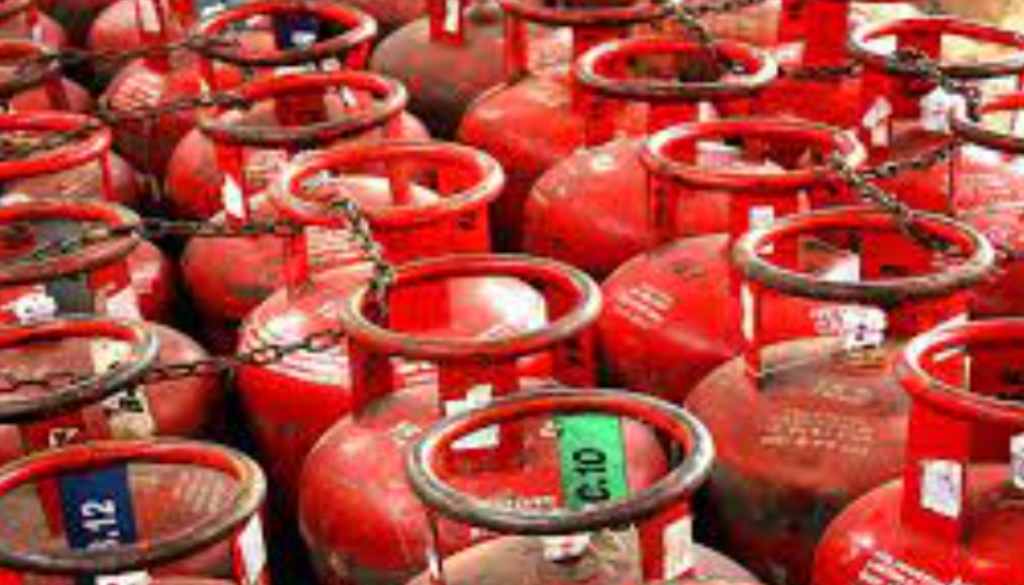
Pune, 11th March 2026: A shortage of liquefied petroleum gas (LPG), reportedly linked to disruptions in international supply chains amid tensions in the Middle East, has begun affecting small and medium-scale industries in parts of Pune district. Several manufacturing units, particularly in the Chakan industrial area, have temporarily stopped production after running out of fuel.
Industrialists said many factories that rely on LPG for heating and coating processes have not received fresh supplies for the past four to five days, forcing them to suspend operations.
Mass Precision Pvt Ltd, a powder-coating unit located in Chakan and employing nearly 250 workers, halted its manufacturing activities last week after exhausting its LPG stock. The company’s owner, Rajesh Deodhare, said the plant has remained non-operational despite workers continuing to report for duty.
“We have been trying to procure LPG for the last few days, but distributors are telling us that commercial cylinders are currently unavailable,” Deodhare said. “As a result, the plant has been idle since Friday.”
Deodhare said the company, which records a monthly turnover of about ₹7–8 crore, is suffering heavy financial losses due to the shutdown. “Every day that production remains suspended results in losses of roughly ₹25 lakh. Even when there is no manufacturing activity, we still have to bear expenses such as salaries and loan repayments,” he said.
He added that the situation reminds him of the Covid-19 lockdown period, when his factory had to remain closed for nearly three months. “If the LPG shortage continues for long, the pressure on small industries will become severe,” he said.
Another manufacturing unit in the Chakan area, Sahyadri Industries, which produces fabrication components, machined parts and sheet metal assemblies, has also paused production after its LPG reserves were depleted four days ago.
Its owner, Jaidev Akkalkote, said the factory currently has no active manufacturing work. “Since there is no fuel available for production processes, our workers are mostly engaged in housekeeping and maintenance activities within the unit,” Akkalkote said.
Despite the shutdowns, both industrialists said they have continued paying their employees, emphasising that retaining skilled labour is important for long-term operations. “Experienced workers are not easy to replace. We would rather absorb the temporary loss than risk losing trained staff,” one of them said.
Industry representatives pointed out that most small and medium enterprises maintain LPG stocks that last only three to four days. If the supply situation does not improve soon, more units in the region may be forced to halt production.
Some business owners are considering switching to electric-based equipment such as electric ovens or machinery as an alternative to LPG. However, they said the transition would require significant capital investment and time for installation.
Sandip Belsare, president of the Pimpri Chinchwad Small Scale Industries Association and owner of an engineering unit in Bhosari, said a large number of industries in the region depend on LPG for daily operations. “More than half of the units in this belt rely on LPG. A few companies are exploring alternative systems, but shifting to them involves high costs and operational adjustments,” he said.
Belsare added that his own firm has begun investing in alternative technology. “We have ordered two electric-operated plasma machines to reduce our dependence on LPG in the future,” he said.
Meanwhile, Kalyan Dekhale, owner of Rudra Veer Technologies, which operates powder-coating facilities in both Bhosari and Chakan, said his company’s LPG reserves may last only a few more days.
“Our current stock will probably sustain us for another two or three days. If fresh supplies do not arrive by then, we may also have to stop production,” Dekhale said. He added that the two units together employ around 70 to 80 workers.