57% of Women Anxious on Pune Buses: Parisar Submits ‘Gender Action Plan’ to PMPML for Safer Commutes
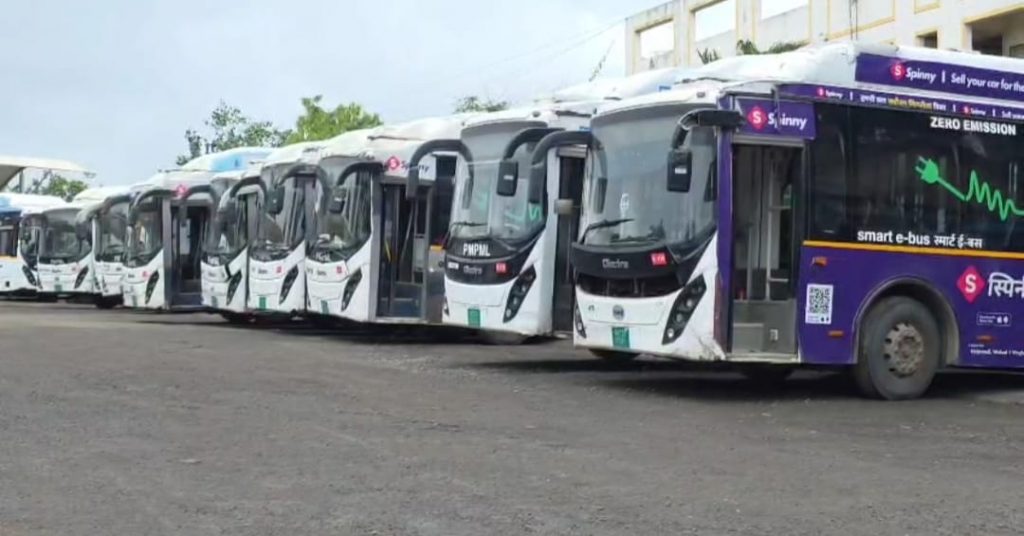
Pune, 15th March 2026: In a major push to overhaul women’s safety in public transport, the advocacy group Parisar on Friday submitted a comprehensive “Gender-Responsive Transport Framework” to the Pune Mahanagar Parivahan Mahamandal Limited (PMPML). The report, built on a survey of 540 women commuters, reveals that a staggering 57% of women feel anxious while traveling by bus, prompting urgent calls for institutionalizing safety measures rather than relying on ad-hoc solutions.
Alarmingly Low Confidence in Safety
The study, handed over to PMPML Joint Managing Director Alice Pore by Parisar representatives Tanzeel Allapur and Shweta Vernekar, highlights a significant gap between infrastructure and user needs. While public transport is a lifeline for education and employment—with 41% of respondents being students—the experience is marred by fear.
According to the report, 11% of women have experienced or witnessed harassment (staring, verbal abuse, or unwanted physical contact) in the last three months. Alarmingly, very few incidents are reported due to a lack of confidence in institutional responses and a lack of awareness regarding complaint mechanisms.
Infrastructure Failures in Hadapsar
Audits conducted at seven bus stops in Hadapsar revealed critical infrastructure gaps. Although most stops have shelters, none were equipped with emergency alert systems, CCTV signage, or visible helpline information.
The journey to the bus stop is equally perilous; 54% of women reach stops by walking, often through poorly lit or deserted streets. Furthermore, long wait times increase vulnerability, with 22% of commuters reporting waits of more than 30 minutes.
Economic Toll on Women
The report underscores that poor transport isn’t just a safety issue—it is an economic barrier.
- 12% of women chose schools or jobs closer to home specifically because of transport issues.
- 8% of respondents knew of women who left education or employment entirely due to mobility constraints.
Interestingly, the survey found that 47% of women prefer safer conditions in regular buses over segregated “women-only” services, signaling a demand for system-wide improvements.
Key Recommendations
Parisar has urged PMPML to adopt a formal Gender Action Plan, similar to international models in Los Angeles and the Surat Metro project. Key demands include:
- Installation of CCTV cameras and panic buttons inside buses.
- Gender-sensitization training for all drivers and conductors.
- Improved street lighting and safer walking routes to bus stops.
- Establishment of anonymous complaint mechanisms for passengers.
“Institutionalizing a Gender Action Plan ensures that women’s mobility needs are built into the system itself,” said Tanzeel Allapur, Program Associate at Parisar.