LGBTQIA+ Community in Pune Opposes New Transgender Act, Plans to Challenge it in Court
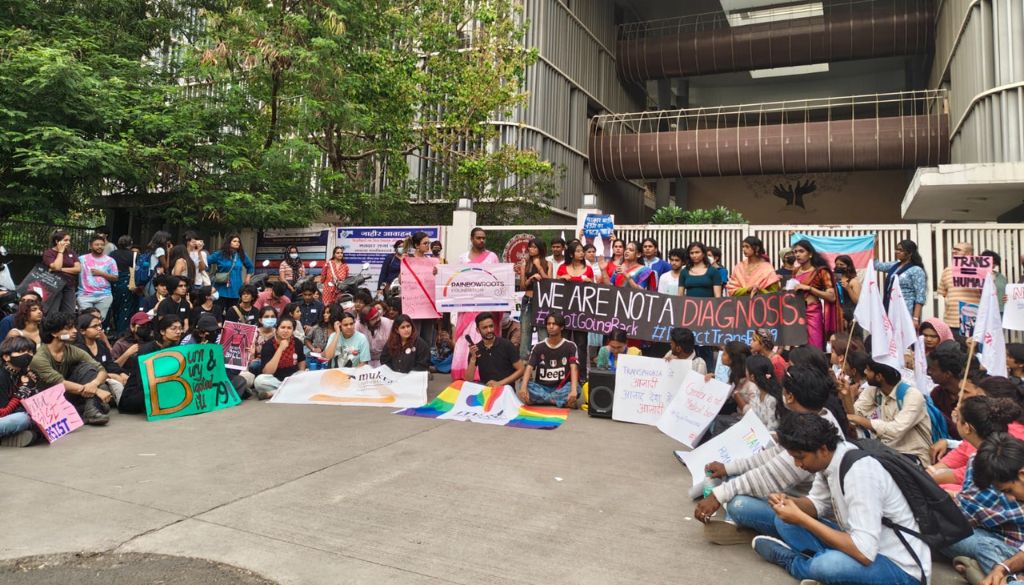
Pune, 31st March 2026: Members of the LGBTQIA+ community in the city staged a protest against the Transgender Persons (Protection of Rights) Amendment Act, 2026, which recently came into force after being passed by Parliament and receiving presidential assent.
Activists contend that the amendments are in violation of the Supreme Court’s 2014 ruling in ‘NALSA v Union of India’, which recognised the right to self-identification of gender. According to them, the Act introduces a restrictive definition of transgender persons by linking identity to biological conditions, coercion or select socio-cultural identities such as hijra, kinner, aravani and jogti, while excluding trans men, non-binary individuals and other gender-diverse persons.
In a statement issued in Pune, trans and queer groups criticised what they described as a narrowing of identity. They flagged concerns over the merging of intersex and transgender identities, removal of self-determination, and provisions that frame transgender identity as a result of coercion or undue influence. Activists said this shifts the framework from recognition of rights to one of surveillance and control.
They further argued that the Act creates arbitrary classifications within the community and uses vague criteria to determine eligibility for protections. Such provisions, they said, risk reinforcing the perception that existing safeguards have been misused, even as many benefits promised under the 2019 law remain unimplemented.
Some speakers also drew parallels with colonial-era legislation such as the Criminal Tribes Act of 1871, warning that the amendments could revive stigma and institutional discrimination against transgender persons.
Protests against the law have been reported from several cities, including Delhi, Mumbai, Goa, Hyderabad, Chennai and Nagpur. In Pune, hundreds participated in a demonstration on March 22, where copies of the Bill were symbolically burnt.
At a press conference in the city, activists and members of the transgender community reiterated that the law would adversely affect their rights and dignity. Among those who spoke were Disha Pinky Shaikh and Shamibha Patil of the Vanchit Bahujan Aghadi, activist Prem Jabade, trans rights advocate Manasvi Goilkar, and social welfare official Vishal Londhe.
Members of the medical community also voiced concern, stating that certain provisions could impact support systems for transgender persons and raise ethical and legal questions for healthcare professionals.
Activists said they plan to challenge the law through legal avenues and continue protests at the grassroots level.