From AI to Empathy: SYMHEALTH 2026 Redefines the Future of Healthcare
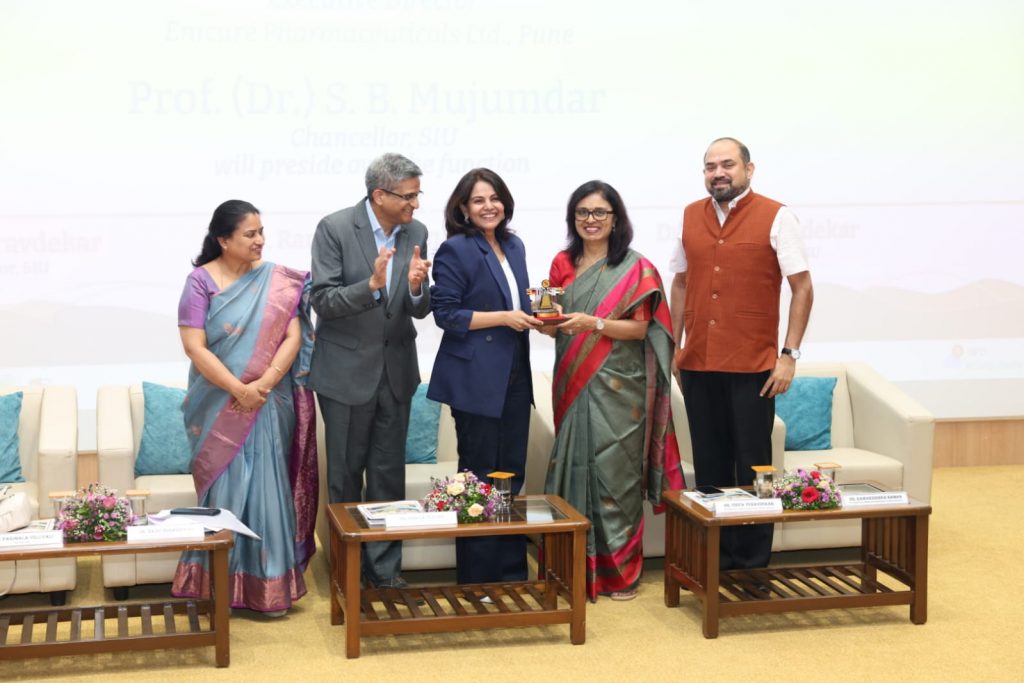
Pune, 18th April 2026: “India’s healthcare journey must now decisively move from access gaps to purpose-driven care, where technology amplifies empathy rather than replaces it,” said Ms. Namita Thapar, Executive Director, Emcure Pharmaceuticals Ltd., while addressing the valedictory ceremony of SYMHEALTH 2026.
“Artificial Intelligence has the power to shift healthcare professionals from repetitive tasks to meaningful patient engagement. At the same time, integrating alternate therapies and prioritising women’s health are essential if we want an inclusive and future-ready healthcare ecosystem,” she added, urging delegates to become active champions of change across the country.
Symbiosis International (Deemed University), through its Faculty of Medical and Health Sciences (FoMHS), successfully hosted SYMHEALTH 2026 — a landmark two-day national conference themed “Embracing Smart Healthcare: Predictive, Precision and Personalized Health Systems” — on April 17 and 18, 2026 at its Lavale campus in Pune. In its 27th year, SYMHEALTH has evolved into one of India’s premier academic platforms at the intersection of healthcare, technology, and public policy. The conference witnessed participation from over 1,400 delegates, including clinicians, researchers, public health professionals, IT innovators, and senior government officials, engaging in keynote sessions, panel discussions, oral presentations, and interdisciplinary dialogue. The valedictory ceremony was graced by Ms. Namita Thapar as Guest of Honour, in the presence of Dr. Rajiv Yeravdekar, Provost, Faculty of Medical and Health Sciences; Dr. Vidya Yeravdekar, Principal Director, Symbiosis and Pro Chancellor; Symbiosis International University and Dr. R. Raman, Vice Chancellor, Symbiosis International University.
Expanding on the future of healthcare, Ms. Thapar highlighted the importance of addressing India’s “three A’s” — access, awareness, and affordability — while also advocating for a forward-looking approach driven by Artificial Intelligence, alternate therapies, and focused attention on women’s health. She emphasised that AI can significantly enhance diagnostics, clinical trials, and accessibility in underserved regions, while freeing healthcare professionals to focus on empathy and personalised care. She further underscored the growing relevance of integrating Ayurveda, nutrition, and nature-based therapies with modern medicine, and called for greater awareness, research, and investment in women’s health, noting that it remains one of the most underserved areas in the healthcare ecosystem.
In his welcome address, Dr. Rajiv Yeravdekar underscored the importance of interdisciplinary collaboration, stating that “predictive, precision and personalised healthcare cannot be achieved in silos; it requires a strong, coordinated team where each stakeholder contributes to a shared vision.” Reflecting on the conference deliberations, he added, “the true impact of SYMHEALTH lies in how these learnings are translated into practice across healthcare systems, institutions, and communities, with innovation rooted in both technology and insights drawn from nature.”