Conclave on Emerging Dimensions in Pharma and Healthcare Law: Lessons from Industry
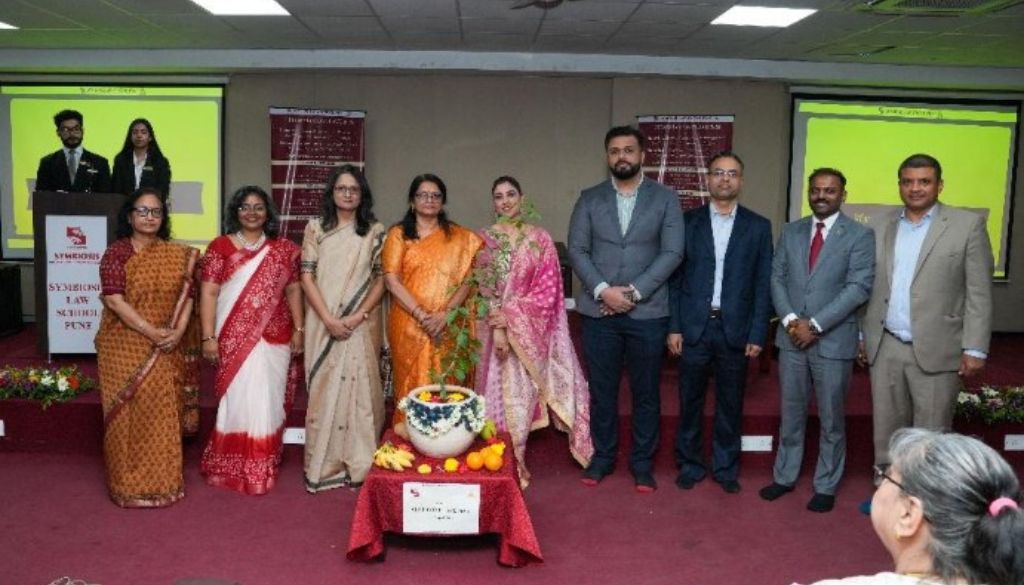
Pune, 18th April 2026: Symbiosis Law School, Pune, a constituent of Symbiosis International (Deemed University), successfully organised a one-day academic–industry interface event titled “Emerging Dimensions in Pharma and Healthcare Law: Lessons from Industry” on Thursday, 16 April 2026, at the PDCLE. The programme was conducted under the aegis of the Career and Professional Development (CPD) initiative, with a focus on fostering meaningful engagement between academia and industry in the evolving domain of pharmaceutical and healthcare law.
The event commenced at 11:15 AM with the arrival of dignitaries, followed by the ceremonial watering of the Bilwa sapling, symbolising growth and institutional commitment to knowledge and sustainability. The formal proceedings began with the Opening Address by Prof. (Dr.) Shashikala Gurpur, Director, Symbiosis Law School, Pune, who set the tone by emphasising that the conclave brought together like-minded stalwarts to debate and learn from the intersections of legal and pharmaceutical studies. She highlighted the importance of interdisciplinary engagement and industry-informed legal education to bring out and address gaps and challenges, such as intellectual property regimes, regulatory acceleration, data governance, and ESG compliance.
The Opening Address was followed by the playing of the SIU Video, showcasing the genesis and journey of the university from its inception to where it proudly stands today. Thereafter, the esteemed panellists and guests were felicitated by Prof. (Dr.) Shashikala Gurpur, Director, SLS Pune.
This was followed by the Keynote Address delivered by Dr. Rajiv Yeravdekar, Hon’ble Provost, Faculty of Medical and Health Sciences, Symbiosis International (Deemed University), who provided a holistic, 360-degree view of the conclave’s theme. He described the healthcare “industry” as an ecosystem characterised by interconnected relationships among hospitals, regulatory bodies, pharmaceutical companies, IT, medical devices, data, and technology, while continuing to remain patient-centric. Moreover, he emphasised India’s position as a unique hub in the world in the pharmaceutical field, with its diverse facets of modern as well as indigenous medical systems. He underscored the need for responsive and adaptive regulatory mechanisms in light of technological innovation and global health challenges.
The academic deliberations were structured around two panel discussions, each preceded by a survey-based analysis presented by Prof. (Dr.) Shashikala Gurpur, ensuring that the discussions were grounded in empirical insights and contemporary trends, while also introducing a participatory element. Panel Discussion I, held from 12:15 PM to 01:20 PM, focused on “Emerging Dimensions in Pharma and Healthcare Law: Lessons from Industry.” The panel featured distinguished industry experts, including Ms. Nishita Koltharkar (GSK), Dr. Vijaya Desai (Lupin Limited), and Mr. Abhijeet Patil (Clarivate). The discussion engaged with critical questions about the affordability and accessibility of healthcare, strategic patent architecture, regulatory acceleration and emergency approval frameworks, informed consent and patient awareness, pharmaceutical pricing regulation, data governance in healthcare, global legal trends, and pharmaceutical trade laws. The panellists highlighted the shifting role of legal professionals from traditional compliance functions to proactive strategic advisors within the pharmaceutical sector, reflecting the broader transformation of regulatory and corporate landscapes.
Following an executive lunch, the programme resumed with Panel Discussion II from 2:30 PM to 4:00 PM on “Development, Career Readiness, and Challenges for Legal Talent and Roles.” The panel comprised Dr. Prem Prakash Pathak (Information Professional), Ms. Puneet Kapur (Covestro), and Mr. Karan Shah (Medusind). This session examined the structural transformation of the legal profession, focusing on the increasing demand for technological literacy, regulatory specialisation, and interdisciplinary competence. The panel also addressed the gap between legal education and industry expectations, the impact of digital transformation on legal practice, and broader concerns relating to access, sustainability, and professional well-being within the legal field.
A key highlight of the conclave was its emphasis on bridging the gap between theoretical legal education and practical industry requirements. The integration of survey-based insights with expert deliberations enabled a data-driven and practice-oriented understanding of the issues discussed.
The event concluded with a formal Vote of Thanks delivered by Dr. Aparajita Mohanty, Deputy Director, Symbiosis Law School, Pune, who expressed gratitude to the distinguished speakers, organisers, and participants for their contributions to the success of the programme.
Overall, the conclave served as a significant platform for dialogue at the intersection of law, healthcare, and industry. It successfully fostered critical engagement with contemporary legal challenges while generating meaningful insights for competency-based curricula, student training, continuing legal education, policy discourse, institutional reform, the inclusion of non-litigious lawyers, and professional development in the field of pharmaceutical and healthcare law.