Where the Rain is the Destination: South India in Monsoon
By Sneha Deb
Bengaluru, 11th June 2026: The Western Ghats don’t just survive the monsoon, they come alive because of it.
Most travellers pack their bags for south India in December and flee before the skies open. They are missing the point entirely. When the southwest monsoon sweeps in from the Arabian Sea each June, it doesn’t ruin the landscape — it completes it. Rivers swell to their true selves. Waterfalls that were trickles in March become thundering curtains of white. Tea estates turn a green so saturated it looks painted. And the crowds? Gone. This is south India at its most alive, and most honest.
Here are six destinations in South India that don’t just tolerate the monsoon they demand it.
1.Coorg, Karnataka- Coffee Plantations, River treks, Mist, and the Smell of Rain
Best: July–September
Coorg receives some of the heaviest rainfall in the country and wears it spectacularly. The coffee and cardamom plantations that cover these hills turn into dripping, fragrant corridors, a walk through them in the rain is a full sensory experience. The Kaveri river begins its journey here, and you can watch it swell day by day through the season.
Abbey Falls, already impressive, becomes genuinely awe-inspiring in July and August when the water volume peaks. Namdroling Monastery in Bylakuppe, the largest Tibetan settlement in India offers an unexpected pocket of calm, its golden temple serene against grey monsoon skies. Stay in a plantation homestay rather than a resort and you’ll understand what Coorg hospitality really means.
2.Munnar, Kerela- Tea estates, Waterfalls, Trekking, Wildlife
Best: June–August
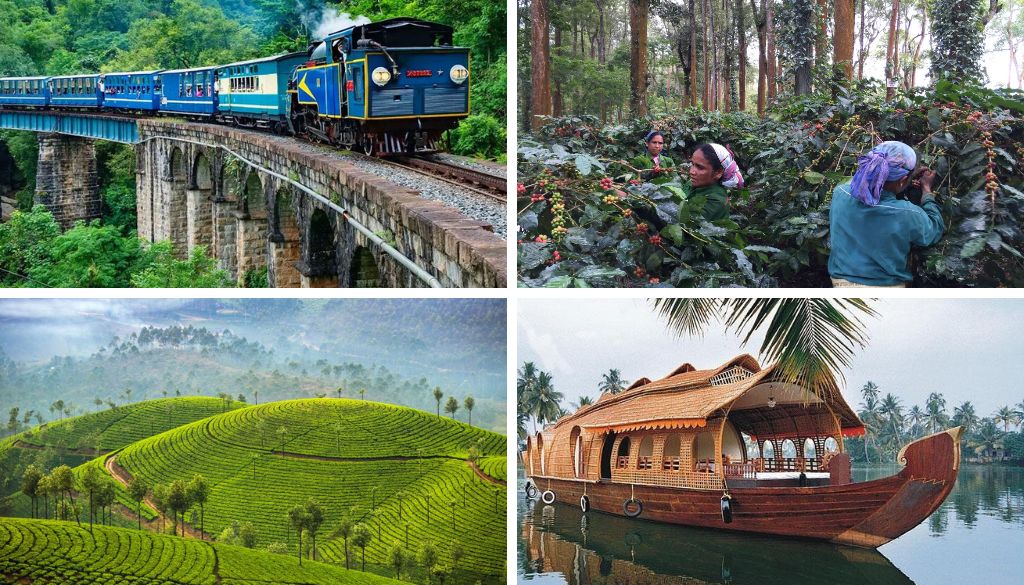
Perched high in the Ghats, Munnar’s tea estates absorb the monsoon like a slow, grateful exhale. The rain arrives in waves here, a morning of visibility gives way to afternoon cloud that settles between the ridges, blurring the boundary between sky and slope. Walk the plantation trails in the early hours before the mist rolls in and you’ll have the whole hillside to yourself.
Eravikulam National Park reopens after the breeding season in September, time your visit right and you’ll spot Nilgiri tahr on rain washed slopes with almost no competition from other tourists. The Attukal and Lakkam waterfalls are best seen now, at their most dramatic.
3.Ooty & the Nilgiris, Tamil Nadu- Mountain railway, Elephant sightings, Grasslands, Colonial heritage
Best: June–August
Ooty’s famous toy train, the Nilgiri Mountain Railway, is at its most magical when it weaves through cloud and dripping forest on the way up from Mettupalayam. The journey alone eucalyptus giving way to pine, the valley disappearing below a ceiling of grey justifies the trip. Book the early morning departure and watch the Ghats reveal themselves one ridge at a time.
Mudumalai Wildlife Sanctuary, at the foothills, sees good elephant activity during and after the rains. The Doddabetta peak and surrounding grasslands are quieter now, often wrapped in cloud excellent for solitary walks with a flask of hot tea from any of the estate shops along the road.
4.Alleppey, Kerela- Houseboats, Birdwatching, Off-season rates, Paddy fields
Back Waters, Best: June–September
The backwaters in monsoon are not for sunbathing they are for watching. Take a houseboat and spend two days drifting through a landscape of rain hammered paddy fields, coconut palms bowing in the wind, and canals turned silver under overcast skies. The light is extraordinary: flat, diffuse, equal, the kind that photographers call perfect.
Prices drop by 30–50% compared to peak season, and the houseboats that usually navigate in convoy now float in genuine solitude. Pack a good book, surrender the itinerary, and let the rain decide the rhythm of the day. Kumarakom Bird Sanctuary, a short drive away, is lush and full of monsoon waders that are absent in drier months.
5. Jog Falls, Karnataka-Waterfall, Gorge views, Forest drive, Photography
Sharavathi river, Best: August–October
The second-highest plunge waterfall in India falls year round, but in monsoon it falls like it means it. The Sharavathi river, swollen and dark with silt, splits into four distinct cascades -Raja, Rani, Rover, and Rocket and together they generate a roar and a mist that you feel before you see them. Stand on the viewpoint and the spray reaches you within seconds.
The road to Jog passes through dense deciduous forest that is fully alive in the rains look for langurs and peacocks along the route. The town itself is quiet and functional, stay the night to catch both the evening rush of water and the morning calm when early light catches the mist rising off the gorge below.
6.Yelagiri & Yercaud, Tamil Nadu- Offbeat, Orchards, Lake walks, Hill station
Eastern Ghats, Best: July–September
While Ooty fills with weekend crowds even in the off season, Yelagiri and Yercaud receive a fraction of the footfall for a landscape that’s arguably just as rewarding. Yelagiri a plateau rather than a peak has fruit orchards that are harvested through the wet months, and paths through the plateau that rarely see another walker. Yercaud, above Salem in the Shevaroy Hills, is coffee, orange, and jackfruit country.
Both are accessible by train and road without the traffic snarls of the more popular stations. The Yercaud lake in the rains reflects a sky that never looks the same two hours running. These are places for slowing down, not ticking off.
Experiences you cannot miss
Munnar — tea estates and peak waterfalls in the mist
Coorg — coffee plantations, Abbey Falls at full roar, and plantation homestays
Ooty & the Nilgiris — the toy train through cloud, Mudumalai wildlife
Alleppey — backwater houseboats in monsoon solitude at off-season prices
Jog Falls — the Sharavathi at its most dramatic in August–October
Yelagiri & Yercaud — the quieter, offbeat hill stations most tourists skip