Pune: Housing Societies Across PCMC Push Back Against Amenity Tax, Federation Warns of Legal Challenge
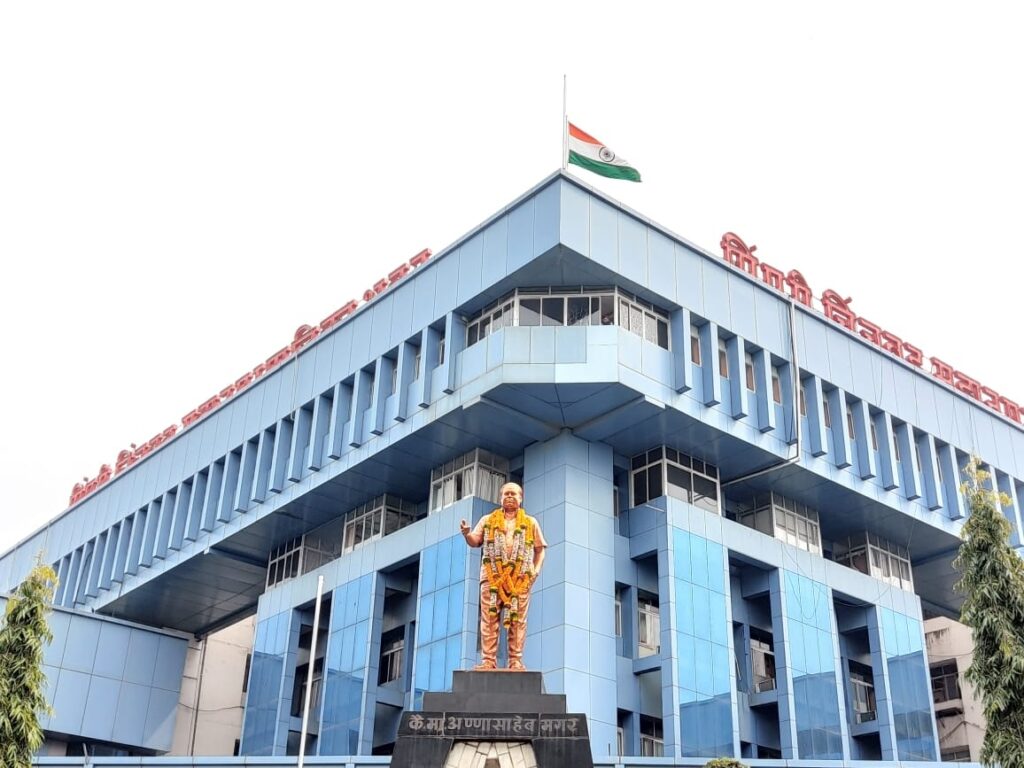
Pimpri Chinchwad, 12th June 2026: A fresh dispute has emerged between residents of cooperative housing societies and the Pimpri Chinchwad Municipal Corporation (PCMC) over the civic body’s decision to levy property tax on common amenity spaces within residential complexes.
The move has triggered widespread resentment among residents, many of whom describe it as an unfair financial burden that could significantly increase the cost of living in housing societies already grappling with rising operational expenses.
Several societies across Pimpri Chinchwad have received tax bills ranging from approximately ₹1 lakh to ₹5 lakh for common facilities such as clubhouses, swimming pools, libraries, society offices and other shared amenities. While civic officials maintain that these spaces have always been taxable, residents argue that this is the first time such demands have been raised against their societies.
Residents contend that individual flat owners already pay property tax and that common amenities form part of the overall built-up area of residential projects. Imposing a separate tax on these facilities, they argue, amounts to double taxation.
The issue has sparked concern among office-bearers of housing societies, who say the collection and distribution of this additional liability among residents could prove contentious.
Sandip Yeole, Expert Director of Horizons at Wakad Cooperative Housing Society, said the 266-flat society recently received a property tax demand of ₹3.18 lakh.
“This is the first time our society has received such a bill. Every resident is already paying property tax for their respective flats. Taxing common amenities separately does not appear justified,” Yeole said.
He further highlighted the administrative challenges involved in recovering the amount.
“Under cooperative housing society bylaws, expenditure beyond a specified limit requires approval through a General Body Meeting.
Moreover, deciding how the burden should be shared among residents with different flat sizes may create disagreements and disputes within societies,” he added.
A similar situation has arisen at Sanskriti Cooperative Housing Society in Kaspate Wasti. According to Sachin Gunale, the 650-flat residential complex has been served a property tax bill of ₹5.45 lakh.
“Our society was completed in 2011, and this is the first time we have received such a demand for facilities like the swimming pool, library and society office,” Gunale said.
He stated that the society had objected to the proposed assessment after receiving a draft notice several months ago.
“We submitted our objections in writing, but our concerns were not considered. Eventually, the final bill was issued,” he said.
The controversy has also drawn a strong response from the Pimpri Chinchwad Cooperative Housing Societies Federation Limited (PCCHSF), the officially registered apex body representing cooperative housing societies in the city.
PCCHSF President Sachin Londhe said housing societies are already under tremendous financial pressure due to inadequate civic services and mandatory compliance costs.
“Housing societies are spending heavily on water tankers because municipal supply remains inadequate in several areas. They are also bearing expenses related to sewage treatment plants, wet waste management, garbage disposal and routine maintenance. Imposing another financial burden in the form of an amenity tax is unjustified and unacceptable,” Londhe said.
He pointed out that many societies had lodged objections with the municipal corporation nearly two months ago after receiving draft assessment notices.
“General Body Meetings of societies are scheduled around June 15, and residents across the city are expected to express strong opposition to this taxation. The Federation has already begun receiving representations from hundreds of housing societies seeking intervention,” he said.
Londhe said the Federation is prepared to pursue legal remedies if necessary to safeguard the interests of residents.
“As the apex body representing cooperative housing societies, we have formally opposed this levy and are ready to take all appropriate legal steps if required. However, we sincerely hope that elected representatives will reconsider the decision in the larger public interest and provide relief to citizens,” he said.
Appealing to corporators and political leaders to intervene, Londhe added that if public representatives can demand the withdrawal of the 0.5 per cent charge on property transfers, they should demonstrate the same commitment toward the amenity tax issue.
“Residents should not be forced to pay additional taxes for facilities that they themselves maintain and fund. Citizens expect their elected representatives to respect the trust reposed in them and adopt a compassionate approach toward the hardships faced by thousands of families,” he said.
Meanwhile, PCMC officials have defended the move, clarifying that the levy is not a newly introduced tax.
Sachin Pawar, Deputy Municipal Commissioner and head of the civic body’s property tax department, said common amenity spaces have always been taxable under existing provisions, but many had remained outside the assessment process.
“Following a survey conducted to identify unassessed properties, we have started issuing tax bills to societies where amenity spaces had not previously been assessed. This is not a new levy but an exercise to bring such properties under the tax net in accordance with existing rules,” Pawar said.
The survey reportedly enabled the corporation to identify around 1.54 lakh previously unassessed properties, increasing the number of taxable properties in Pimpri Chinchwad from approximately 6.3 lakh to 7.84 lakh.
Officials have also noted that under the Maharashtra Municipal Corporation Act, the civic body has the authority to recover property tax for up to six previous years if any property is found to have remained unassessed.
As resentment grows among residents and housing societies, the issue is expected to dominate discussions at upcoming General Body Meetings, potentially setting the stage for a larger confrontation between citizens and the civic administration over what many view as an unfair and avoidable financial burden.