Pune: AI Tool Screens Warkari Devotees for Oral Cancer in Just 10 Seconds
Pune, 10th July 2026: This year’s Warkari procession passing through Pune has acquired a modern edge, with artificial intelligence making its mark. From AI-powered security tools monitoring lakhs of devotees to AI-enabled health screening camps for high-risk populations on the move, technology is becoming an integral part of the annual pilgrimage.
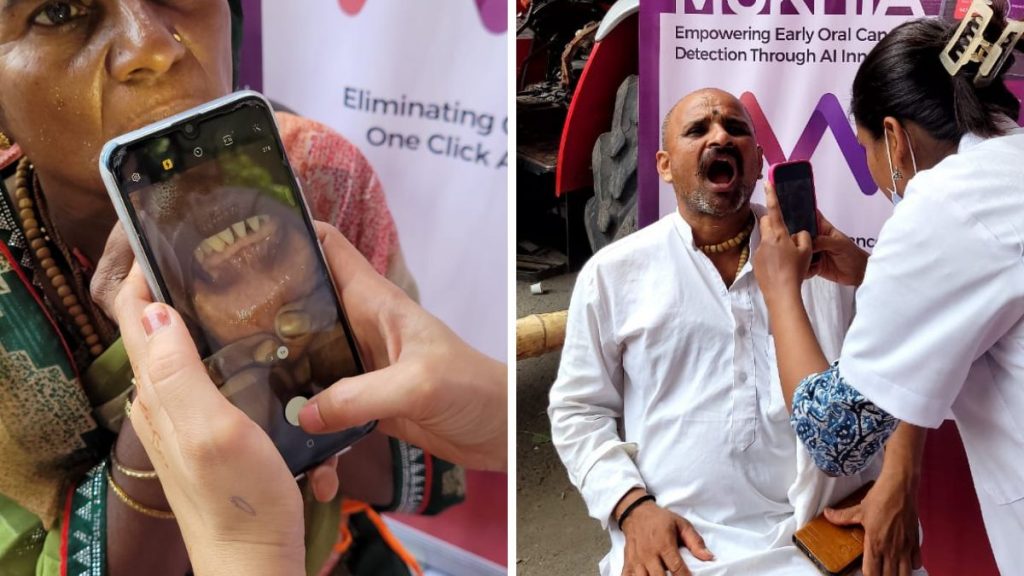
One such tool, Mukhia, was deployed during the procession as part of an initiative aimed at the early detection of precancerous and suspicious oral lesions among high-risk individuals.
Dr Prachee Hendre-Mhetras of Edgescan AI, who led the screening camp, said the dental team screened more than 25 devotees within a few hours in a compact setup.
“Mukhia is ideal for such mass screenings because it is non-invasive and delivers reports within 10 seconds. The tool analyses oral cavity photographs using Mukhia’s trained cloud-based algorithm and flags any lesions that may be potentially precancerous or cancerous,” she said.
The camp was organised at Rasta Peth on Friday as lakhs of devotees participated in the centuries-old Warkari Sampraday pilgrimage from Alandi to Pandharpur. The tradition emphasises community participation and shared rituals, creating a unique convergence of people from diverse social backgrounds and making such gatherings important opportunities for public health outreach and culturally sensitive health education.
Raghunath Mali, a farmer who has participated in the Warkari procession for the past four decades, underwent the screening.
“The test was very easy and gave results within seconds. Fortunately, no lesions were found, but the doctors educated me about the harmful effects of tobacco consumption. I will definitely work towards quitting tobacco,” he said.

Organisers said the Rasta Peth initiative sought to combine spiritual outreach with preventive healthcare, reaching devotees who may not otherwise have access to routine screening services.
With India carrying one of the world’s highest oral cancer burdens, AI-enabled tools such as Mukhia could play a significant role in improving early detection and intervention.
Dr Hendre-Mhetras added that Mukhia, developed by Pune-based Edgescan AI, is a CDSCO-licensed AI-backed oral lesion screening tool that demonstrated high sensitivity in validation trials.
“Within a few hours, several individuals were screened for oral lesions and counselled on the next steps. Designed for large-scale deployment, the tool supports early detection of precancerous and suspicious lesions, enabling timely diagnosis and simpler, more effective treatment,” she said.
Dr Bhairavi Gurav, one of the dentists involved in the screening, said the response from devotees was encouraging.
“We were able to conduct rapid checks and provide on-the-spot education about oral cancer and tobacco cessation. Those with potential lesions were advised to seek confirmatory testing at higher centres and were given information on quitting tobacco. The tool is extremely easy to use — we simply register the patient, capture images using a Mukhia-enabled smartphone, and the report is generated within seconds,” she said.
Sheetal Bendre, a woman in her fifties who has consumed tobacco since her twenties, said she was initially apprehensive about being screened.
“After the doctors explained the process, I agreed to take the test. It took only a few seconds and I received the report immediately. The report indicated a potential lesion, and the dentist advised me to undergo further testing at a hospital or diagnostic centre to confirm the diagnosis. The doctor assured me that with proper treatment there is no need to panic,” she said.

Health experts highlighted the advantages of deploying AI-assisted screening at large public gatherings, particularly among populations with high tobacco use. According to them, AI can speed up assessments, standardise interpretation across operators, and identify suspicious lesions that might otherwise go unnoticed, especially because such lesions are often painless and asymptomatic in their early stages.
In outreach settings, these benefits can translate into higher screening capacity, quicker referrals, and better utilisation of limited specialist resources — factors that are critical because early detection significantly improves treatment outcomes.