BCA or BBA: Which is the Better Course to Choose in 2026?
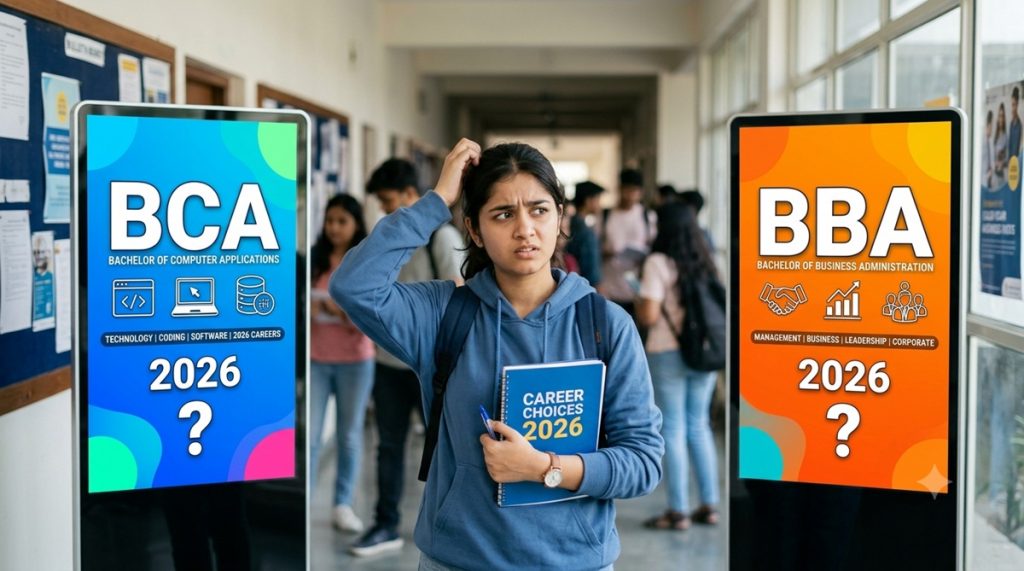
New Delhi, 13th July 2026: After 12th, one of the most common dilemmas students face is choosing between BCA and BBA. Both are three-year undergraduate programs. Both are popular. Both lead to decent careers. But they are fundamentally different in what they teach and where they take you.
Here is a clear, honest comparison to help you decide.
What is BCA?
Bachelor of Computer Applications is a three-year undergraduate degree focused on computer science and information technology. The curriculum covers programming languages, data structures, algorithms, database management, networking, web development, and software engineering fundamentals.
BCA is the right choice if you want to build a career in technology – software development, data science, cybersecurity, networking, or IT management. It is a technical degree that prepares you for the growing IT industry in India and globally.
Eligibility: Most universities require 10+2 with Mathematics as a compulsory subject. Some universities accept students from any stream but verify this for the specific institution you are applying to.
What is BBA?
Bachelor of Business Administration is a three-year undergraduate degree focused on business and management. The curriculum covers marketing, finance, HR, operations, organizational behavior, business law, economics, and entrepreneurship.
BBA is the right choice if you want to build a career in business, management, sales, banking, or entrepreneurship. It is a management degree that prepares you for the corporate world across industries.
Eligibility: Most universities accept students from any stream for BBA admission. It is one of the most accessible undergraduate degrees in India in terms of eligibility.
BCA vs BBA: Key Differences
The most fundamental difference is the focus. BCA is a technology degree. BBA is a management degree. Everything else follows from that.
BCA requires Mathematics at the 12th level for most university admissions. BBA accepts students from any stream, making it more accessible in terms of eligibility.
Career paths diverge significantly after graduation. BCA graduates enter the technology sector including software development, data science, networking, and cybersecurity. BBA graduates enter the business world including marketing, finance, HR, sales, and operations across every industry.
Further study also differs. BCA graduates typically go on to MCA, MTech, or MBA. BBA graduates almost always pursue MBA or PGDM as their next step.
Starting salaries are broadly similar. BCA graduates entering tech roles start at Rs. 3.5 to 6 LPA. BBA graduates entering business roles start at Rs. 3 to 5.5 LPA. The difference in long-term earning depends far more on what you do with the degree than on which degree you chose.
Career Options After BCA
BCA opens doors primarily in the technology sector. Common career paths include software developer or junior programmer in web, mobile, or enterprise software companies. This is the most common entry point for BCA graduates.
Data analyst roles are available for graduates who develop strong programming and statistics skills during their degree.
Network and system administrator roles suit those who specialize in networking and IT infrastructure.
Cybersecurity analyst is one of the fastest growing areas of tech hiring in India across BFSI, government, and large enterprises.
Most BCA graduates who want to maximize their career potential go on to pursue an MCA or MBA after completing their undergraduate degree.
Career Options After BBA
BBA opens doors across a much wider range of industries because business functions exist in every sector.
Marketing executive, brand associate, or digital marketing specialist roles are available across FMCG, e-commerce, media, and startups.
Banking and financial services roles including relationship manager, credit analyst, and banking officer positions are consistently available for BBA graduates.
Human resources roles in talent acquisition, employee engagement, and HR operations are open across mid-size and large companies.
Sales and business development roles in tech companies, SaaS businesses, and manufacturing are another popular path.
Entrepreneurship is also a strong option. BBA’s foundational business education gives aspiring founders the vocabulary and frameworks to build and manage a business.
For students who want to pursue an online BBA without relocating or attending campus full-time, programs from UGC entitled universities now offer the same degree with live classes and flexible schedules. JAIN Online offers a UGC entitled online BBA from a NAAC A++ accredited university with 5 specializations and EMI options, making it accessible for students across India.
Which Has Better Salary Prospects?
In the short term, BCA graduates entering tech roles tend to have a slight salary advantage. Entry-level software development roles at mid-size companies start at Rs. 4 to 6 LPA for strong BCA graduates.
BBA graduates entering marketing, sales, or HR typically start at Rs. 3 to 5 LPA, though banking and finance roles can start higher depending on the company.
In the long term, the gap closes significantly. BBA graduates who pursue an MBA and move into management roles often outpace BCA graduates who stay in technical positions. And BCA graduates who move into product management, data science, or tech leadership roles can earn far more than BBA graduates in traditional management paths.
Long-term salary depends more on what you do with the degree than on which degree you choose.
Which Should You Choose?
Choose BCA if you genuinely enjoy computers, coding, and technology. If the idea of building software, working with data, or solving technical problems excites you, BCA gives you the foundation to do that well.
Choose BBA if you are interested in how businesses work including marketing strategy, financial management, team leadership, or entrepreneurship. BBA gives you a broad business foundation that is applicable across virtually every industry.
Do not choose BCA just because IT jobs pay well. And do not choose BBA just because it is easier to get into. Both decisions tend to backfire within two to three years when students realize they are not interested in what their degree is preparing them for.
The best career comes from choosing the field that genuinely interests you and then building on it consistently.
What to Do After BCA or BBA?
Both degrees are stepping stones rather than destinations.
BCA graduates typically go on to MCA, MTech, or MBA depending on whether they want to deepen their technical knowledge or transition into management.
BBA graduates typically go on to MBA, PGDM, or specialized certifications in their area of focus including finance, marketing, HR, or data analytics.
The combination that consistently produces strong career outcomes in India is a solid undergraduate degree followed by a relevant postgraduate qualification from an accredited institution. Whether you start with BCA or BBA, plan for what comes next from the beginning.