Pune Water Crisis Warning: BWF Urges Housing Societies to Adopt Rainwater Harvesting Amid Rainfall Deficit
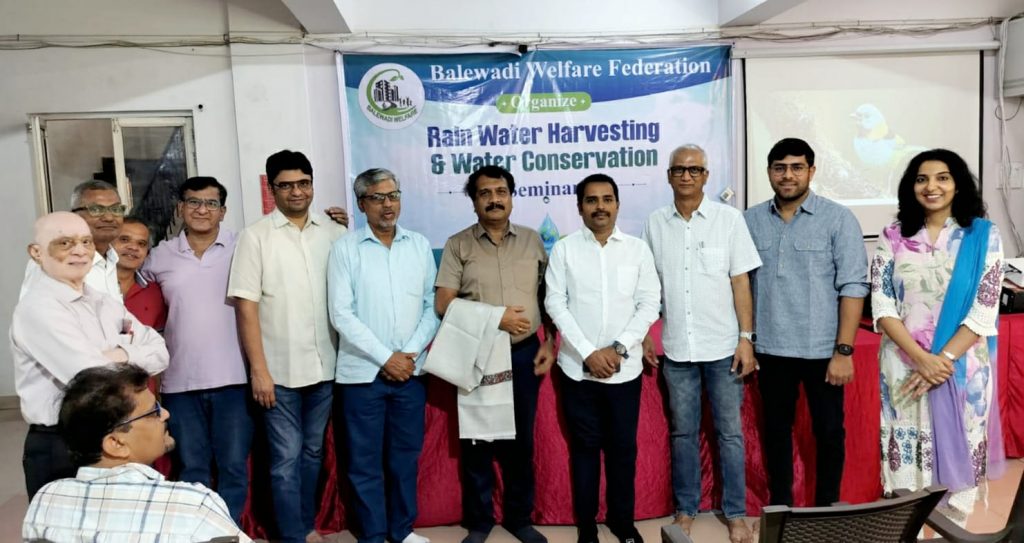
Balewadi, 14th July 2026: Against the backdrop of a severe rainfall deficit and growing concerns over water availability, the Balewadi Welfare Federation (BWF) organised a seminar on “Water Recharge and Conservation”, urging residential communities to take immediate steps to secure Pune’s future water needs through rainwater harvesting and water conservation.
Delivering the keynote address, noted water conservation expert Satish Khade called upon housing societies to act without delay. “Think of the next generation – start saving water today,” he said, stressing that water conservation can no longer be postponed.
The seminar comes at a crucial time, as Pune recorded one of its driest Junes in recent years with a 57% rainfall deficit, raising concerns over drinking water availability. The Pune Municipal Corporation (PMC) has already introduced alternate-day water supply in several areas, resulting in increased dependence on private water tankers.
Khade explained that around 65% of Pune’s water supply comes from dams, while the remaining 35% depends on groundwater, which is rapidly declining due to urbanisation and population growth. He warned that unless rainwater harvesting systems are installed, maintained and effectively utilised, the city could face a serious water crisis in the coming years.
Highlighting the impact of rapid urban development, Khade said the growing population has created a demand-supply imbalance in densely populated and heavily concretised areas.
He noted that extensive high-rise construction has disrupted natural groundwater recharge by damaging aquifers and reducing water percolation. He also expressed concern over increasing runoff, pollution of water bodies and declining groundwater recharge capacity.
Khade urged all housing societies and institutional campuses to adopt rainwater harvesting systems. He also cited the successful restoration of a local stream through bio-enzyme treatment as a sustainable model that can be replicated across Pune through community participation.
As part of the seminar, Khade demonstrated practical water-saving measures, including the installation of aerators and flow regulators on taps to minimise water wastage. He said citizens, public representatives and government authorities must collectively treat water scarcity and climate change as urgent priorities.
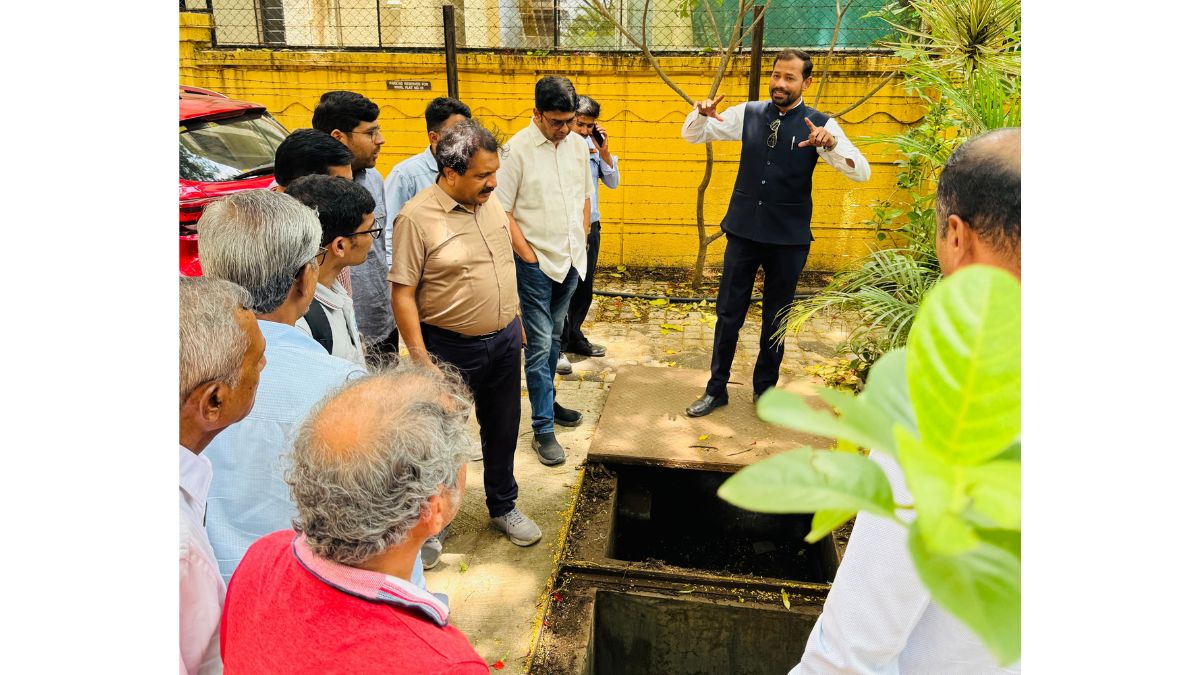
Participants were also given a live demonstration of the rainwater harvesting system installed at Aditya Bridge Society in Balewadi, where contractor Ramesh Gayake addressed residents’ technical queries.
BWF President Ramesh Rokade reaffirmed the federation’s commitment to spreading awareness about water conservation and promoting rainwater harvesting across the Baner-Balewadi area.
“With community rainwater harvesting and active citizen participation, we can ensure Pune’s long-term water security and significantly reduce dependence on water tankers,” Rokade said.
Khade, author of the book Abhinav Jalnayak, has been working in the field of water literacy and environmental conservation for more than 13 years and has received recognition from several organisations for his contributions.
The seminar concluded with the felicitation of Khade by community leaders Dafedar Singh, Ashish Kotamkar, Shakeel Salati, Vandana Chaudhary and Shailesh Patil. Mangalmurti, Secretary of Aditya Bridge Society, welcomed the participants, while Yogesh Dumbare conducted the proceedings and delivered the vote of thanks. The event was supported by Moreswar Balwadkar, Vaibhav Aadhav, Shubhangi Ingwale, Nilesh Baste, Yogendra Singh and Yash Chaudhary.
The seminar forms part of BWF’s ongoing campaign to strengthen rainwater harvesting across the Baner-Balewadi region. Following a similar awareness drive in 2023, the latest initiative focused on practical implementation, citizen awareness and encouraging maximum adoption of rainwater harvesting systems, which are mandatory under PMC regulations.
Housing society office-bearers and representatives were urged to implement sustainable water management practices immediately, emphasising that conservation will be the key to ensuring Pune’s water security in the years ahead.