Maharashtra Doubles Pink E-Auto Subsidy to 40%, But Only 17 Women Benefit in Pune So Far
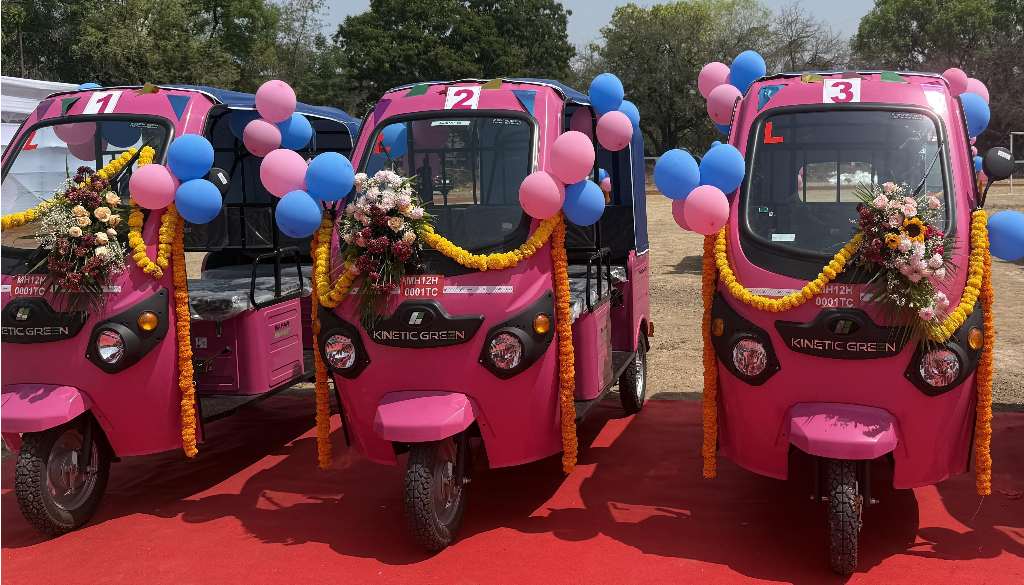
Pune, 4th August 2026: The Maharashtra Government has doubled the subsidy under its Pink E-Auto Scheme from 20% to 40%, providing a significant boost to the initiative aimed at creating sustainable livelihood opportunities for women while promoting clean and eco-friendly urban mobility.
According to a recent Government Resolution (GR), women who had already received Pink E-Rickshaws under the earlier version of the scheme will also be eligible for the additional 20% subsidy. The enhanced assistance is intended to help beneficiaries repay loans taken to purchase their vehicles.
The revised policy also changes the funding pattern. Beneficiaries will now be required to contribute a minimum of 10% of the vehicle cost, while the remaining amount can be financed through bank loans or an interest-free deferred payment facility offered by the vehicle supplier.
During the recently concluded Maharashtra Legislative Assembly session, Minister for Women and Child Development Aditi Tatkare reaffirmed the government’s commitment to deploying 5,000 Pink E-Autos across the state. She said the application process would be simplified by the end of the current financial year to accelerate implementation.
Despite the scheme’s ambitious targets, its rollout has been slow. Pune district was earlier allocated a target of around 4,000 Pink E-Autos. However, since the scheme was launched two years ago, only 17 women have successfully completed the application process and begun operating the vehicles, highlighting a significant gap between policy intent and on-ground execution.
Welcoming the enhanced subsidy, Pune-based NGOs Parisar and Asar Social Impact Advisors said the decision would benefit women entrepreneurs but stressed that major implementation reforms are necessary for the scheme to achieve its intended objectives.
The two organisations have been working closely with women applicants and other stakeholders involved in the scheme, including the Department of Women and Child Development (WCD), implementing agency Kinetic Green, and beneficiaries. Based on field engagement and an independent survey conducted among beneficiaries in Pune, they have documented several implementation challenges and submitted recommendations to the concerned authorities.
The survey found that women applicants continue to face multiple hurdles, including unclear eligibility criteria and documentation requirements, delays during different stages of the application process, difficulties in accessing finance and arranging the beneficiary contribution, and concerns over the commercial viability of operating the vehicles.
Commenting on the findings, Sharmila Deo, Senior Program Associate at Parisar, said, “The increase in subsidy is a welcome step and has the potential to significantly improve the scheme’s uptake, provided it is accompanied by timely implementation and adequate institutional support. The visibility of the scheme remains low, and the Department of Women and Child Development must intensify awareness efforts.”
Deo also said the Pune Metro could play an important role by providing dedicated parking and pick-up spaces for women beneficiaries at Metro stations.
“While Metro officials have been supportive during discussions, we now look forward to concrete action. Similarly, departments such as transport and traffic police have an important role in ensuring timely licensing, vehicle registration, permit approvals, route planning, designated parking and pick-up points, and overall operational facilitation. Sensitising male auto-rickshaw drivers is also essential to encourage cooperation at auto stands and prevent workplace hostility,” she added.
Vilas Gite, Program Associate at Asar Social Impact Advisors, said beneficiaries had also raised concerns regarding vehicle speed, ride comfort and passenger acceptance.
“At the same time, the service has received encouraging feedback from students, senior citizens, women passengers and regular short-distance commuters. Many beneficiaries say that owning and driving a Pink E-Auto has given them confidence, dignity, financial independence and the flexibility to determine their own work schedules,” Gite said.
While many women appreciated the enhanced subsidy for reducing their initial financial burden, they emphasised that financial assistance alone would not ensure sustainable livelihoods.
“The beneficiaries stressed that implementing agencies should provide timely and easily accessible technical support to ensure immediate assistance during vehicle breakdowns or maintenance-related issues,” Gite added.
Based on their field experience, Parisar and Asar have recommended simplifying application and documentation procedures, establishing district-level facilitation and grievance redressal mechanisms, improving coordination among implementing agencies, vehicle manufacturers and financial institutions, reviewing vehicle specifications based on user feedback, strengthening financial support systems, and monitoring post-delivery outcomes to ensure beneficiaries can earn sustainable incomes.
The organisations said that if implemented effectively, the large-scale deployment of Pink E-Autos in Pune could significantly reduce greenhouse gas emissions, local air pollution and noise while creating dignified and sustainable livelihood opportunities for thousands of women.
However, they emphasised that achieving the government’s target will depend not only on distributing vehicles but also on ensuring that women can successfully adopt, operate and sustain them as viable sources of income.