Garbage Around Pune Airport Attracting Black Kites, Raising Flight Safety Concerns
Reported by Mubarak Ansari
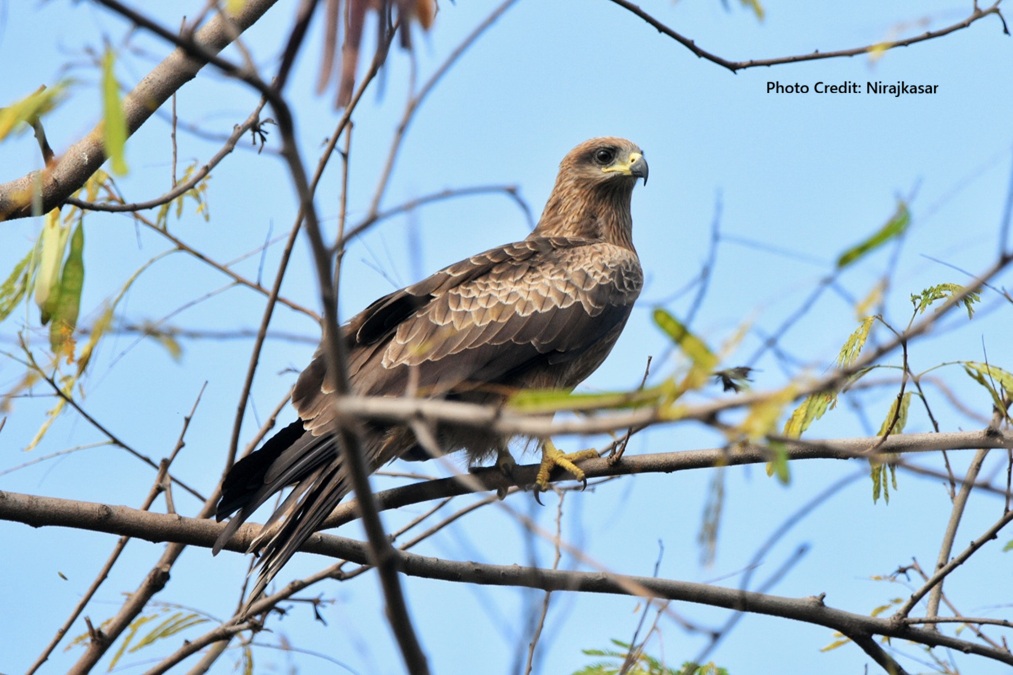
Lohgaon, 7th August 2026: The Indian Air Force (IAF) has identified the black kite as the biggest bird-related threat to the safe operation of both civil and military aircraft at Pune International Airport and the adjoining Lohgaon Air Force Station.
According to IAF officials, the growing presence of these birds is primarily linked to open garbage dumping and poor waste management around the airport, which attracts large numbers of scavenging birds into the flight path of aircraft during take-off and landing.
To minimise the risk of bird strikes, the Air Force has deployed eight Bird Distraction Modules, intensified manual patrolling at 16 locations around the runway, and implemented several other preventive measures to keep birds away from aircraft operating areas.
Lohgaon Air Force Station serves as a key base for Sukhoi fighter aircraft operations while also sharing its runway with Pune’s civil airport. On average, around 240 civil flight movements take place daily, taking the annual figure to nearly 72,000 aircraft movements. Pune is home to nearly 200 bird species, of which about 20 species are frequently observed within the airport’s operational area. Among them, the black kite, because of its large size and soaring flight pattern, poses the greatest danger to aircraft safety.
IAF officials said that 5,740 bird strike incidents were reported across India between 2020 and June 2025, resulting in damage to 804 aircraft. In some cases, pilots also sustained serious injuries, highlighting bird strikes as a significant aviation safety challenge.
Rise in high-rise building NOCs around airport
The Indian Air Force has also witnessed a steady increase in applications seeking No Objection Certificates (NOCs) for high-rise buildings around the airport, reflecting the rapid pace of urban development in eastern Pune. According to a senior IAF officer, around 1,000 NOC applications were received in 2020, while the number has increased to more than 1,400 applications annually over the last three years.
“We inform builders about the permissible height restrictions while examining their building proposals so that there is no threat to aircraft during landing and take-off operations. Every proposal is assessed from an aviation safety perspective before an NOC is issued,” the senior officer told Punekar News.
Garbage attracting birds
Pune Defence PRO Ankush Chavan said open garbage dumping and inadequate waste management around the airport remain the primary reasons for the increasing presence of birds.
“Birds such as black kites are attracted to the area in search of food, creating a serious hazard during aircraft take-offs and landings. Among all bird species found around the airport, black kites pose the highest risk because of their size and flight pattern,” Chavan said.
He added that the Air Force has been consistently pursuing the issue with the Pune Municipal Corporation (PMC), district administration and other concerned agencies to improve waste management around the airport.
“We have held several meetings with the civic administration and requested effective garbage management around the airport. However, the desired level of improvement has not yet been achieved. Unless garbage is managed scientifically, birds will continue to be attracted to the airport vicinity, increasing the risk of bird strikes,” Chavan said.
Drone flying prohibited
The Air Force has also reiterated that the area surrounding Pune Airport and Lohgaon Air Force Station is a highly sensitive and restricted zone, where flying drones is strictly prohibited.
Officials said that with drones becoming increasingly accessible, incidents of unauthorised drone operations in restricted airspace have been reported. Whenever such violations are detected, complaints are lodged with the police and legal action is initiated.
“The airport is a prohibited zone from the aviation security point of view. Citizens should refrain from flying drones in and around the airport and must immediately report any suspicious drone activity to the authorities,” Chavan appealed.
Leopard entered airport following stray dogs
The Air Force also cited a recent incident to underline the broader impact of poor waste management. Garbage accumulated around the airport attracts large numbers of stray dogs, which in turn drew a leopard into the airport premises last year while tracking the animals.
The leopard was eventually captured following a joint operation by the Indian Air Force and the Forest Department. Officials said the incident demonstrated that proper waste management is essential not only for reducing bird strike risks but also for preventing the movement of wild animals into the airport area.
“Scientific waste management around the airport is no longer only a cleanliness issue. It is directly linked to aviation safety and preventing the entry of birds and wild animals into operational areas,” an IAF officer said.