Biosurfactants, Food Safety And Waterless Personal Care: Inside Green Pyramid Biotech’s Technology
Reported by Radhika Sharma
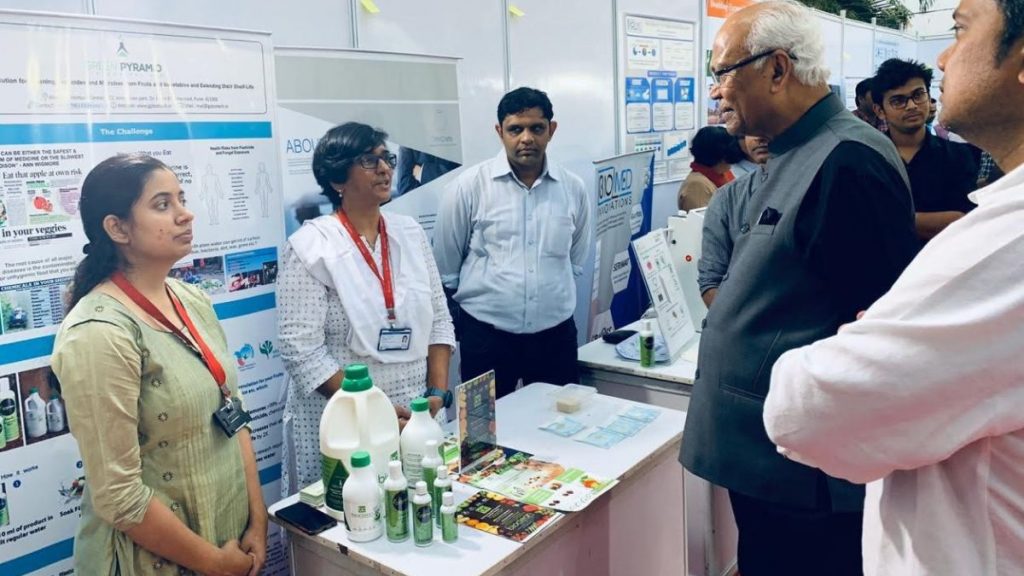
Pune, 24th August 2026: Green Pyramid Biotech Pvt. Ltd., a biotechnology company established as a spin-off from CSIR-National Chemical Laboratory (NCL), Pune, is developing biosurfactant-based technologies for applications across food safety, agriculture, personal care and hygiene.
Founded in 2015 by Dr Asmita A. Prabhune and incubated at Venture Centre, Pune, the company uses microbial fermentation to produce biosurfactants. Its areas of development include fruit and vegetable washing, meat hygiene, post-harvest shelf-life extension, waterless personal care and natural sanitisation.
Prabhune, who has more than 34 years of research experience in biosurfactants, said the company was created to address the gap between laboratory research and commercial applications.
“Founding Green Pyramid Biotech was really about closing that gap; taking three decades of accumulated know-how in biosurfactant science, both in India and from my postdoctoral years in the UK and Germany, and putting it to work commercially rather than leaving it as purely academic output,” she said.
Biosurfactants are molecules that reduce surface tension, allowing water and oil to interact and helping substances spread more evenly. Unlike conventional surfactants, which are synthesised from petroleum, biosurfactants are produced by microorganisms through fermentation using feedstocks such as sugars and oils.
According to Dr Asmita, biosurfactants are biodegradable and generally milder on skin and mucous membranes. Some can also have additional functions, including antimicrobial activity.
The company’s technology is being developed for food safety applications involving fruits, vegetables and meat. Biosurfactants can be formulated into washes, coatings and sanitising systems because of their antimicrobial and antifungal properties.
“Biosurfactants have intrinsic antimicrobial and antifungal properties, so they can be formulated into washes, coatings, and sanitising systems for fruits, vegetables, and meat that reduce microbial load without relying purely on chlorine-based or synthetic chemical sanitisers,” Prabhune said.
The company is also developing biosurfactant-based washes to remove pesticide residues from produce. Prabhune explained that many pesticides are oil-based and adhere to the waxy surface of fruits and vegetables.
“A biosurfactant molecule has one end that grabs onto oily residue and another end that mixes with water, so it can actually lift the pesticide off the surface and carry it away,” she said.
Another application is post-harvest preservation. Biosurfactant-based coatings can be combined with compounds that inhibit browning, preserve chlorophyll or suppress microorganisms responsible for spoilage.
Prabhune said the approach could help extend the period for which fresh produce remains marketable, reducing losses between the farm, retail outlets and consumers.
Green Pyramid is also working on waterless personal care formulations. Biosurfactants can be used in powder, low-water and waterless systems, with potential applications including dry shampoos and rinse-free cleansers.
Taking the technology from laboratory research to commercial production has involved challenges related to scale-up, cost and market acceptance. Prabhune said fermentation processes that work at laboratory scale do not necessarily perform identically at production volumes.
“Academic research doesn’t have to compete on price, but a commercial product does,” she said, highlighting the need for formulations that can compete with established synthetic alternatives.
The company is also focused on applications where biosurfactant performance can justify their use without relying on consumers paying more solely for sustainability.
“I don’t think you win it by asking customers to pay a ‘sustainability premium’; that only works for a small segment of the market,” Prabhune said.
For India, Prabhune identifies agriculture and food processing as key areas for future applications, particularly post-harvest preservation, food-contact sanitisation and biocontrol during storage and transportation.
“India’s scale is the opportunity,” she said, pointing to the country’s agricultural output, fermentation and bioprocess expertise and research base.
The company’s longer-term focus is on establishing sustainable biotechnology as a commercially viable alternative rather than a niche technology.
“The next five to ten years for GPB, and for this sector generally, is really about proving that sustainable biotechnology isn’t a niche or boutique choice; it’s a scalable, cost-competitive, mainstream one,” she said.