Pune: GIPE Launches Mahadaji Shinde Memorial Lecture on Geopolitics with Inaugural Address by Israeli Consul General Yaniv Revach
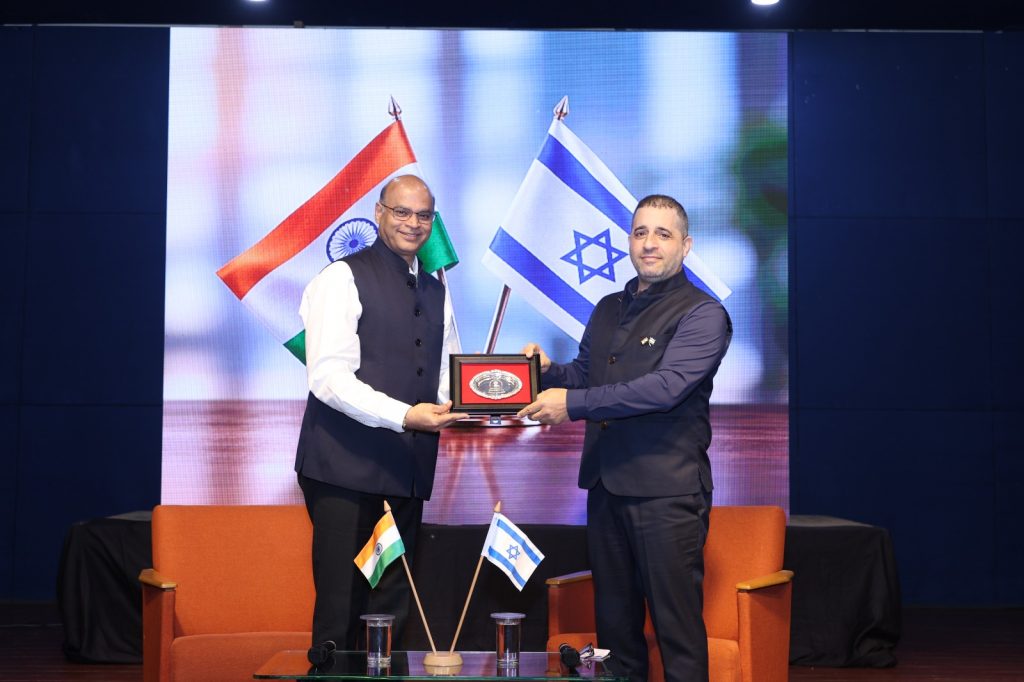
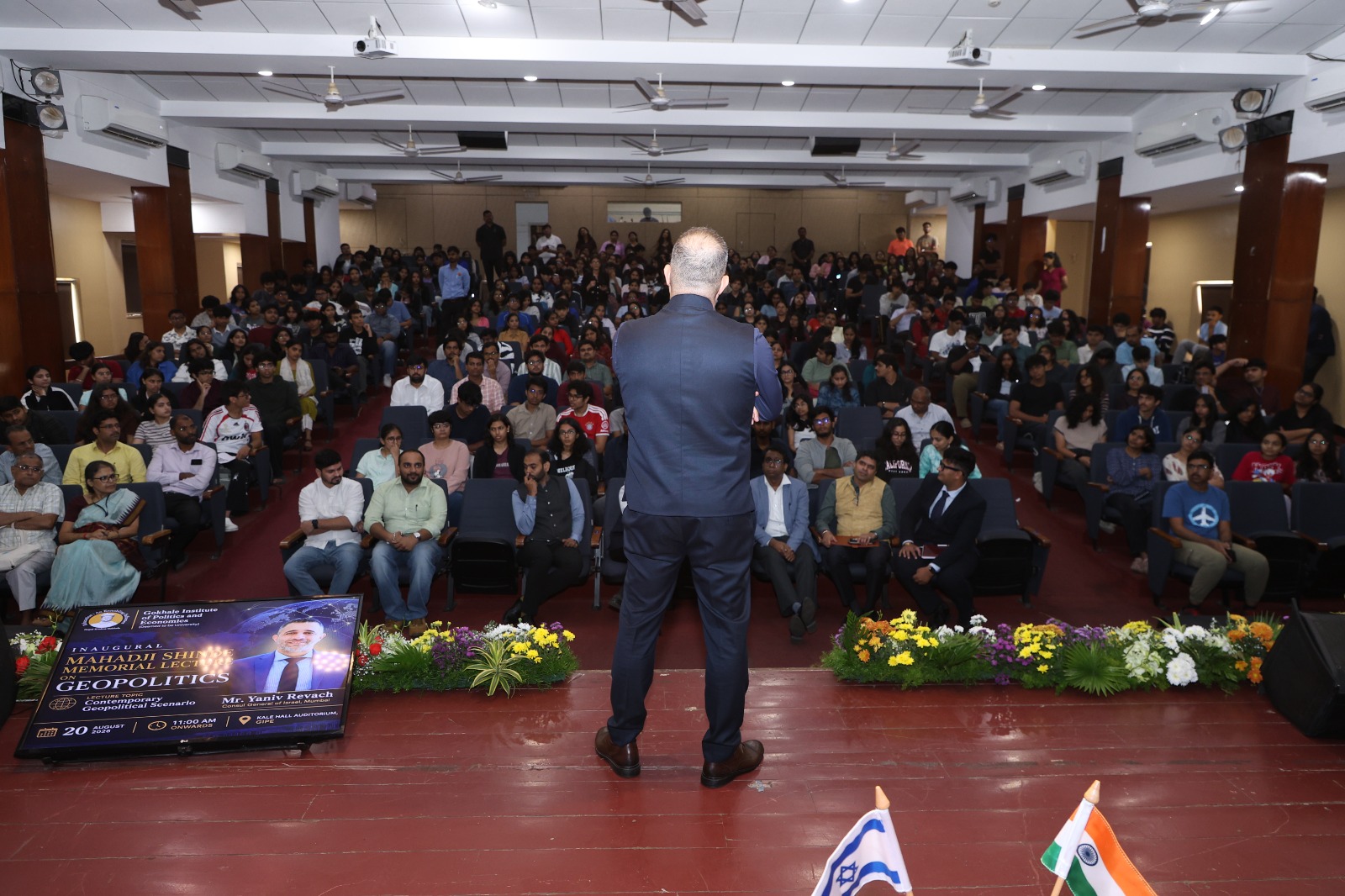
Shivajinagar, 24th August 2026: The Gokhale Institute of Politics and Economics (GIPE) inaugurated the Mahadaji Shinde Memorial Lecture on Geopolitics, a new lecture series dedicated to strategic affairs, diplomacy and global geopolitics. The inaugural lecture was delivered by Yaniv Revach, Consul General of Israel in Mumbai, at Kale Hall Auditorium, GIPE.
Prior to the lecture, Revach was received at the historic Gokhale Bungalow, where he participated in a closed-door interaction with distinguished guests and members of the Institute at SIS Hall.
The programme commenced with the welcome address by Dr. Umakant Dash, Vice Chancellor of GIPE, who felicitated Revach with a commemorative memento and presented him with a book published by the Institute. Dr. Dash described the inaugural lecture as an important academic initiative aimed at fostering informed dialogue on the rapidly evolving global geopolitical landscape.
Dr. Dash stated that the Mahadaji Shinde Memorial Lecture would bring together eminent diplomats, scholars and strategic thinkers from across the world. Highlighting the significance of the lecture series, he observed that Mahadaji Shinde’s legacy as an exceptional strategist and diplomat makes him an appropriate inspiration for a forum dedicated to geopolitics and statecraft. He also emphasized the potential for academic collaboration between GIPE and Israeli institutions in areas such as water management, technology, agriculture, joint research and academic exchange programmes.
Mahadaji Shinde’s Legacy and the Vision of the Lecture Series
Introducing the rationale behind the memorial lecture, Prof. Kedar Naik reflected on Mahadaji Shinde’s contribution to Indian strategic history. He noted that although Mahadaji Shinde is widely remembered as a Maratha military leader, his larger contribution lay in his ability to rebuild political power, restore stability and shape diplomacy during a challenging period in Indian history following the Third Battle of Panipat.
Prof. Naik highlighted three defining dimensions of Mahadaji Shinde’s leadership, military modernisation through the adoption of European military techniques, diplomatic excellence reflected in the Treaty of Salbai, and statesmanship that enabled him to emerge as one of the most influential political figures of eighteenth-century India.
He further observed that history often celebrates those who create new political orders while overlooking leaders whose greatest achievement lies in reconstruction and restoration. In this context, he described Mahadaji Shinde as an unsung strategic visionary whose legacy continues to offer valuable lessons in geopolitics and diplomacy.
India–Israel Relations and Geopolitical Perspectives
Delivering the inaugural memorial lecture, Yaniv Revach shared perspectives from his two-decade-long diplomatic career and reflected on the evolving strategic relationship between India and Israel. He emphasized that the partnership between the two countries extends beyond governmental engagement and is strengthened by people-to-people connections, innovation and shared developmental aspirations.
Revach drew parallels between India and Israel as relatively young modern nations that emerged in 1947 and 1948 respectively while facing significant geopolitical challenges in their neighbourhoods. Referring to Israel’s development journey, he highlighted the country’s transformation into an innovation-driven economy despite limited natural resources and challenging environmental conditions.
Speaking about India, Revach welcomed initiatives such as Make in India and described Pune as an important centre for manufacturing, automobiles, defence and information technology. He observed that India’s scale and Israel’s innovation ecosystem create significant opportunities for deeper technological and industrial cooperation. He also cited Israeli innovations, including advanced mobility and radar technologies, as examples of areas where collaborative development could benefit both economies.
Security, Regional Developments and Strategic Cooperation
The Consul General also addressed Israel’s contemporary security environment and discussed the geopolitical implications of regional conflicts, including the events following October 7, 2023, and their impact on Israeli society, national resilience and economic continuity.
During the interactive discussion, Revach responded to questions concerning emerging regional alignments involving Pakistan, Turkey and Saudi Arabia. Expressing his assessment, he characterised the developing alignment as an “axis of evil”, while discussing broader regional security concerns and the strategic implications of defence cooperation in West Asia and South Asia.
He further highlighted the importance of strengthening cooperation among India, Israel, the United Arab Emirates and the United States through the I2U2 framework, describing such partnerships as important platforms for economic, technological and strategic collaboration.
Concluding his lecture, Revach referred to the forthcoming installation of a statue of Chhatrapati Shivaji Maharaj at the Port of Haifa, highlighting its cultural significance in the context of India–Israel relations.
Interactive Session and Vote of Thanks
The inaugural lecture was followed by an open question-and-answer session with students, faculty members, researchers and invited guests, enabling an exchange of perspectives on diplomacy, international relations, strategic affairs and contemporary geopolitical developments.
The programme concluded with the Vote of Thanks delivered by Prateik Dhatrak, Chief Financial Officer, GIPE.
With the launch of the Mahadaji Shinde Memorial Lecture on Geopolitics, GIPE has added a second major memorial lecture series alongside its distinguished R.R. Kale Memorial Lecture, reaffirming the Institute’s commitment to promoting rigorous academic discourse on public policy, international relations, diplomacy and global strategic affairs.