Leopards, Humans Can Coexist: Pune Conservationists Share Lessons From the Field
Pune, 7th October 2026: Human-wildlife conflict can be reduced and coexistence made possible when people exercise sensitivity and appropriate caution, nature conservationists Smita Rajhans and Prajakta Hushangabadkar said at an event in Pune on Tuesday.
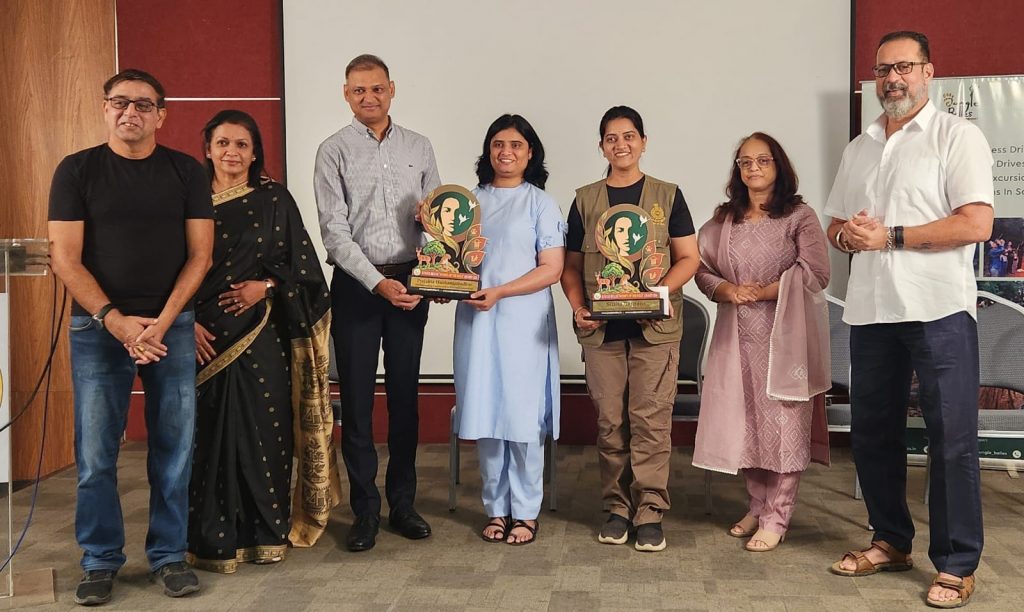
The two were honoured with the JungleBells Woman of the Wild 2026 award for their contributions to wildlife and nature conservation. The awards were presented by Pune Chief Conservator of Forests Ashish Thakre, IFS, during a special programme organised by JungleBells as part of Wildlife Week.
The award comprises a trophy, citation and a cash prize of Rs 25,000.
Former Chief Conservator of Forests (Wildlife) Sunil Limaye, Neeta Kulkarni, Hemangi Vartak and Sanjay Deshpande were present at the event.
Rajhans, Assistant Conservator of Forests with the Junnar Forest Division, and Hushangabadkar, a wildlife biologist and conservation activist, presented audio-visual accounts of their conservation work.
Rajhans spoke about her work in managing human-leopard conflict, rehabilitating leopard cubs, conducting rescue and capture operations, and addressing challenges involving leopards inhabiting sugarcane fields.
She said every week should be considered Wildlife Week and highlighted initiatives undertaken to involve students in environmental conservation. She said 28,000 students had been associated with the National Green Corps through the Social Forestry Division.
Rajhans also spoke about a tree-covered area developed and conserved through conservation efforts that was subsequently used as a habitat by a tiger. She said the Forest Department’s work involves protection, conservation and management of natural resources, along with maintaining sensitivity during conflict situations and undertaking leopard rescue operations.
Hushangabadkar said involving local communities in conservation efforts was proving to be an effective approach. She also noted the growing participation of women across various sectors.
Thakre said the contribution of women working in different positions in the Forest Department was noteworthy. He said women often approached issues with sensitivity and helped find appropriate solutions.
“These are gender-neutral fields of work and efforts should be made to encourage more women to participate,” Thakre said.
Limaye said the increasing participation of women in the sector was welcome and added that their working methods were helping the Forest Department’s approach evolve from being reactive to more responsive.
Sanjay Deshpande of Sanjeevani Developers said that although he worked in the construction sector, he considered it his responsibility to support nature conservation initiatives to the best of his ability.
In her introductory remarks, Vartak outlined the objectives and activities of JungleBells. She said the award had been instituted to recognise women working to bring about a change in perspectives towards wildlife and conservation.
Anuj Khare shared his observations as an examiner, while Rohan Deshpande proposed the vote of thanks. Sonal Marne compered the programme.