Pune MPSC Protest: Bombay High Court Tells State to Keep Roads Clear Amid Agitation
Mumbai/Pune, 7th October 2026: The Bombay High Court has directed the Maharashtra government to file a detailed affidavit on grievances raised by candidates and students over Maharashtra Public Service Commission (MPSC) examinations, including the investigation into an alleged Drug Inspector examination paper leak.
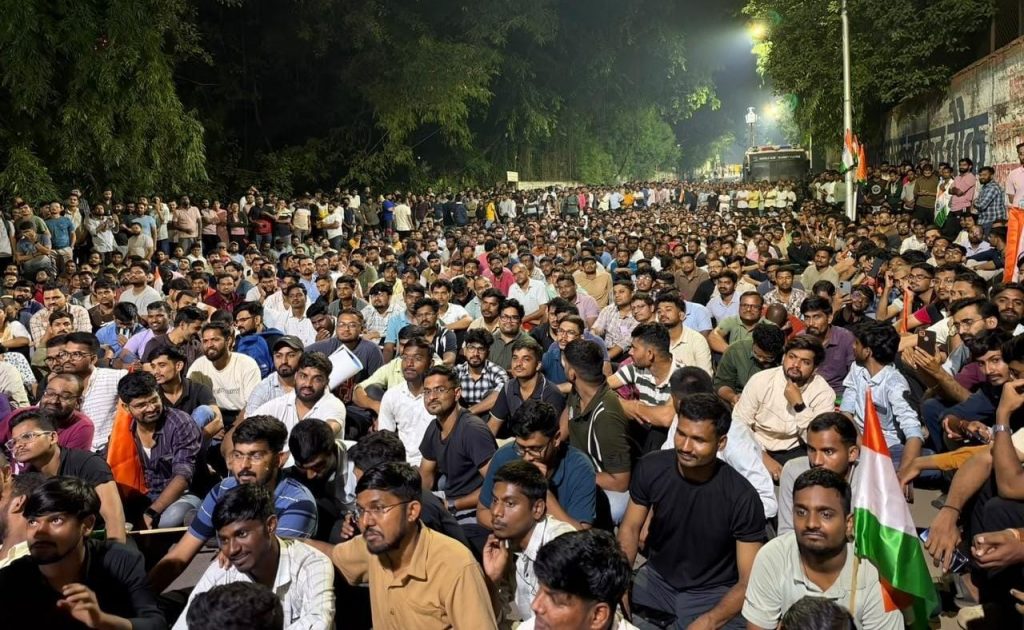
The court also directed the State to take reasonable steps to ensure that ongoing protests in Pune do not block roads or disrupt public movement.
A division bench comprising Chief Justice Mahesh Chandra Tripathi and Justice Advait M. Sethna passed the directions while hearing Writ Petition No. 13357 of 2026 filed by Amit Balu Supekar and another against the State of Maharashtra and other respondents.
The court made it clear that its observations at this stage were prima facie and did not constitute final findings on the issues raised before it.
The matter has been posted for November 25, 2026.
Court seeks investigation details in alleged paper leak
During the hearing, advocate Mayur Khandeparkar, appearing for respondent No. 3, submitted that FIRs had been registered in connection with the alleged MPSC Drug Inspector examination paper leak but alleged that effective action had not been taken against those responsible.
The court observed that there was prima facie substance to the submission that accountability needed to be fixed. It said the State machinery should act swiftly, take necessary steps to secure justice and prevent similar incidents from recurring.
The State has now been directed to disclose the progress of investigations into the FIRs in its affidavit.
The order, however, does not establish the guilt of any individual or make a final finding on responsibility for the alleged paper leak.
State says three demands accepted in principle
Advocate General Dr Milind Sathe told the court that representatives of affected candidates and protesting students had submitted four demands to the Pune Police Commissioner on September 24.
The demands included:
Resignation or removal of the MPSC chairman under Article 317 of the Constitution.
Immediate recruitment against around 70,000 vacant posts.
A maximum examination fee of ₹100 for all MPSC examinations.
Conducting all MPSC examinations in offline mode.
Sathe submitted that student representatives had met Chief Minister Devendra Fadnavis on September 30 and agreed to withdraw their agitation after receiving assurances on their demands.
According to the State’s submissions, the demands concerning recruitment, examination fees and offline examinations had been accepted in principle, while steps were being taken to fill vacancies.
The court has now sought department-wise details of the vacancies and information on the steps taken by the government to address the students’ concerns.
Representation made to Governor over MPSC chairman
On the demand concerning the MPSC chairman, Sathe told the court that Article 317 provides a constitutional procedure and that the State had made a representation to the Governor.
The court sought details of the steps taken in connection with the representation.
The order does not record any removal of the MPSC chairman. It also does not direct such removal.
Court backs peaceful protests but warns against road blockades
The bench recognised the students’ right to express their grievances through lawful and peaceful protests, observing that dissent is an important feature of a robust democracy.
At the same time, the court said protests should not result in unnecessary blockades of roads, bridges or other public spaces and cause inconvenience to residents.
“We cannot countenance a situation of a civil paralysis anywhere, let alone in the city of Pune,” the bench observed.
The court also noted the importance of restoring students’ trust so that they could return to their campuses and classes.
Advocates appearing for various respondents assured the court that the agitation would be conducted lawfully and at locations where the necessary permission had been obtained.
The State was directed to take reasonable steps to prevent protest-related road blockages.
Dispute over alternative protest locations
Sathe submitted that two alternative protest locations had been made available and that the agitation had initially been withdrawn following the September 30 meeting with the Chief Minister, but was subsequently resumed without fresh permission.
He also submitted that the police had exercised restraint despite demonstrations on roads and bridges causing inconvenience to the public.
Khandeparkar disputed the availability of designated protest sites after the initially permitted agitation. He said his client would seek a suitable alternative location if necessary and assured the court that his client would not inconvenience the public.
Advocate Manish Kelkar also expressed willingness to relocate the protest if the administration provided a suitable alternative location.
Another advocate, Abhishek Karnik, told the court that his client had already withdrawn the agitation. The court accepted the statement.
State gets three weeks to file affidavit
The High Court has directed the State to file its affidavit within three weeks of the order being uploaded.
The affidavit must address:
Department-wise vacancies against the approximately 70,000 vacancies claimed before the court.
Steps taken to address the concerns of students and candidates.
The mode of subsequent MPSC examinations and their outer time limit.
Progress of investigations into the FIRs concerning the alleged Drug Inspector examination paper leak.
Steps taken regarding the representation concerning the MPSC chairman.
The State has also been directed to provide advance copies of the affidavit to the parties.
The matter will be heard next on November 25, 2026.
The court’s directions come amid protests in Pune by students and candidates over MPSC recruitment, examination arrangements and the alleged Drug Inspector examination paper leak.
The order recognises the right to peaceful protest while making clear that public roads and movement cannot be indefinitely obstructed.