Nana Patekar: From Walking 16 Km for Rs 35 to Becoming a Bollywood Legend
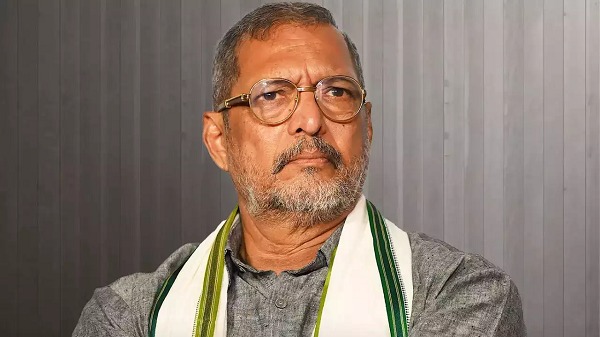
Pune, 8th October 2026: Veteran actor and filmmaker Nana Patekar died at the age of 75 on Thursday after suffering a cardiac arrest at his residence in Dona Paula, Goa. He was found unresponsive and was taken to Manipal Hospital, where doctors attempted to revive him with CPR for around 45 minutes. He was declared dead at about 5:20 am.
According to hospital authorities, Patekar could not be revived despite sustained efforts. His death marks the end of a career spanning nearly five decades, during which he established himself as one of the most distinctive actors in Hindi and Marathi cinema, known for his intense performances, powerful dialogue delivery and ability to portray complex characters.
Born Vishwanath Gajanan Patekar on January 1, 1951, in Murud-Janjira village in Maharashtra’s Raigad district, he became popularly known as Nana Patekar. He began his career in theatre before moving to films and went on to deliver memorable performances in movies including Gaman, Ankush, Parinda, Krantiveer, Tirangaa, Ab Tak Chhappan, Apaharan and Welcome.
From poverty to the world of cinema
Patekar’s childhood was marked by financial hardship. According to accounts he shared in interviews, his father ran a small textile-painting business, which collapsed after a financial fraud when Patekar was around 13.
The family’s property was sold, and Patekar began working while continuing his education. He painted film posters in the evenings and reportedly earned around Rs 35 a month.
The distance between the place where he worked and his home was about eight kilometres each way, meaning he walked nearly 16 kilometres a day.
He also recalled periods when the family struggled to afford food. During lunch or dinner hours, he would sometimes visit friends hoping that someone would invite him to eat.
His childhood was also marked by mischief. Patekar had recalled that teachers would seat him beside them so that they would not have to repeatedly get up to discipline him. His mother eventually sent him to stay with her sister after he completed Class 6, hoping a change of environment would improve his behaviour.
Theatre gave Nana Patekar his identity
Patekar’s early association with theatre shaped the actor he would eventually become. He wanted to use art to portray social problems and the darker realities of society.
One of his notable stage performances was in the play Purush, in which he played a villain. He performed the play for around 16 years and reportedly completed nearly 1,800 shows.
His portrayal was so disturbing that women in the audience would sometimes throw their footwear at him during performances. Rather than objecting, Patekar reportedly regarded the footwear as a form of recognition for his performance and kept some of them.
His transition from theatre to cinema eventually led to a career that included serious dramas, crime films, action roles and mainstream comedies.
The actor known for intensity and a fiery temperament
Patekar was known not only for his powerful acting but also for his outspoken and sometimes short-tempered personality.
One often-recalled incident involved filmmaker Ravi Chopra, who was making Aaj Ki Awaaz. Actress Smita Patil had reportedly introduced Patekar to Chopra.
When Chopra initially offered him the role of a rapist, Patekar became angry and rejected the proposal in strong language. Smita Patil later intervened and helped resolve the situation.
Chopra subsequently offered him the role of the main villain. Patekar agreed on the condition that he would have a say in developing his character. He eventually played Jagmohandas in the 1984 film.
Another famous story comes from the making of Parinda. Director Vidhu Vinod Chopra later recalled that he and Patekar had a heated confrontation during the shoot. Chopra said Patekar was repeatedly using abusive language during a scene and that the argument escalated to the point where he tore Patekar’s kurta.
The camera was ready for a shot at the time, and Patekar subsequently performed the emotional scene wearing only a vest. Chopra later said the shot turned out to be effective and that the two eventually reconciled.
Injured while shooting Parinda
Patekar suffered serious burns while filming the climax of Parinda, released in 1989.
The sequence required his character to appear engulfed in flames. At the time, filmmakers often used real fire for such scenes. Patekar reportedly refused extensive protective equipment because he feared it would affect his performance.
During the shoot, the flames reached his body and he suffered burns to his hands and legs. He was subsequently admitted to Nanavati Hospital in Mumbai and stayed away from films for about a year.
The film went on to become one of the most important works of his career, with Patekar delivering a memorable negative performance.
He mortgaged his house for Ankush
The 1986 film Ankush was another major turning point in Patekar’s career.
Director N. Chandra reportedly signed him for Rs 10,000, with Rs 3,000 paid as an advance and the remaining amount to be paid after the film was sold. Patekar had planned to use the money to buy a scooter.
When production ran out of money, Patekar reportedly mortgaged his house and arranged around Rs 2 lakh to help complete the film.
Ankush eventually became a success and helped establish him as a serious actor. After its success, N. Chandra reportedly helped him recover his house and also gifted him a scooter.
His connection with the Army
Patekar had long wanted to join the Indian Army. His interest in the armed forces also influenced his 1991 film Prahaar: The Final Attack, which he directed and starred in.
For the film, he underwent extensive military training and was given an honorary captain’s rank during the training programme.
Patekar later recalled serving alongside the Army during the 1999 Kargil conflict. According to accounts he shared, he initially approached an Army officer about joining the forces but was told that he could not be inducted as a civilian.
He then contacted the then Defence Minister George Fernandes, who already knew him. After hearing about Patekar’s military background and interest, Fernandes reportedly gave him permission to participate.
Patekar said he spent around two months with the Army and was associated with a Quick Reaction Team. He recalled that he weighed about 76 kg when he joined and around 56 kg when he returned.
His marriage to Neelakanti
Patekar met his wife, Neelakanti, while working on the stage play Jaat Na Poocho Sadhu Ki. Neelakanti was also an actor in the production and was working as a bank officer at the time.
In an interview with The Lallantop, Patekar recalled that he earned around Rs 50 per show, while Neelakanti’s monthly salary was about Rs 2,500.
He credited her support for allowing him to continue pursuing acting at a time when he was uncertain whether he would succeed professionally.
Neelakanti later left acting to look after the family. The couple eventually began living separately but never divorced. Their son, Malhar, remained part of their family.
The loss of his elder son
Patekar experienced one of the deepest personal tragedies of his life when his elder son, Durvasa, died at the age of about two-and-a-half years.
Patekar had spoken about the child having been born with a cleft palate and having difficulty seeing with one eye. He later admitted that his first concern after seeing his son was how other people would react, rather than the child’s condition itself.
Reflecting on the tragedy in later interviews, Patekar said the loss taught him many things and changed his perspective on life.
Following his son’s death, he also developed a severe smoking habit. He recalled smoking as many as 60 cigarettes a day and even smoking while bathing. He later described it as a terrible habit.
The 1993 Mumbai blasts claimed his brother
Patekar also lost his brother in the 1993 Mumbai serial bomb blasts.
According to Patekar’s account, his brother and wife Neelakanti had left around the same time and were travelling by bus. There was only one seat available, so his brother took another bus.
That bus was hit by a blast. His brother’s body was difficult to identify, but the family was able to identify him through the bangle he wore.
Patekar later recalled the incident as one of the most painful experiences of his life.
A producer was once asked to wash the dishes
Actor Paresh Rawal once shared a humorous story about Patekar during an interview with The Lallantop.
According to Rawal, Patekar once invited a film producer to his home and asked whether he ate mutton. After the producer finished eating, Patekar reportedly told him, in his characteristic blunt manner, that he should wash the dishes.
Rawal described Patekar as a “legend” and said he was unlike anyone else in the industry.
Rawal also recalled that Patekar was among the first character actors in Hindi cinema to command a fee of around Rs 1 crore for a role at a time when even leading actors were cautious about asking for such amounts.
A memorable moment with Raj Kumar
Patekar also recalled an amusing incident from the shooting of Tirangaa, in which he starred alongside Raj Kumar.
Patekar said he had brought a home-cooked vegetable dish made from banana flowers. Raj Kumar tasted it and reportedly mistook it for keema.
When Patekar explained that it was actually banana-flower vegetable, Raj Kumar continued jokingly referring to it as keema.
The two actors became known for their memorable performances in the 1993 film, with Raj Kumar playing Brigadier Suryadev Singh and Patekar portraying Inspector Shivajirao Wagle.
A career that crossed genres
From the socially charged Ankush and the intense crime drama Parinda to the military-themed Prahaar, the action film Ab Tak Chhappan and the comedy Welcome, Patekar repeatedly moved between genres.
His performances were often marked by a distinctive voice, restrained physicality, explosive emotional outbursts and an ability to bring realism to characters.
His career was built on roles that were often unconventional, allowing him to become one of the most recognisable character actors in Indian cinema.
Nana Patekar’s death on October 8, 2026, brings an end to the journey of an actor whose life moved from financial hardship and theatre to some of the most memorable performances in Hindi and Marathi cinema.