Pune’s Clean-Air Spending: Where Did Rs 275 Crore Go as Pollution Rose?
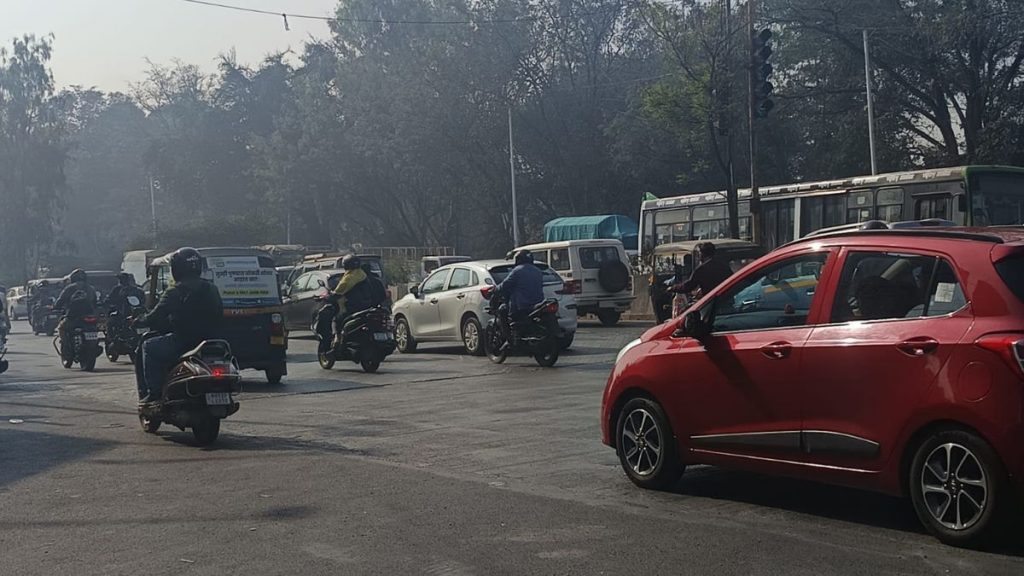
Pune, 16th October 2026: Pune has spent ₹275.28 crore—nearly 66% of its ₹418.45-crore clean-air allocation—over the past seven years, but its annual average PM10 concentration reached a seven-year high in 2025–26, prompting experts to call for measures that tackle pollution at its source.
According to a press release citing government data on the Portal for Regulation of Air Pollution in Non-Attainment Cities (PRANA), Pune received ₹9.45 crore under the National Clean Air Programme (NCAP) and ₹409 crore through the 15th Finance Commission.
Despite expenditure on road improvements, public transport, dust-control equipment and waste management, the city’s annual average PM10 concentration stood at 101 micrograms per cubic metre (µg/m³) in 2025–26, against the national permissible annual limit of 60 µg/m³. The figure was up from 81 µg/m³ in 2019–20.
PM10 refers to inhalable particles measuring 10 micrometres or less in diameter, which can aggravate respiratory, lung and heart conditions.
Information obtained through the Right to Information Act, cited in the release, showed that the interventions included paving 121.4 km of roads and repairing 19 km of footpaths. Two mechanical road sweepers and 19 sprinklers were also deployed to control road dust, identified as a major contributor to Pune’s PM10 pollution.
Other measures included procuring and deploying 36 electric buses, installing 65 charging stations, and establishing six dry waste collection centres and four construction and demolition waste collection centres.
Experts, however, cautioned that spending and equipment purchases alone do not demonstrate improvements in air quality.
Dr Rakesh Kumar, president of the Society for Indoor Environment, said the available data suggested a possible shift in Pune’s pollution profile from combustion-related emissions towards dust.
The release reported that Pune’s annual average PM2.5 concentration declined from 48 µg/m³ in 2019 to 34.2 µg/m³ in 2026, although it fluctuated during the intervening years.
“BS-VI vehicles, cleaner fuels and electric buses, alongside possible reductions in emissions from open burning and solid-fuel use, may have contributed to lower PM2.5 levels. Meanwhile, urban expansion, metro works, road widening, concreting and construction activity continue to generate coarse dust,” Kumar said.
He stressed that efforts to reduce PM2.5 needed to be sustained, while measures targeting PM10 required reassessment. Construction activity and the resuspension of settled dust could be limiting the effectiveness of sprinklers and sweeping machines, he said.
“The focus should be on construction methods, operation and maintenance (O&M) practices, and site-specific interventions. Mere water sprinkling and mechanical sweeping are not sufficient,” Kumar said.
He also called for audits of air-quality data, noting that differences in monitoring locations, measurement methods, data availability and weather conditions could affect year-on-year comparisons. He flagged the 2022 figure as a potential data-quality concern.
Sharmila Deo, senior programme associate at Pune-based NGO Parisar, said fund utilisation figures revealed only part of the picture.
“The expenditure breakdown and the actual implementation and effectiveness of each intervention must be assessed to determine whether the expenditure has translated into meaningful outcomes,” she said.
Deo criticised spending on mist fountains and fog cannons, describing their use without scientific evidence as a waste of funds. She said mechanical sweeping should be assessed through the roads covered, frequency of cleaning, equipment uptime, dust disposal practices and evidence of reduced dust resuspension—not merely the procurement or deployment of machines.
Citing the city’s emission inventory, which identifies vehicular emissions as a major contributor to PM10 pollution, she called for reduced dependence on private vehicles and stronger bus and Metro services.
“While addressing existing pollution is necessary, expenditure should primarily focus on mitigation at source,” Deo said.