Conveyance Deed Delay: Bombay High Court Issues Non-Bailable Warrants Against Pune Builder in Hinjawadi Case
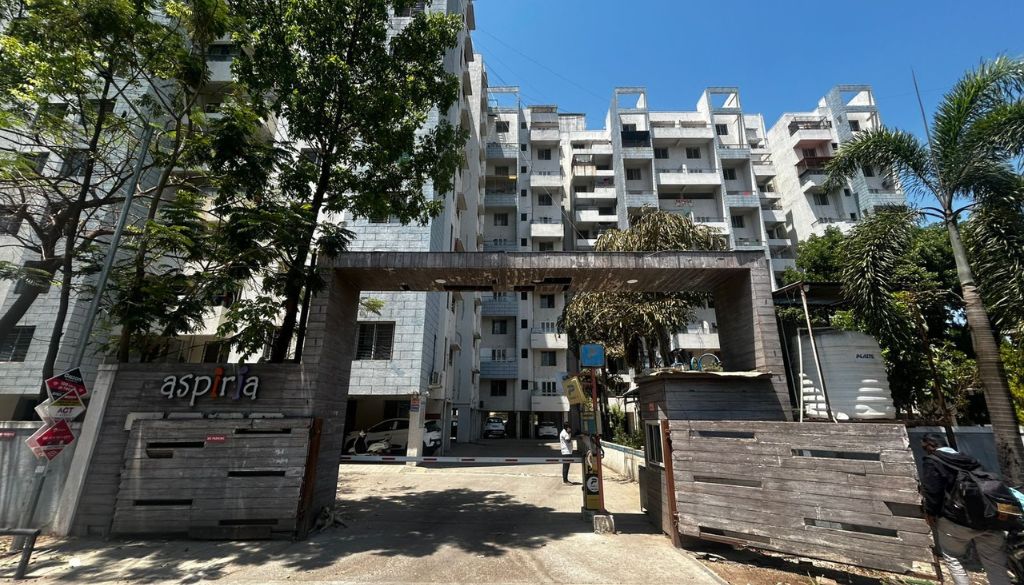
Hinjawadi, 16th April 2026: In a significant legal victory for homebuyers, the Bombay High Court has issued non-bailable warrants against three partners of a Pune-based real estate firm, Bhagyalaxmi Properties, for failing to execute a conveyance deed and deliver promised amenities to a Hinjawadi housing society.
The order, issued by the bench of Justice Amit Borker on April 15, stems from Contempt Petition 152/2026 filed by the Aspiria B & C Co-Operative Housing Society. The warrants specifically target three of the firm’s seven partners—Mr. Ishwarchand K. Goyal, Mrs. Vijaylaxmi V. Agarwal, and Mr. Mohamedali Aslam Haiji—after they failed to appear in court despite strict prior warnings regarding their non-compliance with earlier consent terms.
An 11-Year Legal Battle
The conflict traces its roots back to 2012, when the majority of flats in the Aspiria project were sold. According to the residents, discussions to form a co-operative housing society began in 2016. However, the developer allegedly demanded that flat owners first consent to alterations in the project’s sanctioned plans.
In a move that shocked buyers, the developer bypassed the formation of a co-operative society in 2017. Instead, they executed a unilateral Deed of Declaration and registered Deeds of Apartment, a tactic residents claim was designed to extract consent for the developer’s profitable plan alterations.
When the flat owners applied for the unilateral formation of a co-operative housing society, the District Deputy Registrar (DDR) rejected the application, citing the existing Deed of Declaration.
The Broken Settlement
Undeterred, the persistent residents challenged the plan alterations in Civil Court and appealed the DDR’s rejection in the Bombay High Court. This led to a settlement: the developer agreed to form the housing society and immediately execute the conveyance deed, while the flat owners agreed to withdraw all legal cases and consent to the revised plans.
By 2019, the flat owners had fulfilled their obligations and withdrawn their cases. However, the developer allegedly failed to execute the conveyance deed or complete the promised amenities. Furthermore, the developer did not cancel the Deed of Declaration, rendering the legal status of the property highly complex and leading the DDR to reject a subsequent application by the society for deemed conveyance.
Invoking Contempt Jurisdiction
Left with shattered dreams and no administrative recourse, Aspiria CHS approached the Bombay High Court through Advocate Satya Muley, strategically invoking the court’s contempt jurisdiction over the breached consent terms.
During the recent hearings, the developer’s advocate argued that the conveyance could not be completed due to the existing Deed of Declaration. However, taking a strong view of the developer’s conduct, the High Court issued strict warnings, culminating in the non-bailable warrants when the three partners failed to attend the April 15 hearing.
Residents and Legal Counsel React
For the residents of Aspiria, the court’s strict stance marks a light at the end of a long tunnel. “This development reaffirms the strength of the judiciary in upholding the rights of homebuyers,” said Mr. Ashwin Koli, Chairman of Aspiria CHS. “Even after 11 years, the builder has failed to deliver the promised amenities and conveyance deed, disregarding earlier court directions. Today’s order sends a clear message that such negligence and non-compliance will not be tolerated.”
Fellow resident Shivraj Kalshitte echoed this relief, stating, “Justice delayed may not always mean justice denied. The judiciary remains our strongest hope… We can now expect a final resolution of our demands.”
Advocate Satya Muley, who represented the housing society, emphasized the broader implications of the case for real estate developers and buyers across the state. “Developers must not take the law lightly,” Adv. Muley stated. “Conveyance deed or deemed conveyance is a statutory right of every housing society. Many times, developers take advantage of the lack of unity among flat owners. Housing societies must be proactive in timely invoking legal remedies to secure their ownership of the land and buildings.”