Major Order in Rs 1,200 Crore Baner Masjid Land Row: Maharashtra Waqf Board Declares Sale Void
Reported by Mubarak Ansari
Baner, 15th September 2026: The Maharashtra State Board of Waqfs has cancelled the separate registration of Baner Masjid and declared void from the outset the permissions and property transactions arising from that registration, including a disputed 2009 sale of more than seven hectares (18 acres) of land in Baner.
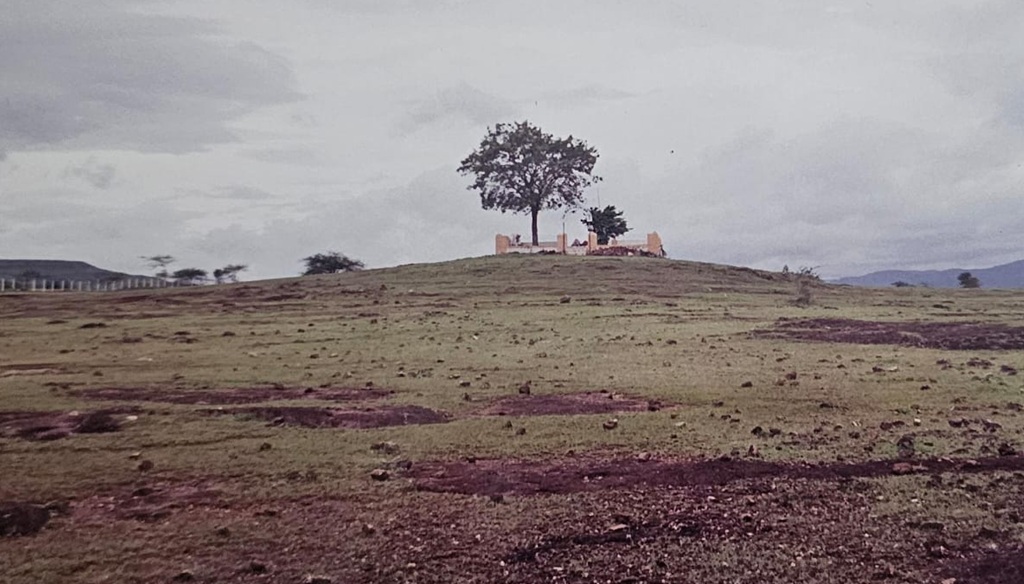
The land in question, Survey Nos. 99/1/1 and 99/1/2, houses the revered Hazrat Udan Shah Wali Dargah and a mosque near B. U. Bhandari Mercedes-Benz showroom along the Pune-Bangalore Highway. Historical records of the Dargah go back to 1830, with British-era documents marking it as Inam Class-3 land.
In a 22-page order dated September 2, 2026, the Board accepted an objection filed by Hamid Khan and others concerning the land. The revocation order was issued by the Board’s newly appointed Chief Executive Officer (CEO), Faiyyaz Khan.
The dispute concerns approximately 7 hectares and 34 ares from a larger parcel measuring about 7 hectares and 74 ares. The land has been associated with the historic Udan Shah Wali Dargah and Baner Masjid.
The order followed a resolution adopted at a Waqf Board meeting on August 11, 2026. The proceedings were conducted under provisions of the Waqf Act dealing with the registration, management, protection and transfer of Waqf property.
Separate Baner Masjid registration cancelled
The central issue before the Board was whether Baner Masjid could have been separately registered as a Waqf institution when Udan Shah Wali Dargah Trust, registered as Public Trust No. B-382 with the Charity Commissioner’s office in Pune, already existed.
The property has been treated as a religious endowment since a grant by the then Governor of Bombay under Order No. 986 dated August 12, 1870. It was subsequently registered as a waqf under Certificate No. MSBW/REG-95/4872/05 following the coming into force of the Waqf Act, 1995.
After reviewing the registration history and the documents submitted by the parties, the Board concluded that the separate registration of Baner Masjid was procedurally improper.
The Board consequently cancelled Baner Masjid’s registration, identified in the order as MSBW/PUN/4872.
According to the order, Hazrat Udan Shah Wali Dargah Trust and its properties were already recognised in the records of the Charity Commissioner before the Waqf Act, 1995, came into force. The institution and its properties were therefore required to be treated as deemed registered with the Waqf Board under Section 43 of the Act.
The Board directed that Hazrat Udan Shah Wali Dargah, Baner, together with the properties recorded against it, be formally entered in the Maharashtra Waqf Board’s register.
The Udan Shah Wali Dargah had also appeared in earlier administrative records of the Maharashtra Waqf Board.
How the controversy unfolded
The chain of events began in 2005, when an application was moved by the then alleged mutawalli, Razzak Lalbhai Sayyed, seeking permission to alienate the land.
On September 29, 2006, the then chairman of the Board issued an order permitting the sale to Respondent No. 4, Pancea Hill Co-operative Housing Society, for ₹9.51 crore, of which ₹7 crore was to be paid to the Board. That amount was never received.
The sale deed was eventually executed on October 31, 2009 — well beyond the 36-month validity of the 2006 permission. The Board subsequently cancelled the transaction in 2009. The matter remained entangled in litigation and administrative proceedings for nearly two decades.
The controversy resurfaced in 2025 when the then CEO, Juned Sayyed, issued a letter on May 27, 2025, directing revenue authorities to remove all restrictions on the land.
Acting on the letter, land records were updated on July 2, 2025, reclassifying the property from Inam Class III / Occupant Class II to Occupant Class I (freehold private property). The record change, coupled with the fact that it effectively revived a transaction cancelled 16 years earlier at an outdated price, drew criticism from legal experts, activists and community representatives.
Sale permission and transactions declared void
A significant consequence of the decision is the invalidation of the disputed land transaction.
The record states that the then mutawalli had applied in October 2005 for permission to sell the property. An order dated September 29, 2006, attributed to the then chairman of the Waqf Board, granted permission for the sale for a total consideration of ₹9.51 crore.
A subsequent order or no-objection certificate was issued by the then chief executive officer on November 3, 2006. Sale deed No. 7100/2009 was eventually executed on October 31, 2009.
The applicants challenged the transaction on several grounds. They contended that the chairman did not have independent authority to sanction the sale, as the statutory power rested with the Waqf Board. They also argued that no valid resolution supported by the required majority of Board members had been passed.
The applicants further alleged that there had been no valid public auction, no proper confirmation by the Board and no adequate record demonstrating that the full sale consideration had been received and used by the institution.
Questions were also raised about the authenticity and legal validity of the November 3, 2006 order, as well as whether the sale was completed within the prescribed 36-month period.
After considering the rival submissions, the Board cancelled the no-objection certificate connected with the sale. It held that the then chairman lacked the legal authority to issue it.
Since the registration of Baner Masjid itself was cancelled, the Board declared that the permissions and sale transactions based on that registration were void ab initio, meaning legally invalid from their inception.
May 2025 administrative letter also revoked
The order also cancelled a letter issued by the then chief executive officer of the Waqf Board on May 27, 2025, to revenue authorities, including officials in the Haveli division.
That letter had become a major point of controversy after it was reportedly used to remove restrictions from the Baner property’s revenue record. A July 2025 report cited activists who valued the larger landholding at more than ₹1,200 crore, although that figure was not adopted as an official valuation in the Board’s September 2026 order.
The Board has now withdrawn the May 2025 communication as part of its directions for restoring the property’s Waqf record.
Directions to revenue authorities
The Board ordered several consequential changes to government and Waqf records.
It directed the Pune district administration to enter the name of Udan Shah Wali Dargah, Baner, as the Waqf institution connected with the disputed land and associated properties.
The Board also ordered that communications be issued to the Pune district collector, the Haveli sub-divisional officer, the Haveli tahsildar and the relevant registration and revenue authorities.
Officials were directed to cancel revenue entries reflecting purchases or transfers based on the transactions that the Board has now declared invalid.
The directions are intended to reverse the effects of the cancelled registration, permissions and sale deeds in the land and revenue records.
Purchasers questioned Board’s jurisdiction
The purchasers and other respondents opposed the proceedings and denied allegations of illegality.
They argued that the Waqf Board could not effectively sit in appeal over or review its own earlier decision. According to them, any party aggrieved by the 2006 order should have approached the Waqf Tribunal under Section 83 of the Waqf Act.
They also questioned the applicant’s legal standing and argued that the challenge was barred by limitation because it had been initiated approximately 16 to 19 years after the 2006 permission and 2009 sale.
The respondents maintained that the sale process had followed the required procedure. Their submissions referred to a newspaper advertisement published in September 2005, consideration of the proposal at a Board meeting in November 2005, publication of a Gazette notice in March 2006 and delegation of authority to decide the application.
They further argued that the October 31, 2009 sale deed was executed within 36 months of the chief executive officer’s November 3, 2006 order. They described themselves as bona fide purchasers and sought dismissal of the proceedings.
The Board, however, rejected the objections and accepted Hamid Khan’s application.
Descendants of original grantee intervened
The proceedings also included an intervention application filed by Bashir Khan Dilawar Khan and others, who claimed to be the descendants and legal heirs of the original grantee, Bhikanbhai Valad Ramzanbhai.
The interveners relied on an 1870 grant and contended that neither the original grantee nor his descendants had permanently dedicated the property as Waqf. They argued that no valid Waqf deed or declaration of dedication had been produced.
They also alleged that the property’s later Waqf registration was affected by fraud, misrepresentation and suppression of material facts relating to ownership and succession.
The final directions, however, recognise Udan Shah Wali Dargah as the relevant institution and order its deemed registration with all associated properties under Section 43.
Long-running dispute over valuable Baner land
The order marks a major development in a dispute extending over two decades and involving competing claims by religious institutions, purchasers, developers and descendants of the original grantee.
The matter has also attracted scrutiny because of the land’s location in Baner, one of Pune’s most valuable real-estate markets, and the substantial difference between the ₹9.51-crore consideration recorded in the 2006 sale permission and later public estimates of the land’s value.
The immediate legal effect of the order is the cancellation of Baner Masjid’s separate Waqf registration, restoration of the property to the record of Udan Shah Wali Dargah and invalidation of the related sale permissions and transactions.
The implementation of the decision will now depend on action by the Waqf Board, Pune district administration, revenue authorities and registration officials. Parties affected by the order may also pursue remedies before the appropriate court or tribunal.
Civic activists welcome decision
The revocation has been welcomed by social workers, legal advocates and civic groups who have been working for years to protect community and public properties in Pune district.
“This order restores the fundamental principle that waqf and public properties are not commodities to be traded away at throwaway prices,” one activist said. “It is a victory not for any individual, but for the community and for the rule of law.”
The activists also highlighted that Adv. Sameer Shaikh, a Pune-based advocate and long-time campaigner for waqf rights, has welcomed the decision. He has called upon advocates, social workers, journalists and media professionals across Maharashtra to come forward and join hands in a coordinated effort to protect and defend public and community properties from illegal alienation, undervaluation and administrative irregularities.
“Today’s order is not the end — it is a beginning,” Shaikh said. “We must now build a strong, coordinated movement where every lawyer, journalist and concerned citizen takes responsibility to monitor, expose and challenge any attempt to undermine public trust in our sacred and shared spaces.”
He said the issue was not limited to one land parcel but concerned the integrity of institutions, laws and community heritage.