Onam: Kerala’s Festival of Heritage and Harmony
Reported by Devapriya K J
Thiruvananthapuram, 12th September 2025: Onam, the grand harvest festival of Kerala, is celebrated across the state with wholeheartedness without the lines of religion, caste and creed. The festival marks the arrival of King Mahabali. During his sovereignty, people lived in equality and prosperity. The festival begins with Athachamayam and lasts for ten days, blending rituals, art forms, boat races, and feasts, making it one of the most vibrant celebrations across the country.
Athachamayam: The Beginning of Festivities
Onam officially starts with Athachamayam, a vibrant procession held at Tripunithura near Kochi. Traditionally, this was a royal march led by the Maharaja of Kochi. Today, it continues as a grand cultural parade featuring decorated elephants, traditional art forms like Theyam and Panchavadyam, floats, and folk artists. This procession sets a festive tone and symbolises Kerala’s cultural richness.
Pullikali: The Playful Tiger Dance
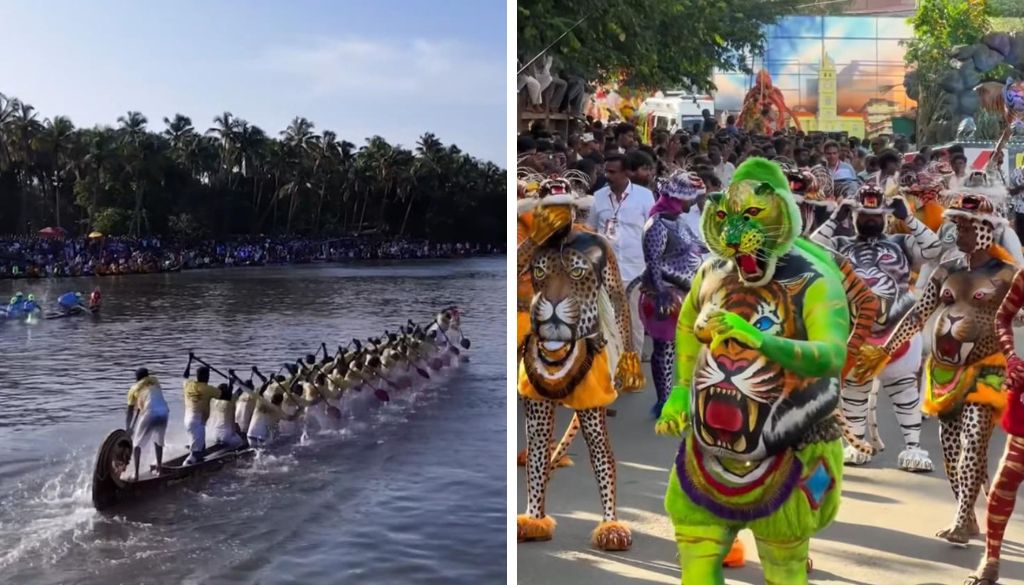
Pullikali, or the Tiger Dance, is one of the most entertaining art forms of Onam. Performers paint their bodies in bright yellow, red, and black to look like tigers and hunters. They dance through the streets to the beat of traditional drum “chenda”. Pullikali reflects the martial spirit and playful energy of the people. Thrissur is the main hub, attracting thousands of spectators each year.
Kummattikali: The Folk Mask Dance
In central Kerala, especially in Thrissur and Palakkad, Kummattikali brings a fun element to Onam. Dancers wear colorful wooden masks of gods, demons, or animals and cover themselves with leaves and grass. They visit homes, performing and entertaining families, who then offer them gifts or treats. This performance blends humor, devotion, and tradition.
Vallamkali: The Snake Boat Race
One of the most famous events of Onam is Vallamkali, or the snake boat race. These long, narrow boats, sometimes stretching up to 100 feet, are rowed by over a hundred oarsmen in perfect rhythm with Vanchipattu (boat songs). The races take place on Kerala’s backwaters, with the Nehru Trophy Boat Race in Alappuzha and the Aranmula Boat Race being the most popular. Vallamkali showcases teamwork, discipline, and Kerala’s deep bond with its waterways.
Aranmula Valla Sadhya: The Legendary Feast
The Aranmula Valla Sadhya is closely tied to the Aranmula Boat Race. It is one of the largest vegetarian feasts in the world. Pilgrims, boatmen, and visitors come together at the Aranmula Parthasarathy Temple to share a meal that often includes 100 traditional dishes served on banana leaves. This celebration goes beyond food; it represents equality, devotion, and community bonding.
Thiruvathirakali: The Women’s Dance of Grace
During Onam, women gather to perform Thiruvathirakali (or Kaikottikali). This graceful group dance happens around a lit lamp. Dressed in traditional white and gold sarees, the women move in circular patterns while clapping their hands in rhythm. This dance honors Goddess Parvati and celebrates femininity, marital happiness, and cultural heritage.
While these events form the highlights, Onam is also about family reunions, the grand Onam Sadhya and Pookkalam. It is a festival that blends devotion, cultural expression, and joy. Above all, Onam reflects Kerala’s message of unity, prosperity, and inclusiveness values cherished since the legendary reign of King Mahabali.