Pimpri-Chinchwad Named Maharashtra’s Cleanest City in Swachh Survekshan 2025-26
Reported by Mubarak Ansari
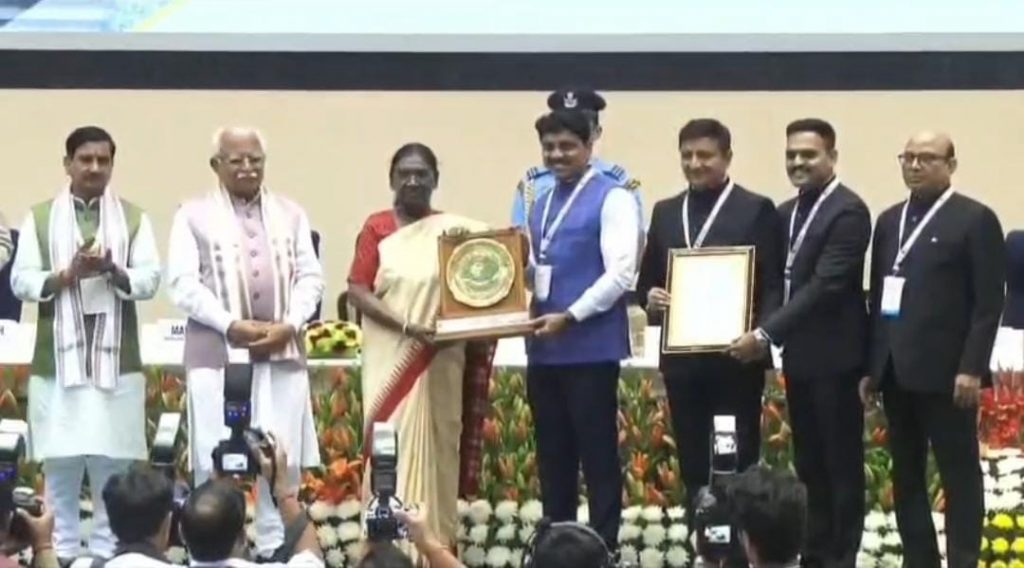
Pune, 11th November 2026: The Pimpri-Chinchwad Municipal Corporation (PCMC) has secured the first rank in Maharashtra in the Swachh Survekshan 2025-26 in the category of cities with a population of more than 10 lakh, earning recognition as the state’s cleanest city in its population category. The civic body was also honoured with a national award for its performance in improving the city’s sanitation and waste management systems.
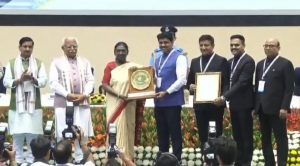
President Droupadi Murmu presented the award at a ceremony held at Vigyan Bhawan in New Delhi on Wednesday. PCMC Mayor Ravi Landge and Municipal Commissioner Dr Vijay Suryawanshi received the award on behalf of the civic body.
Additional Municipal Commissioner Kuldeep Jangam and Deputy Commissioner Dr Pradeep Thengal were also present. Union Minister for Housing and Urban Affairs Manohar Lal, Minister of State Tokhan Sahu, department secretaries Satendra Singh and D Thara, and other senior central government officials attended the ceremony.
The recognition comes in acknowledgment of PCMC’s efforts to strengthen the city’s sanitation infrastructure through systematic planning, improved waste management, inter-departmental coordination, technological interventions and public participation.
Focus on waste segregation and scientific processing
PCMC has focused on making cleanliness a part of citizens’ daily routines rather than limiting it to municipal sanitation drives. Its initiatives have included segregation of waste at source, regular collection, scientific processing and recycling, along with measures to maintain cleanliness in public spaces.
The civic body has also strengthened its waste management initiatives by ensuring separate collection of wet, dry, sanitary and domestic hazardous waste, followed by appropriate processing and disposal.
Through its Reduce, Reuse and Recycle (RRR) centres, PCMC has encouraged the reuse of usable household items, recycling and environmentally sustainable practices. Initiatives aimed at converting waste into useful resources have also been promoted.
Special attention has been given to maintaining cleanliness on roads, in gardens, public spaces and around civic facilities. Awareness campaigns involving housing societies, non-governmental organisations and other community groups have been conducted to encourage citizens to adopt responsible waste disposal practices.
Inter-departmental coordination strengthens sanitation system
The civic body’s cleanliness initiatives have involved several departments beyond the health department, including drainage, water supply, civil engineering, electrical, environment and garden departments.
Their coordinated efforts have contributed to maintaining public infrastructure, improving civic amenities, environmental conservation and the upkeep of public spaces.
At the ward level, assistant health officers, chief health inspectors and health inspectors have been responsible for planning and monitoring sanitation activities. Sanitation workers have played a crucial role in implementing these initiatives on the ground, ensuring that roads, residential areas and public spaces remain clean.
Sanitation workers’ contribution recognised
PCMC officials have credited sanitation workers for playing a vital role in achieving the recognition. Working in challenging weather conditions throughout the year, they are responsible for maintaining cleanliness across roads, public spaces and residential neighbourhoods.
The civic administration said their consistent efforts, along with administrative planning and effective implementation, have helped improve the city’s sanitation standards.
Citizens’ participation remains key to cleanliness drive
Public participation has also been identified as an important factor behind the achievement. Citizens have been encouraged to segregate waste at home, avoid littering public spaces, dispose of recyclable materials appropriately and take responsibility for keeping their surroundings clean.
PCMC has also worked with housing societies, voluntary organisations and social groups to promote cleanliness as a shared civic responsibility rather than a service dependent solely on the municipal administration.
What PCMC Mayor and Commissioner said
Mayor Ravi Landge said the Maharashtra-level first rank was a recognition of the collective efforts of the city’s administration, sanitation workers and residents.
“Cleanliness has a fundamental role in the development of a city, and active participation from citizens is as important as the efforts of the administration. This award, achieved through the hard work of sanitation workers and public participation, is a matter of pride for the city. We will continue working towards setting higher standards of cleanliness and maintaining this position,” he said.
Municipal Commissioner Dr Vijay Suryawanshi said the recognition reflected the positive changes brought about in the city’s sanitation system through sustained efforts and systematic planning.
He said PCMC had focused on strengthening waste segregation at source, regular collection, scientific processing, recycling and cleanliness in public spaces. The administration had also improved technological interventions, field-level monitoring and coordination among various departments.
“The contribution of sanitation workers, who have worked tirelessly throughout this process, has been extremely important. Their dedicated service has kept the city’s sanitation system functioning consistently. We have also focused on increasing the participation of citizens, housing societies, voluntary organisations and various social groups,” Suryawanshi said.
He added that the national award presented by President Droupadi Murmu was an honour for the entire municipal administration, sanitation workers and every citizen who had contributed to the cleanliness initiatives.
“The award is not just a matter of pride but also a responsibility and motivation to create an even better sanitation system in the future. We will continue working to make Pimpri-Chinchwad a model city for cleanliness, environmental conservation and sustainable waste management,” he said.
Additional Municipal Commissioner Kuldeep Jangam said coordination between planning and ground-level implementation had been essential in achieving improvements in the city’s sanitation system.
He highlighted the contribution of sanitation workers, who continue to maintain roads, public spaces and residential areas under challenging weather conditions.
“The national award is a recognition of the hard work of every sanitation worker and the municipal administration. It has provided fresh motivation to further improve the city’s cleanliness standards,” Jangam said.
Deputy Commissioner Dr Pradeep Thengal said the success of any sanitation system depended on the efficiency of ground-level workers and the cooperation of citizens.
He said the health department had consistently worked towards ensuring proper waste segregation, timely collection, maintenance of public spaces and awareness among residents.
The PCMC administration said it would continue to focus on improving sanitation standards, strengthening sustainable waste management and maintaining the city’s position in future cleanliness assessments.