Pune: 130-Year-Old Marathi Manuscript ‘Dnyanlilamrit’ Unearthed in Alandi; Scholars Call It a Cultural Treasure
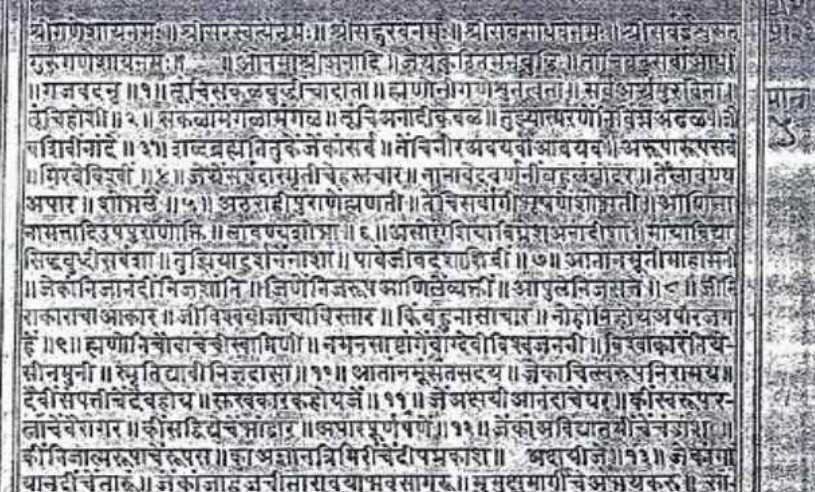
Alandi, 12th November 2025: In a remarkable literary and spiritual discovery, a 130-year-old handwritten Marathi manuscript titled ‘Dnyanlilamrit’, authored by Sadashiv, has come to light in Alandi, offering new insights into the ‘Alankapuri Mahatmya’ and the deep-rooted spiritual traditions of the revered pilgrim town. The 252-page text, composed in ovi metre across 18 chapters, has never been published and remained unknown to devotees and scholars until now.
The rare manuscript was recently submitted to the Marathi Manuscript Centre, where experts confirmed its authenticity and historical significance. It was introduced to the public by V. L. Manjul, former librarian of the Bhandarkar Oriental Research Institute and a noted researcher of ancient manuscripts, during the Shri Dnyaneshwar Maharaj Sanjeevan Samadhi Utsav held in Alandi on Monday.
Inspired by the Skanda Purana
According to scholars, Dnyanlilamrit is based on the 64th chapter of the Sahyadri Khand of the Skanda Purana, which contains a divine dialogue between Brahmadev and Narad about the sanctity of Shri Kshetra Alandi and the lives of Sant Dnyaneshwar and his siblings. The text was translated from Sanskrit into Marathi in Shaka 1817 (1895 CE), with Sadashiv believed to be a descendant of Antoba Kulkarni, a contemporary of Sant Dnyaneshwar.
As tradition holds, when Sant Dnyaneshwar took Sanjeevan Samadhi, Antoba Kulkarni placed the saint’s hand upon his own head, symbolically accepting discipleship. His descendants are said to still reside in Alandi — a connection that lends the rediscovered manuscript profound spiritual resonance.
Experts note that Dnyanlilamrit combines literary grace with theological depth, reflecting both poetic craftsmanship and devotional fervour. Scholars believe the discovery will enrich studies on the Alankapuri Mahatmya and expand understanding of early Marathi religious literature connected to the Warkari Sampradaya.
Notably, the manuscript’s calligraphic precision gives it a print-like finish, underscoring the meticulous craftsmanship of its scribe. Its rediscovery, coinciding with the annual Sanjeevan Samadhi Utsav, has been hailed as a momentous event for both devotees and researchers, adding a luminous chapter to Maharashtra’s literary and spiritual heritage.