Pune-based Astrophel Aerospace Signs MoU with IN-SPACe for Semi-Cryogenic Propulsion Development
Reported by Akshata Pawar
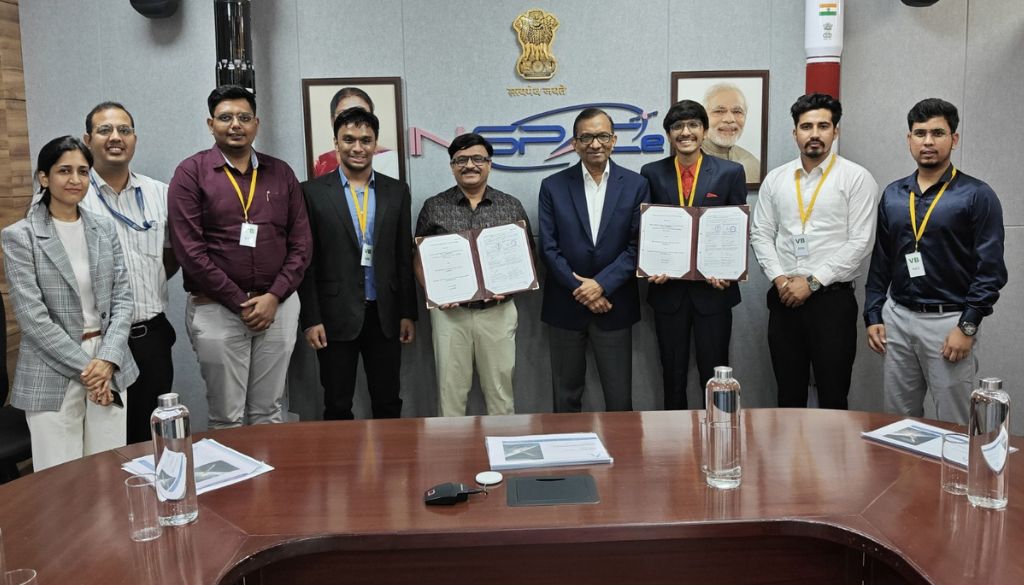
Pune/Ahmedabad,13th August 2025: Astrophel Aerospace, a Pune-headquartered space technology startup, has signed a framework Memorandum of Understanding (MoU) with the Indian National Space Promotion and Authorization Centre (IN-SPACe), the Department of Space’s nodal agency for enabling private sector participation in India’s space ecosystem.
The agreement grants Astrophel Aerospace access to Indian Space Research Organisation (ISRO) facilities for technical reviews, system-level testing, and qualification support for critical components of its semi-cryogenic propulsion systems, including turbopumps and engine modules.
Under the MoU, the company will collaborate with ISRO experts through a Joint Project Implementation Plan (JPIP) to receive project-specific support, design validation, and testing campaigns. The signing ceremony was attended by IN-SPACe Chairman Dr. Pawan Goenka and Dr. Prafulla Kumar Jain, Director of Program Management & Authorization.
“Our collaboration with IN-SPACe brings us one step closer to realising our vision of flexible, affordable launch access across India,” said Suyash Bafna, Co-founder and CEO of Astrophel Aerospace. Co-founder Immanuel Louis added, “We’re building a next-gen propulsion platform focused not only on reusability but also on strengthening India’s end-to-end space supply chain with cryogenic valves, components, and missile-grade guidance systems.”
Funding and Technology Roadmap
The MoU comes shortly after Astrophel raised ₹6.84 crore to develop a reusable launch hopper powered by its Astra series launch vehicle. The company is also planning an additional $5 million fundraising to accelerate its reusable rocket engine programme and expand commercial production of cryogenic components.
Astrophel’s subsystems — including valves, turbopumps, and avionics — have dual-use applications in defence, clean energy, and industrial gas systems, placing the startup at the intersection of aerospace and critical technology sectors.
With a modular design approach, cost-efficient manufacturing practices, and a lean team comprising veterans from ISRO, DRDO, and HAL, the company aims to conduct its first suborbital launch and deliver a fully reusable hopper prototype within the next 24–36 months.