Pune Double Murder Case: Bombay High Court Acquits All Accused in 2010 Karve Nagar Killings
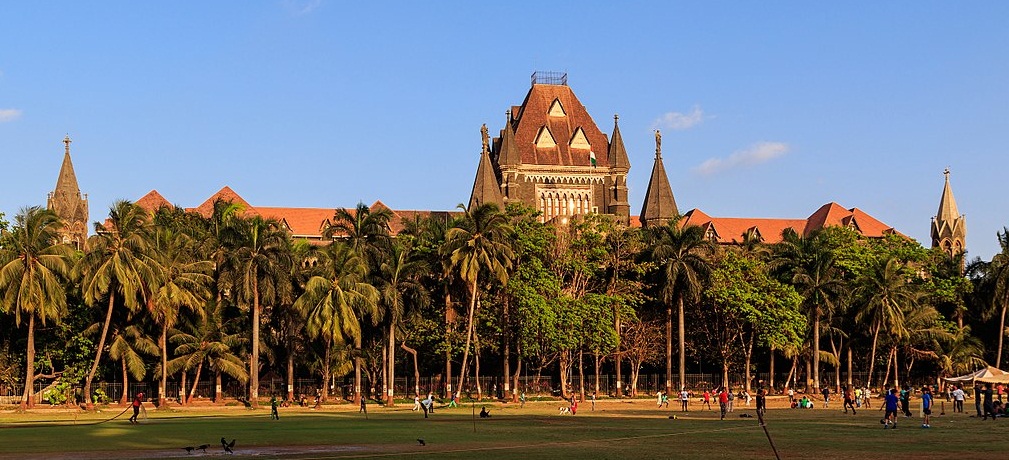
Pune, 24th December 2025: Fifteen years after the brutal double murder of two elderly women in Karve Nagar, all four accused in the Patki murder case have been acquitted, with the Bombay High Court ruling that the prosecution failed to establish a complete chain of circumstantial evidence.
The incident dates back to April 17, 2010, when Smita Patki and Sulabha Pachapurkar, residents of Shakambari Bungalow in Raghukul Society, Karve Nagar, were found lying in a pool of blood inside their home. The bodies were discovered by PW-3, maid Kalpana Hule, who entered the house using a spare key to carry out household chores. She immediately alerted a neighbour, following which the police were informed.
The four accused were charged with murder under Section 302 read with Section 34 of the Indian Penal Code (IPC), for allegedly killing the two women either individually or in furtherance of a common intention. They were also charged under Section 392 read with Section 34 IPC for allegedly robbing gold ornaments, a Titan wristwatch and a mobile handset collectively worth around Rs 80,000. Additionally, charges under Section 392 read with Section 397 IPC were framed for causing grievous hurt using a knife, and under Section 452 read with Section 34 IPC for house trespass after making preparations to commit murder using deadly weapons such as a sickle.
The prosecution’s case rested entirely on circumstantial evidence. To establish the chain of circumstances, reliance was placed on the testimonies of PW-2 to PW-5.
PW-2 stated that three to four days prior to the incident, she had seen unknown persons wandering near the Patki bungalow while garden work was underway in the area. Maid Kalpana Hule corroborated this version, stating that garden work was in progress at the time and that she had seen four persons working in the garden, while others used the area as a shortcut.
Another key witness, PW-4 Basappa Dhotre, a labour supplier, deposed that in April 2010, garden work was ongoing in Ganesh Nagar, where four labourers were engaged. He stated that people frequently passed through a footpath in the garden and that several bungalows were located nearby. Basappa told the court that for two days he noticed four persons sitting in the area who occasionally approached the workers for drinking water, though he had no direct interaction with them.
The prosecution argued that these testimonies established that the accused had surveyed the area in advance with the intention of robbing the two elderly women, who were living alone.
However, the investigation failed to produce corroborative forensic or scientific evidence.
Investigating Officer PW-13 Chandrakant Ghodke, who registered Crime No. 141/2010 based on the complaint filed by Prabhakar Patki, stated that although hair strands, bangles and red-coloured material were seized from the spot, no fingerprints could be lifted. The dog squad also failed to provide any leads.
Appearing for accused Banty Vadverao, advocate Hrishikesh S. Shinde argued that the test identification parade was conducted after an unexplained delay of five to six months, rendering it unreliable. He further pointed out that no test identification parade was conducted for the allegedly recovered gold ornaments. The defence also highlighted that witness Basappa Dhotre had undergone eye surgery and had weak eyesight, and that there were major contradictions in the statements of the maid and other witnesses.
Advocate Anita Agrawal represented accused Ambadas Jadhav, while advocate Farhana Shah appeared for the remaining accused. The State was represented by advocate Mr Agarkar.
After hearing arguments from both sides, the Bombay High Court, comprising Justice Bharati Dangre and Justice Shyam Chandak, acquitted all the accused, holding that the prosecution had failed to prove the case beyond reasonable doubt.