Pune-Mumbai Rail Link Restored After 23 Days: 11,745 Personnel Reopen All Three Lonavala–Karjat Lines
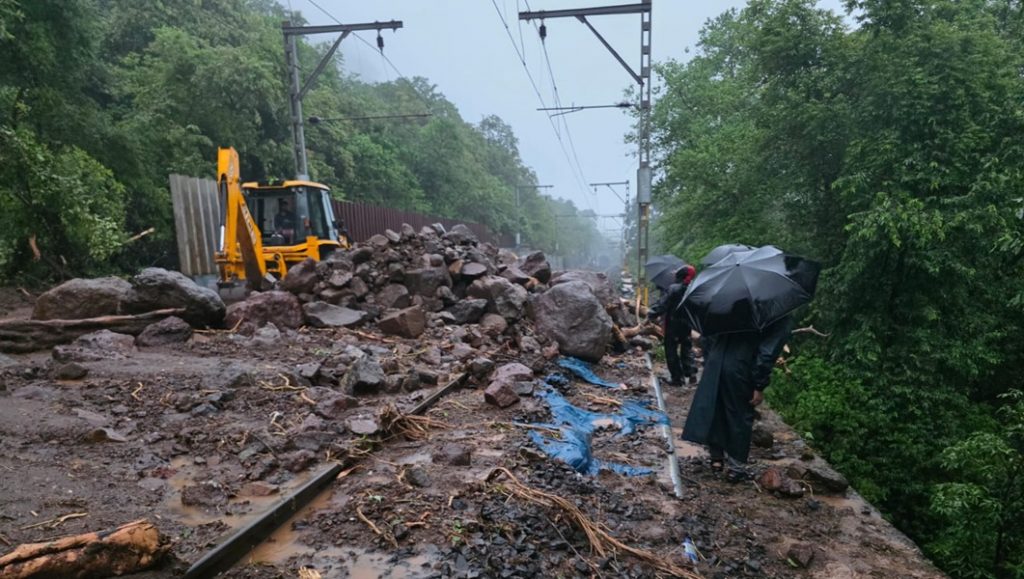
Pune, 29th July 2026: Central Railway has restored train operations on all three railway lines — UP, DOWN and MID — in the Karjat–Lonavala ghat section, bringing the prolonged disruption caused by multiple landslides to an end.
The final stretch of the UP line between Khandala and Monkey Hill was declared fit for traffic at 6:42 pm on July 28, following a 23-day restoration operation. Train movement resumed on the restored section after the track was certified safe for operations.
The Lonavala–Karjat section was severely affected by heavy rainfall on July 5 and 6. The area received 327 mm of rainfall on July 5, followed by 600–670 mm on July 6, triggering multiple landslides, boulder falls and embankment failures. The disruption affected all three lines and led to cancellations, diversions, short terminations, short originations and rescheduling of train services between July 6 and July 28. Around 665 trains were affected during the period.
Two Lines Restored Earlier
The MID line was restored on July 7, followed by the DOWN line on July 14. The UP line between Khandala and Monkey Hill remained the final major restoration challenge and was made fit for train operations on July 28.
The Khandala–Monkey Hill UP line had suffered a 130-metre-long formation settlement, with the embankment sinking by up to four metres, leaving the track without adequate support.

Another major damage site was between Monkey Hill and Thakurwadi on the DOWN line, where a landslide from a hill approximately 200 metres high caused a large boulder to hit and collapse a retaining wall. Around 50 metres of track formation was washed away to a depth of approximately 20 metres.
At Tunnel No. 51, heavy surface runoff flooded the tunnel and washed away shoulder ballast, affecting the stability of the track structure.
Over 11,700 Personnel Deployed
Central Railway deployed 11,745 personnel, comprising 2,514 departmental staff and 9,231 contractual workers, for the restoration operation. Work continued around the clock, with an estimated 1,40,940 man-hours recorded during the 23-day operation.
The machinery deployed included:
18 JCBs
20 Poclain excavators, including two long-boom machines
Rig machines for piling
Multiple dumpers
For filling and stabilisation, the teams used more than 46,460 cubic metres of Granular Sub-Base (GSB) and 2,600 cubic metres of boulders.
Protection and slope stabilisation work included the installation of 8,418 metres of Self-Drilling Anchors (SDA), 1,800 square metres of high-strength GeoMat mesh, 1,700 cubic metres of gabion walls and 7,500 sandbags.
More than 110 railway rakes were deployed to transport materials to restoration sites that were inaccessible by road.

Permanent Works Underway
Although temporary restoration of all three lines has been completed, Central Railway has started permanent strengthening measures at vulnerable locations. These include construction of 1,200-mm-diameter bored cast-in-situ piles and RCC retaining walls.
The restoration operation followed continuous rainfall, landslides, boulder falls and repeated soil and muck movement across the ghat section. Railway teams also used tarpaulin sheets over vulnerable slopes and rain cuts to reduce rainwater ingress and further soil erosion during the restoration process.