Pune: Muslim Khan Family Continues 4-Generation Tradition at Ramwadi Temple on Ram Navami
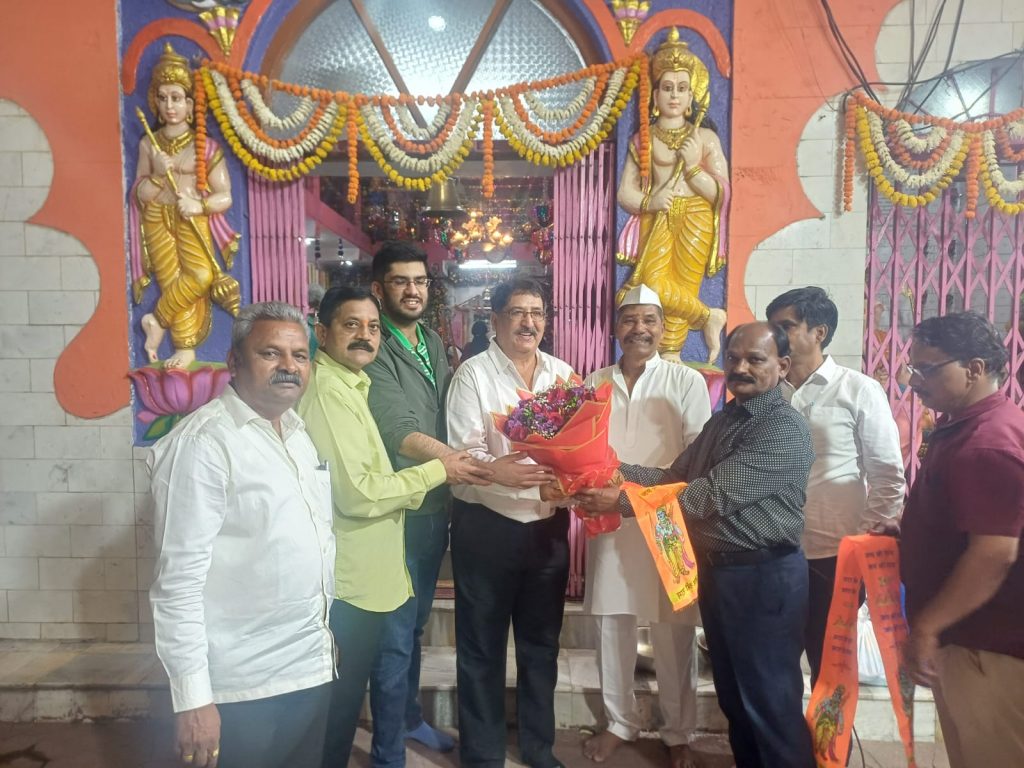
Pune, 28th March 2026: On the occasion of Ram Navami, a temple in Pune quietly reflects a deeper story about India’s long-standing culture of shared heritage and communal harmony. Every year, the Ramwadi Temple becomes a centre of devotion and celebration. But for one family—the Khans—the annual visit represents something far more enduring than a religious ritual. It is a legacy that has continued for four generations.
A Legacy of Respect and Belonging
For Ikram Khan and his family, attending the Ram Navami celebrations at Ramwadi Temple is a tradition that dates back to his grandfather’s time.
“For four generations, our family has been coming to this temple,” Ikram Khan said. “My grandfather began this tradition. For us, it is not only about religion—it is about respect, belonging, and our country.”
As the temple premises fill with saffron flags, devotional music and the sound of prayers, members of the Khan family join other devotees in preparing for the celebrations marking the birth of Lord Ram. They assist in decorating the temple, help distribute prasad and take part in the aarti, continuing a tradition that has been passed down through generations.
A Tradition That Bridges Communities
In an era when discussions around identity often become polarised, the Ramwadi Temple presents a different picture. Here, participation transcends religious boundaries.
Senior temple trustee Tatya Deokar said the temple has always welcomed people from all communities.
“This temple has always belonged to everyone. The participation of Ikram Khan’s family is part of a long-standing tradition of mutual respect,” he said.
The temple trustees say such participation reflects the inclusive spirit that has existed in many neighbourhoods across India for decades.
Trustees Who Carry the Responsibility
The temple’s activities and annual celebrations are managed by a group of dedicated trustees who have grown up in the same locality and share a strong bond with the community.
The trustees include Yogesh Devkar, Santosh Devkar, Suhas Mallav, Vijay Shitole, Shantilal Galande, Prasad Devkar, Toleshwar Devkar, Dattatraya Devkar, Vijay Devkar, Govind Galande, Vijay Galande, Sandeep Kamble, Akash Devkar, Abhinav Devkar, Kunal Devkar and Akash Galande.
Planning for the Ram Navami celebrations begins weeks in advance. The trustees coordinate cultural programmes, oversee arrangements for devotees and ensure that rituals are conducted smoothly.
“We don’t see this as management,” one trustee said. “For us, it is seva. Everyone contributes in their own way, regardless of community. What matters most is the spirit of participation.”
A Message of Unity
As the celebrations reach their peak and chants of “Jai Shri Ram” echo through the temple complex, Ikram Khan stands alongside other devotees, holding a tray of offerings during the aarti.
His presence is neither unusual nor unexpected for those who frequent the temple.
“India’s strength lies in togetherness,” Khan said. “If our presence here reminds people that unity is possible, then our tradition has meaning.”
Senior trustee Tatya Deokar believes such examples are particularly important for younger generations.
“Unity is not something we only talk about. It is something we practice here every year. The younger generation must see this and carry it forward,” he said.
More Than a Festival
As the day concludes with community meals and cultural performances, the Ramwadi Temple once again transforms into a shared space where faith, tradition and community intersect.
For the Khan family, the visit is not simply an annual ritual but part of a story that began decades ago and continues to evolve with each generation.
In a country as diverse as India, such traditions serve as quiet reminders that shared spaces, mutual respect and everyday participation often form the strongest foundations of national unity.