Pune Navratri 2026: Hundreds Join Shri Sukta Recitation at Mahalakshmi Temple
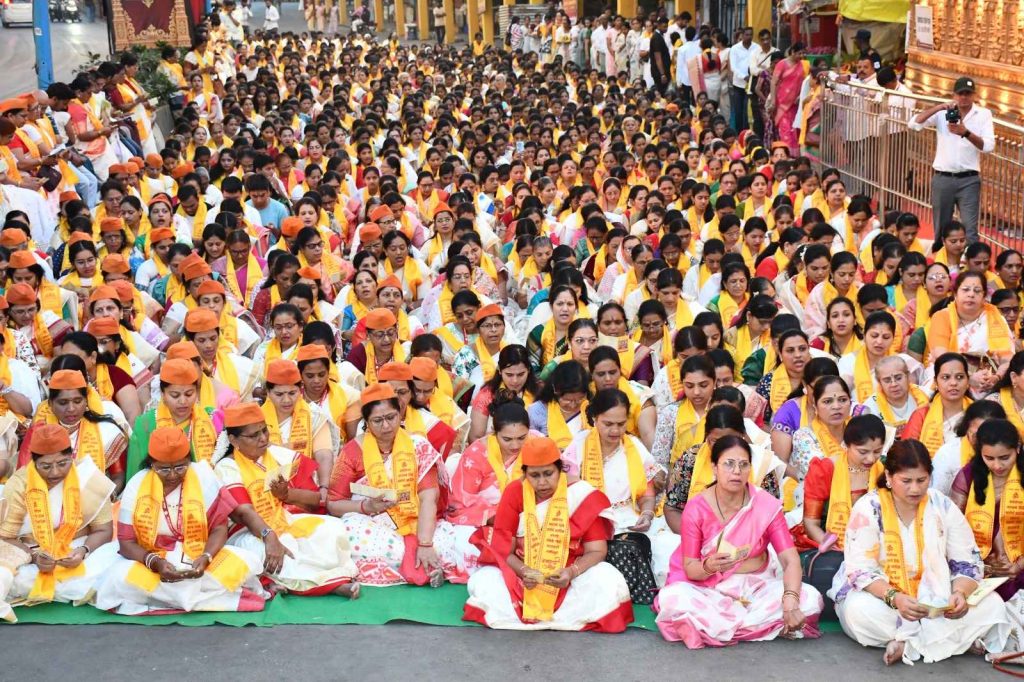
Swargate, 12th October 2026: Hundreds of devotees participated in a collective recitation of the Shri Sukta and Shri Ganpati Atharvashirsha at Shree Mahalakshmi Temple near Sarasbaug in Pune on Monday morning as part of the ongoing Navratri celebrations.
The programme began with conch-shell blowing, followed by the chanting of sacred verses and slogans in praise of Goddess Mahalakshmi. Women and men gathered at the temple to participate in the religious event, which aimed to promote devotion, spiritual awareness and collective participation during Navratri.
The event was organised by Shree Mahalakshmi Temple, Sarasbaug, as part of its public Navratri festival. The programme was held under the guidance of the trust’s founding trustee Rajkumar Agrawal and chief trustee Amita Agrawal.
Dr Satish Desai, chief trustee Amita Agrawal, trustee Dr Trupti Agrawal, Bharat Agrawal, advocate Pratap Pardeshi, Pravin Chorbhele and Hemant Arnalekar were among those present, along with other trustees and office-bearers.
The recitation began with a conch-shell performance by a conch-blowing group. Participants then chanted the Omkar, recited the Shri Ganpati Atharvashirsha once and performed three collective recitations of the Shri Sukta. The programme concluded with an aarti.
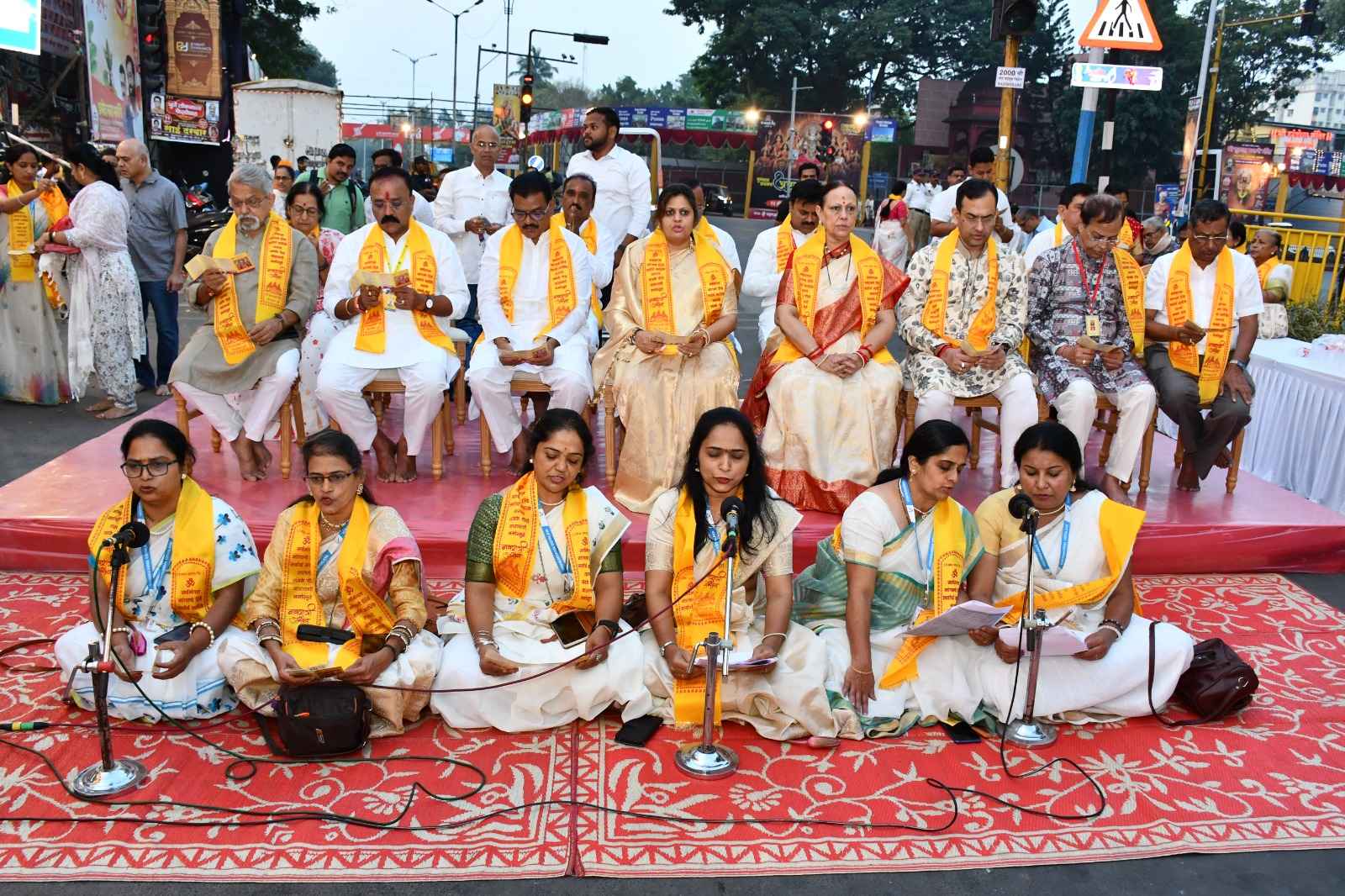
Information about the Shri Sukta and its religious significance was also shared with the participants. Women dressed in traditional attire joined in chants of “Jai Mata Di” during the programme.
Dr Trupti Agrawal said the annual initiative aims to bring women together through collective recitation and highlight women’s strength and participation.
She said the programme attracts devotees during Navratri by offering an opportunity to worship Goddess Mahalakshmi and experience a devotional and spiritual atmosphere.
Dr Agrawal explained that the Shri Sukta is a sacred Vedic hymn from the Rigveda dedicated to the praise of Goddess Mahalakshmi. It holds significance in the worship of the goddess, who is associated with prosperity, wealth, peace and well-being, she said.
The collective recitation is intended to convey a message of devotion, positive energy and shared goodwill, she added.