Pune: NGT Orders Padmavati Associates to Pay Rs 12.46 Crore Over Aundh Housing Violations

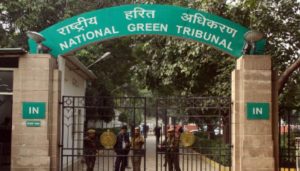
Pune, 20th November 2026: The National Green Tribunal (NGT) has directed Padmavati Associates to pay ₹12.46 crore in environmental damage compensation for carrying out construction at housing projects in Pune’s Aundh area without prior environmental clearance and the requisite pollution control consents. The tribunal ordered that the money be used to restore the area around the projects.
In its November 19 judgment, the NGT’s Western Zone Bench in Pune directed the developer to deposit ₹12,45,77,156.40 with the Maharashtra Pollution Control Board (MPCB) within two months of the judgment being uploaded. The bench, comprising Justice Dinesh Kumar Singh and expert member Dr Sujit Kumar Bajpayee, gave the Pune Municipal Corporation (PMC) the same deadline to prepare a restoration plan in consultation with the state board and the Central Pollution Control Board.
The case concerns three residential developments in Aundh: Pristine Prism, Pristine Royale and Pristine Privilege. Pune resident Tanaji Balasaheb Gambhire filed the execution application to enforce the tribunal’s February 24, 2022 order, which directed a joint committee to determine liability, assess and recover compensation, and draw up a restoration plan.
The MPCB had initially assessed the compensation at ₹14.11 crore. Padmavati Associates objected, saying it had not been given a hearing before the board fixed the amount. It also argued that older violations should be excluded from the calculation and that the PMC had not made prior environmental clearance a condition of its building approvals.
The bench used a different method, citing the Supreme Court’s ruling in the Goel Ganga Developers case. It fixed the compensation at 10% of the estimated project cost of ₹124.58 crore, as declared by the developer in its own filing. The tribunal noted that the developer had applied for environmental clearance in September 2019 but had not pursued the application. It also questioned why Maharashtra’s State Environment Impact Assessment Authority had not acted after learning that construction had proceeded without the approvals.
A team from Visvesvaraya National Institute of Technology, Nagpur, reported after an October 2024 site visit that Pristine Royale and Pristine Privilege had no sewage treatment plants, while Pristine Prism discharged its treated effluent into a public sewer rather than reusing it. The team also found inadequate water conservation measures and insufficient green cover. The tribunal found that the report did not provide a plan to restore the site and tasked the PMC with preparing one.
The bench also directed the MPCB to incorporate the developer’s own environmental management measures—including rainwater harvesting, sewage treatment, organic waste composting, tree planting and environmental monitoring—into the conditions of its Consent to Operate. The tribunal disposed of the execution application with these directions.