Pune: What Can Your Child Eat at School? Maharashtra FDA Lays Down New Rules
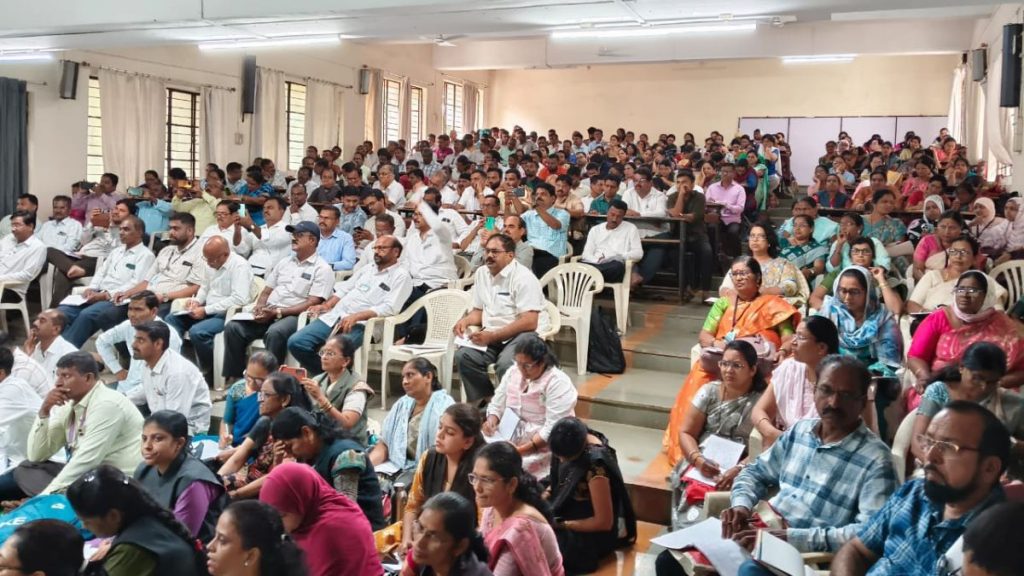
Pune, 20th August 2026: More than 1,800 school principals and head teachers in Pune, Sangli and Pimpri-Chinchwad have been sensitised about food safety, hygiene and balanced nutrition for schoolchildren as part of a joint initiative by municipal education departments and the Maharashtra Food and Drug Administration (FDA).
The awareness programmes were organised to facilitate the implementation of the Food Safety and Standards (Safe Food and Balanced Diets for Children in School) Regulations, 2020, and the School Food Safety Compliance Order issued on July 28, 2026, by Tukaram Mundhe, Commissioner of Food Safety, Maharashtra FDA.
The programmes brought together principals and head teachers from government, semi-government, aided and unaided schools, covering primary, secondary and higher secondary institutions.
More than 1,000 principals attend Pune programme
The Pune Municipal Corporation’s Education Department, in coordination with the FDA, organised a special guidance programme on August 18. More than 1,000 principals participated.
Administrative Officer Sunanda Wakhare, Education Officer Ubade, Dr Manorama Aaware, Project Officer, Samagra Shiksha, and Shilpa Menon, Superintendent, Nutrition Programme and Mid-Day Meal Scheme, attended the programme.
FDA Assistant Commissioners (Food) Syed Imran Hashmi and Pradeep Ambre briefed participants on the responsibilities of school authorities, licensing and registration requirements for food businesses, food hygiene, safe drinking water and restrictions on foods high in fat, salt and sugar.
They also highlighted the need for schools to maintain records and remain prepared for inspections and compliance verification.
200 principals attend Sangli workshop
The Education Department of Sangli-Miraj-Kupwad City Municipal Corporation and the FDA jointly organised a workshop for school principals at Patangrao Kadam College in Sangli on August 19.
Around 200 principals and head teachers from schools within the municipal corporation limits attended the programme.
Administrative Officer Khedkar and Deputy Commissioner of the Education Department Patil attended the workshop along with FDA Assistant Commissioner (Food) Raosaheb Samudre.
Food Safety Officers Dhananjay Aghav, Tushar Ghumre and Sumit Khandar provided guidance on the School Food Regulations, 2020, and the Commissioner of Food Safety’s directions.
The participants were briefed about school authorities’ statutory responsibilities, food hygiene and sanitation, restrictions on unhealthy food, licensing and registration of food suppliers, and the records schools are required to maintain.
Around 600 principals attend Pimpri-Chinchwad programme
The Pimpri-Chinchwad Municipal Corporation’s Education Department and the FDA jointly organised another guidance programme at Acharya Atre Rangmandir in Sant Tukaram Nagar, Pimpri.
Education Department Administrative Officer Sangita Bangar and FDA Assistant Commissioners (Food) Dattatreya Salunkhe and Sanjay Chatte attended the programme and briefed participants.
Around 600 principals from schools within the Pimpri-Chinchwad municipal limits participated. The session focused on the implementation of the School Food Regulations and the responsibilities of school authorities under the Commissioner’s order.
Key food safety directions for schools
Under the directions communicated during the programmes:
School canteens, mid-day meal providers, hostel kitchens, tuck shops and other food suppliers operating in or supplying food to schools must have a valid FSSAI licence or registration.
Schools must comply with prescribed hygiene and sanitation requirements.
Foods high in saturated fat, trans-fat, added sugar or sodium cannot be sold, served, displayed, distributed or promoted on school premises.
Advertising, marketing, sale or free distribution of such high-fat, sugar and salt (HFSS) foods to schoolchildren is prohibited within 50 metres of the school gate in every direction.
Schools must provide nutritious food containing appropriate proportions of carbohydrates, proteins and fats, along with essential micronutrients, dietary fibre and adequate hydration.
Fruits, vegetables, whole grains, pulses, milk and milk products and other locally available nutritious foods should be included regularly in school menus.
Safe and potable drinking water must be provided to students and tested according to applicable standards.
Schools must appoint and train a Health and Wellness Ambassador or Nodal Officer to coordinate food safety and nutrition-related activities.
Food Safety Display Boards, warning boards and healthy-eating messages must be prominently displayed. School computers and digital infrastructure must also be free of advertisements for HFSS foods.
Every school must adopt the Eat Right School framework, formulate a School Nutrition Policy and conduct at least four food safety and nutrition awareness programmes during each academic year.
Food Safety Officers are required to inspect every school at least twice during each academic year and collect food samples from school canteens, mid-day meal kitchens and tuck shops at least once a year.
Violations detected during inspections may lead to improvement notices, licensing action, seizure, prosecution or other statutory action under the Food Safety and Standards Act, 2006.
The initiative is aimed at strengthening accountability for food safety in schools, reducing children’s exposure to unsafe and unhealthy food and encouraging healthy dietary habits from an early age.
The Education Departments and the FDA have appealed to school authorities, food suppliers, parents and students to cooperate in implementing the directions and ensuring that children receive safe, wholesome and nutritionally balanced food.